


How the pitfalls of toxic masculinity unravel in ‘Close’ and ‘Femme’

Although the term ‘toxic masculinity’ feels like it has only been uttered in online arguments and sociological debates in the past decade or so, the concept goes back to the 1980s, when people began to evaluate generations of male mythmakers. Criticised by the uninitiated as a blanket term used to lambast men based solely on their sex, the phrase actually refers to stereotypical male behaviours that are collectively harmful, stunting emotional growth to create a facade of strength and dominance.
Handed down from one generation to the next, exacerbated by ‘role models’ of entertainment, toxic masculinity presents the idea that a man can only be one thing, encouraging the suppression of anything that threatens the rigidity of this mould. Such has allowed mental health issues to fester, with men more likely to hide their true emotions to save face, and has also seen an increase in homophobia and transphobia, with such non-heteronormative identities being perceived as ‘lesser’.
In recent years, the popularisation of this topic has led to the creation of several mandatory, modern texts through literature, music and film, with Chloé Zhao’s The Rider and Barry Jenkins’ ‘Best Picture’ winner Moonlight being two exemplary feats. Yet, few films so directly and venomously attack the structures of toxic masculinity better than Lukas Dhont’s Cannes winner Close and Sam H. Freeman and Ng Choon Ping’s Femme.
A fragile yet pronged excavation of masculinity, Dhont’s film details the tight bond between Leo and Remi, two 13-year-old boys who have just started a new year of school together. Sharing a relationship both physical and emotional, the pair contend with the norms that the other children at school are used to, with a comment from a trio of girls regarding their sexuality forcing them to contest the thorns of toxic masculinity for the very first time.
Passionate in its characterisation, the purity of these delicate protagonists comes into question when they meet the ‘rules’ of wider society, with the film transforming into a devastating plea for human connection in a world of toxicity and judgement. “We have built up this masculine culture that is so much about dominance, and independence, and competitiveness,” Dhont told A-Frame in relation to his film, “That from a very early stage, we murder the beautiful friendships between boys”.
Such life lessons subconsciously taught in this period then have to be unlearned if one wishes to reach personal solace, realising that physical intimacy with another man is crucial for emotional development and not innately sexual. Never labouring this truth, Dhont ingeniously weaves this within a coming-of-age tale, making the story a deeply personal human tragedy that provokes thought rather than alienation.

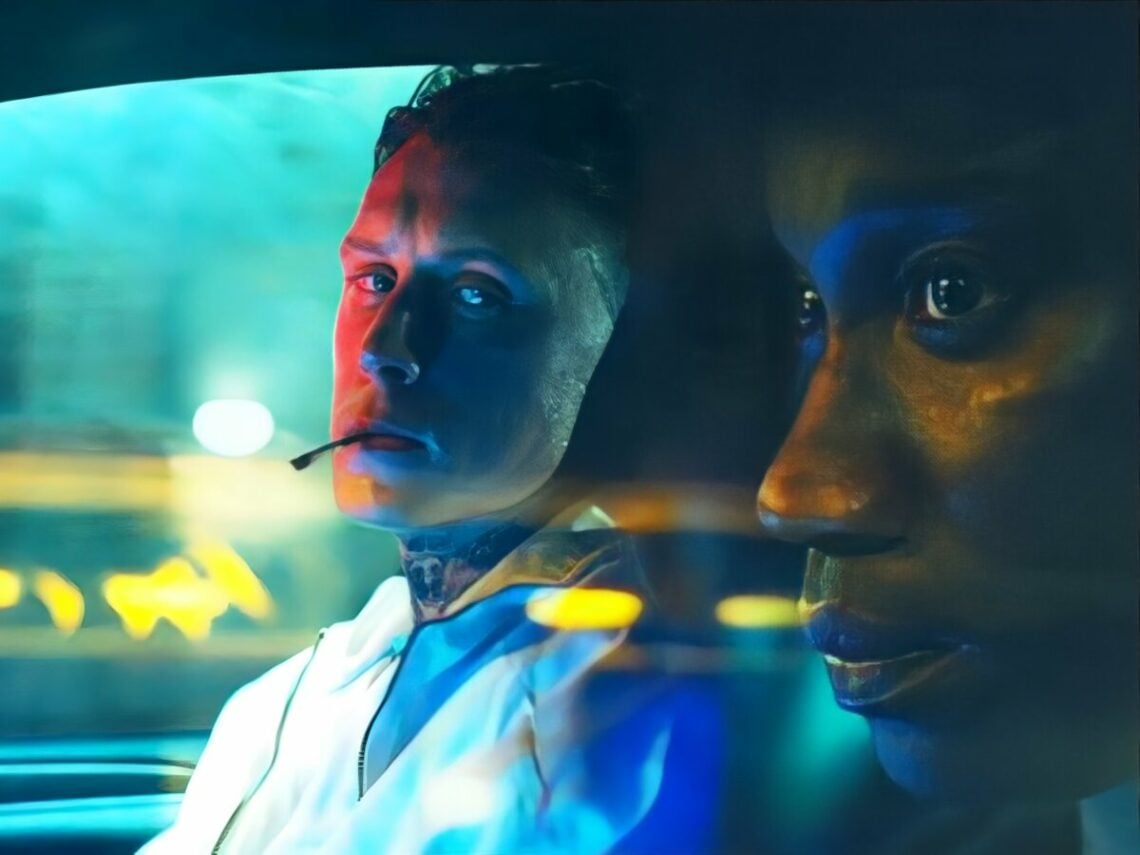
While physically unconnected to the Belgian drama, Femme feels thematically tethered, speaking to the consequences of living in adulthood having developed with the toolkit of toxic masculinity. Focusing on a relationship that blossoms between two unlikely men, one a drag star and the other a wannabe gangster who previously attacked the former, Femme is a complex exploration of modern masculinity with all its thorns and societal complications.
Attempting to reclaim power over his attacker, the drag star, Jules, engages in a relationship with Preston with the intention of exposing his true sexuality by filming him during intercourse. Yet, wielding sexuality as a weapon against Preston exposes the perniciousness within Jules, someone who had seemingly defied the structures of toxic masculinity, all while his former attacker allows himself to lower his facade and reveal his insecurities.
As one character allows himself to become tangled within toxic masculinity, another finds himself slowly untwisting himself from its grip, only for the pair to meet in the middle and allow their taught behaviours to flourish into violence. It’s a layered, tightly-packed study that brims with complexity, probing modern constructs of masculinity with a scalpel, revealing the tender wounds and victims beneath.
“We’re obsessed with masculinity as a culture,” lead actor Nathan Stewart-Jarrett exclaims, “In Femme, Preston is encased within toxic masculinity, and Jules is using and getting in touch with his masculinity to enact revenge…the tragedy in Femme is that Jules is fine, Jules is loved and celebrating his birthday, and he thinks he can take that love, that adulation, on to the streets. And Preston is there to rip it all away from him. And that happens all the time”.
While in Dhont’s Close, we witness toxic masculinity’s germination, in Sam H. Freeman and Ng Choon Ping’s Femme, we see how its vines have imprisoned its antagonist within a construct from which he can barely escape. Steadily asserting its dominance throughout both films, pervading throughout the narrative, the pitfalls of traditional masculinity weather the young characters like the ebb and flow of the tide, either lashing its fury or eroding one’s core. Though tender and empathetic, both films implore human connection and beg for love, compassion and benevolence through the destruction of such restrictive barricades.
