


How the assassination of two American icons created psychedelic rock

When psychedelic rock first started taking shape, the genre was so limitless that it led to total chaos.
Bands had the chance to be as experimental as they wanted, and while this is great for the open-minded creative, it doesn’t always lead to the production of wholly accessible music. As such, it didn’t take off with fans right away, and they were left wondering what the hell they were actually listening to.
Even bands and artists who were making music during the beginning of the inception of psychedelic rock criticised the genre for being a bit too out there. While it’s great having no limits holding you back when making music, that aimlessness can also leave you pining for some sort of direction, unable to hold any kind of shape.
Roger Waters himself admitted that some of Pink Floyd’s early work didn’t have any kind of solid plan behind it, with Jimi Hendrix even going so far as to criticise psychedelic bands who relied more on a trippy light show than they did music. Given Hendrix passed away in 1970, we can safely assume that he is talking about early psychedelic bands in this scathing assessment.
“Here’s one thing I hate, man,” he said, “When these cats say, ‘Look at the band. They’re playing psychedelic music!’ All they’re doing is flashing lights on them and playing ‘Johnny B. Goode’ with the wrong chords. It’s terrible.”
So, what changed? Well, in short, bands started to home in on their sound and create music that continued to push boundaries experimentally, but that wasn’t quite as unlistenable as what they had been making previously. Pink Floyd are a good example, as records like Dark Side of the Moon were still ambitious, but that outrageous sound was sandwiched between a very clear beginning and end, a solid concept that stopped everything falling apart. Such groups were only able to work on perfecting their sound because record labels were willing to invest more money in psychedelic music, and that decision was inspired by more political events.
People often forget that the music business is exactly that – a business. While there are some higher-ups who just want bands and artists to push themselves, the majority of executives are driven by profit. As such, psychedelic music was never high on anyone’s list of priorities when good ol’ fashioned rock was still paying the bills. It wasn’t until towards the end of the ‘60s when the generational gap became a lot more clear, and rock music was dividing audiences, labels understood it was time to pivot towards something new.
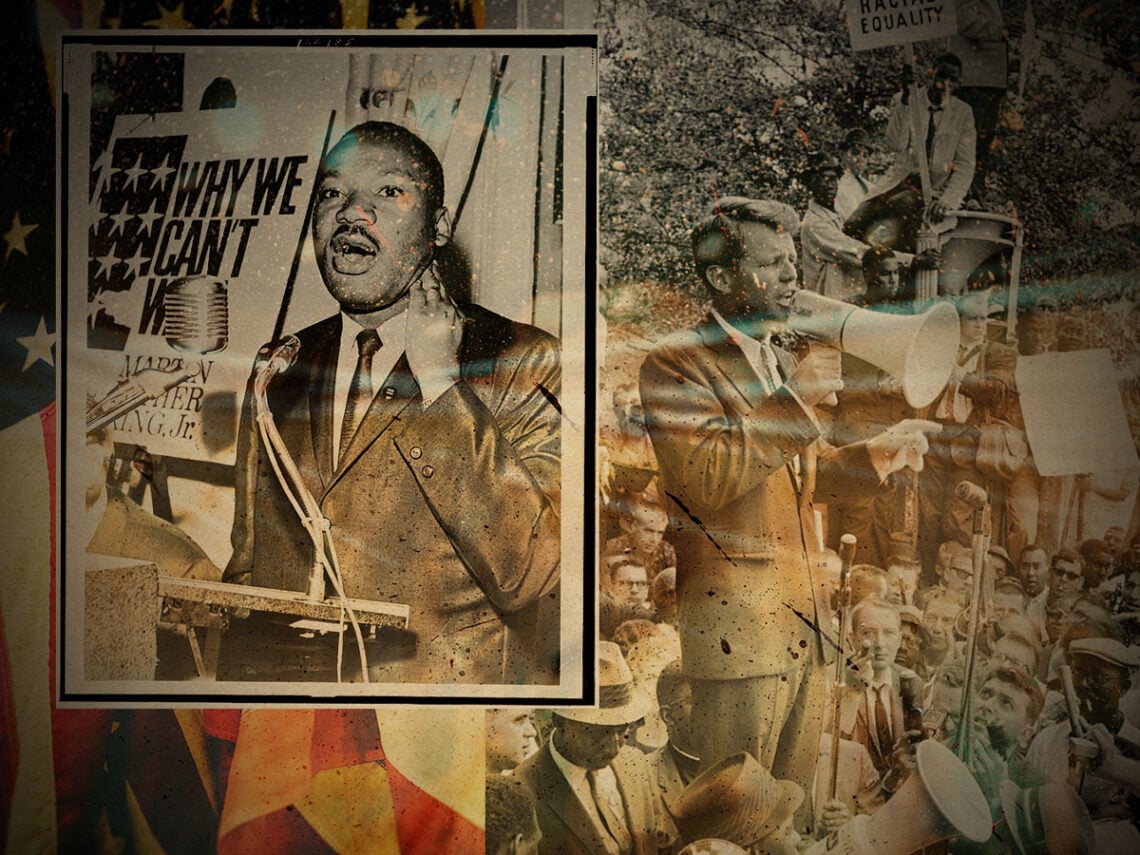
There were a number of political events that made rock music more political and were contributing factors towards the widening of this generational gap, but two of the biggest were the assassination of Martin Luther King Jr and Robert Kennedy. Demonstrations were starting around the world, the political landscape was as uncertain as ever, and so it made sense for record labels to move away from rock music that encouraged such outspokenness and opt for something… stranger.
Psychedelic rock was perfect. It wasn’t a totally new idea, but it was in its infancy enough that investing was still very much a ground-floor endeavour. It was also easy to unite audiences at large with such music, given that the experimental nature of the sound meant it was hard to pull political motivation from it. Without such turmoil, it may well have been the case that the genre never found the form we know and love today.
