


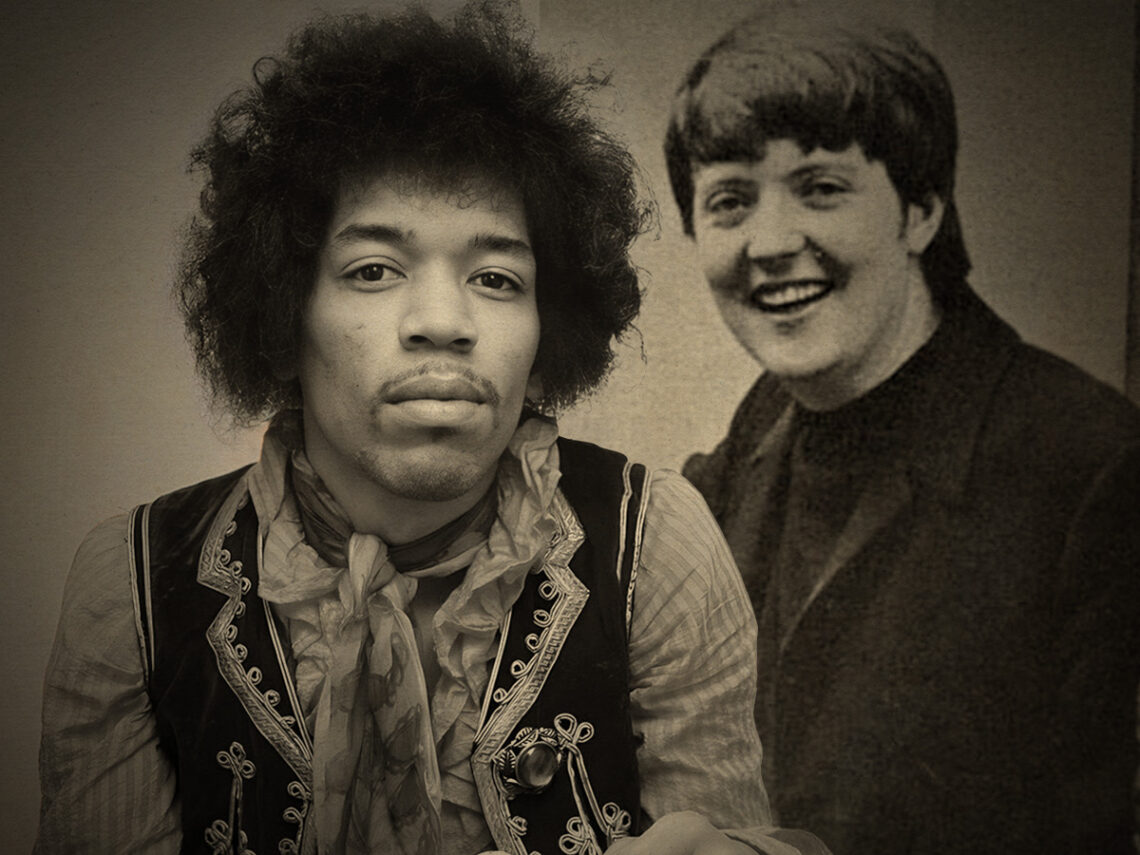
How The Animals convinced Chas Chandler how to help Jimi Hendrix

Bands could be composed of the greatest of friends during their early days, but in the fast-paced, cut-throat world of the music industry, countless once harmonious groups have been reduced to vicious rivalries, infighting, and the death note for countless bands: ‘musical differences’ – something that The Animals’ Chas Chandler had to reckon with on a daily basis.
Emerging from the industrial haze of Newcastle during the early 1960s, The Animals quickly became one of the defining sounds of the British invasion period, amassing a global audience and boasting their fair share of transatlantic hits, too. As a bassist, though, Chas Chandler was rarely afforded the same praise, notoriety or, as it turned out, revenue as some of his other bandmates. What’s more, the group were forced into an exhaustive touring schedule which inevitably took its toll on the band themselves.
It doesn’t matter who you’re with, but if you’re cooped up on a tour bus or in a recording studio day after day for years on end, existing on very little sleep and a typical rock and roll diet, relationships are bound to fracture eventually. So, downcast and world-weary from the endless touring and lack of royalty cheques, Chandler left The Animals and turned his attention to the world of production and management instead.
Inevitably, managing a band and being in a band are two different kettles of fish, but Chandler managed to utilise some of the experiences he had gained with The Animals within his management style, particularly when managing Jimi Hendrix. After discovering the era-defining guitarist in a New York club shortly after the demise of The Animals, Chandler managed to convince Hendrix to relocate to the swinging streets of London to form The Jimi Hendrix Experience, alongside Noel Redding and Mitch Mitchell, who had been recruited by the former bassist.
Trying to manage a figure as enigmatic as Hendrix can’t have been an easy task, but Chandler managed to get by using his Animals-era experiences and, essentially, doing the opposite of what The Animals’ manager had done during their peak. Namely, Chandler made sure that Redding and Mitchell had as little creative input as possible, in an effort to place the talents of Hendrix firmly at the forefront of the trio’s output.
“I wasn’t concerned that Mitch or Noel might feel that they weren’t having enough–or any–say. I had been touring and recording in a band for years, and I’d seen everything end as a compromise,” Chandler revealed of his methods in the book Ultimate Hendrix: An Illustrated Encyclopedia of Live Concerts and Sessions. “Nobody ended up doing what they really wanted to do. I was not going to let that happen with Jimi.”
To be fair to Chandler, nobody was ever in any doubt that Jimi Hendrix was the main draw of the aptly named Jimi Hendrix Experience, but the manager does risk underestimating the musical power of that legendary rhythm section, without whom many of those utterly iconic early records simply wouldn’t sound right.
Eventually, the management tactics of Chandler broke down, and Hendrix parted ways with the former Animal partway through the recording of the seminal Electric Ladyland. Nevertheless, it should be remembered that without the managerial efforts of Chandler, the world at large might never have heard the transformative genius of Jimi Hendrix.
