


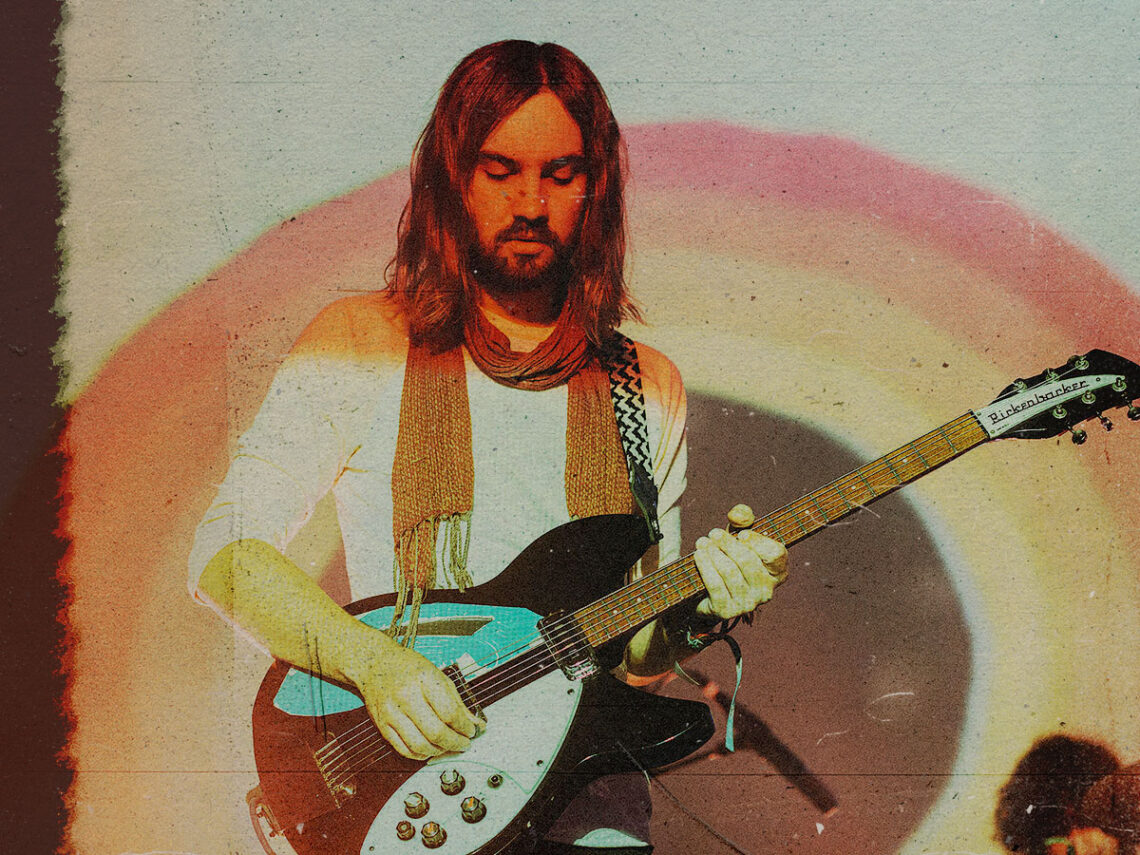
How Tame Impala forecasted the sound of the 2020s: The biggest influence on modern music?

Tame Impala began life as a psychedelic band. When they formed in 2007, this was far from the most in-vogue genre. However, nowadays, despite rather sporadic releases and never really reaching the loftiest Nirvana-like status in music, they are considered rap’s favourite band, the progenitors of bedroom pop, trailblazers of the blossoming Australian music scene, and to bring matters full circle, re-energisers of the psychedelic genre.
Naturally, all of this has exercised a huge influence on modern music. A few years ago, it was becoming clear that ‘The Tame Impala Sound’ was gaining ubiquity—you could hear drum sounds and echo chambers that seemed highly derivative of their style everywhere. Now, it has even surpassed that ever-present status, instead, forecasting the future of music in all genres from a less directly tangible position. Part of this comes down to how they write and operate.
You see, for the most part, Tame Impala are a one-man band. In the studio, Kevin Parker writes all the songs, plays all the instruments, and thereafter produces all of the tracks. This unique approach is closer to the concept of being a DJ rather than a conventional psychedelic band. As a result of being so hands-on, Parker often relies on loops and using studio elements like sampling that are usually confined to genres like hip hop and pop to get his desired sound.
By looping and layering so heavily as he hops around his home studio picking up an array of instruments, he is almost mimicking the collision between GarageBand and an actual garage band. Unlike other artists like Prince who have followed this sole studio presence method in the past, he doesn’t then work within the confines of a single song, ticking off suitable elements to make a singular arrangement ready to unleash into the charts. Alas, he weaves in chord progressions that don’t really fit, experiments with bridges and solos and defies repetitions within the loops by mixing in multiple ideas. It is as though he is jamming with himself.
And, perhaps most importantly, given that Parker’s style was originally grounded in psychedelia, this has meant that he is not then honing his long-winding beats into typical pop structures all that often. For instance, ‘Let It Happen’ is a rare hit that weighs in at nearly eight minutes. Throughout that track, the song moves through phases and movements almost akin to classical music. And like a composer of old, when the music is written, the band come in and bulk it out. It is ‘classic rock’ in the non-too-typical sense. This collision made him a unique presence upon a revival, and as a result, a delightfully refreshing one.
His style was so unique that other artists wanted him to vivify their own sound with his weird ways. So, he was quickly hired by the likes of Travis Scott, hailed by Frank Ocean, and covered by Rhianna, spreading his influence far beyond Australia or the psychedelic-indie genre heralded by bands like The Vines before them. This ensured that his sound caught on within music at large.
However, while that influence might pertain to his specific set of sounds and song structures, it was his methods that made him the king of DIY production. So, in an age where technology has now created a world where anyone can make a track without ever even picking up an instrument, he has illuminated how best to do that.
His use of countermelodies, obsession with mixing his way towards perfect drum sounds and unique echo chambers, have highlighted how you can make one musician indulging themselves without a plan sound interesting. In many ways, this helped to create bedroom pop. While the genre might seem like it was an inevitability, Parker’s way of making instrumentation itself somehow seem introspective is key to its development. There is no doubt that his overly reverbed vocals opened the door for the likes of Billie Eilish to essentially sing with a whisper.
Lastly, while his ‘sound’ may well draw the most attention, his songwriting is also impacting music moving forward. In recent times, a few bands like the Arctic Monkeys with their new album The Car, Lana Del Rey on occasion, and a few other huge names have seemingly ditched choruses. Parker’s wavering structure has always lent towards this. Once again, like a classical musician, he focuses more on the movement of a song and its arc rather than angling it towards a classic pop format, allowing more room for atmosphere.
So, when you combine all these elements along with the natural inspiration that his brilliance is bound to have seeded, you have a singular artist who has orchestrated the direction of modern sound more than most. His singularity has served up a sonic curveball that stems mainly from his strange musical mindset.
Psychedelia is perhaps the most era-defined genre there is. You hear the word itself and think of the groovy 1960s. However, Parker has purveyed what was best about those bands without ever looking back. Like Scott Walker in a world of hip hop he lets the music bolt off wherever it chooses. He has taken the influence and inspiration of bands like Dungen and 13th Floor Elevators and projected them forward in his own rule-breaking way. So, it’s no surprise that hip hop – a genre always looking to progress and break rules – has taken him so keenly to heart, and many others have followed suit, colouring the future just a little kaleidoscopic.
