


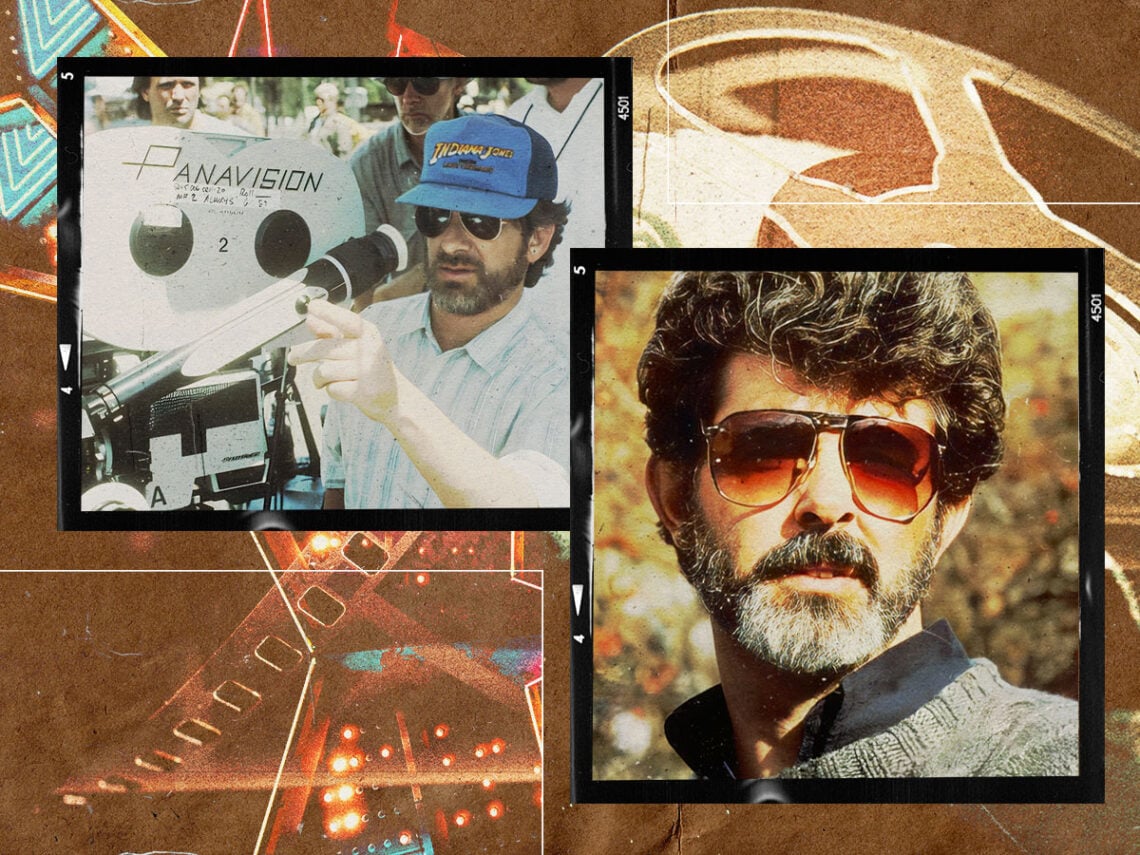
Steven Spielberg and George Lucas: The bearded buddies who made a habit of reinventing cinema

Since first encountering each other in the 1970s, Steven Spielberg and George Lucas have struck up the single most powerful bromance in the history of cinema, with the bearded best friends continually pushing the medium to new heights both individually and collectively.
Their influence is reflected quite clearly in the fact that they’re the two richest celebrities on the planet, boasting a combined net worth of almost $10billion. Lucas is even the single largest individual shareholder in Disney after selling Lucasfilm to the Mouse House over a decade ago, giving him a significant stake in an all-encompassing pop culture behemoth.
Of course, a legacy isn’t measured exclusively in wealth, even if the duo are doing better in that regard than anyone else in Hollywood. Thanks to their competitive streak and kinship, they’ve made a recurring habit of blazing a new trail, shattering records, and pushing the entire industry to continuously adapt and evolve with the times.
Spielberg revolutionised the release model when his breakthrough feature Jaws became the highest-grossing film in history in 1975, with Tinseltown ditching its tried-and-trusted method of slowly rolling out the biggest movies. Instead, it started premiering a hot new film in as many cinemas as possible, backed by a massive marketing blitz, which has been the blockbuster norm ever since.
He was then usurped by his buddy two years later when Star Wars became the highest-grossing film of all time, which is only a fraction of the footprint it left behind. Lucas retaining a stake in the tie-in merchandise was another first that ensured features could make insane amounts of money well beyond the confines of the silver screen, and it’s been a staple of any high-profile mainstream title for going on half a century.
Lucas pushed visual and practical effects forward by creating Industrial Light & Magic for the express purpose of ensuring Star Wars would boast set pieces the likes of which have never been seen before, and it’s long since been established as one of the most innovative companies ever founded.
ILM is responsible for the first completely computer-generated character, the pioneering CGI of The Abyss and Terminator 2: Judgement Day, the dinosaurs of Jurassic Park, the first completely computer-generated main character, the first computer-generated character to have full human anatomy, the first fully computer-generated character in a live-action film using motion capture, and the integration of the Volume technology on soundstages that have been adopted by virtually every big-name franchise.
Even turning towards animation, Pixar began life as part of Lucasfilm’s computer division and eventually evolved into the most consistent hit factory outside of the live-action arena, never mind the never-ending revenue streams generated by Star Wars and Indiana Jones in their many shapes, forms, and mediums.
Not one to be left behind, Spielberg would go on to direct cinema’s top-earning film twice more through E.T. the Extra-Terrestrial and Jurassic Park, instigating another seismic shift after Indiana Jones and the Temple of Doom led to the introduction of the PG-13 rating the majority of the biggest movies adhere to, and set the template for how the most prominent filmmakers in the business can not only continue being regarded as auteurs and lauded names unto themselves, but can do it while delivering crowd-pleasing mass-marketed populist entertainment without sacrificing their own stylistic sensibilities.
The landscape of cinema would look a whole lot different were it not for Spielberg and Lucas, and it would be borderline unrecognisable if they’d ended up hating each other, such is the way their decades-long desire to bounce ideas back and forth while refusing to believe there were limits to how far technology could be pushed completely altered the complexion of the very medium.
