


Broken cars and Elvis’s advice: how Sharon Sheeley gave Ricky Nelson a best-selling hit

When Elvis Presley was shipped off to Germany by the US Army in 1958, he told aspiring songwriter Sharon Sheeley that when he returned home, he wanted her to have written a “Sheeley song for me”.
The two had met when Elvis was working on his first film, Love Me Tender. Sheeley and her sister Jody had driven out to Hollywood to try and meet the man who had sparked a musical revolution two years earlier with his debut hit ‘That’s All Right’. The idea that anyone could just turn up and walk onto the set where the biggest star in the world was making a Hollywood movie and strike up a friendship with him seems like something out of, well, a Hollywood movie, but that’s exactly what happened.
Sheeley would later remember in an interview that Elvis had one true ambition: to meet and personally thank each and every one of his fans for their support. “Elvis is a humble, grateful and sincere person,” she said. “When Elvis signs an autograph, he refuses to accept any thanks and always makes a point of saying ‘No, thank you.’”
Though he never recorded or released a song that she had written, the encouragement from The King gave her the confidence to continue writing, and she didn’t have to wait long to get her first song recorded.
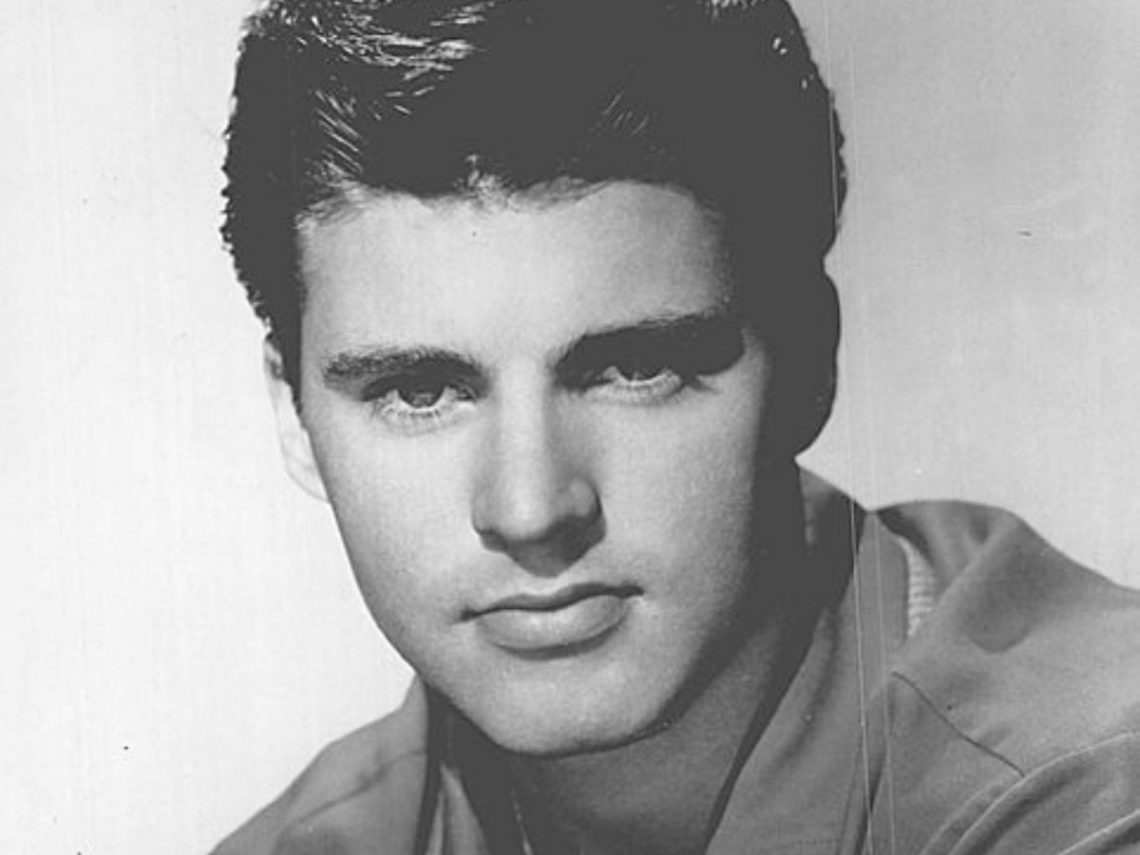
Jumping back in her car and turning out onto the road to success, this time, Sheeley headed for the home of radio and television star Ricky Nelson. Since 1944, Nelson’s family had been at the heart of the radio show The Adventures of Ozzie and Harriet, a musical sitcom which made the leap to television in 1952 and went on to become the longest-running live-action show of all time (until It’s Always Sunny in Philadelphia came along, at least).
Outside of the family business, Ricky Nelson had moved back to radio through his music and was making a name for himself with songs like ‘You’re My One and Only Love’ and ‘Be-Bop Baby’, but he soon found his biggest success yet, thanks to a song written by Sharon Sheeley. In a move that wouldn’t have been out of place on the sitcom where Nelson had made his name, Sheeley pulled up outside his house, knocked on his door and claimed that she was having car troubles. In his attempts to assist her in getting back on the road, the pair struck up a conversation, which they continued for several years.
Sheeley told Nelson about her encounters with Elvis—everybody’s hero, then and now—and her poetry, which she was increasingly setting to music. Before long, she had given one of her songs to Nelson to sing, and the first song that would take him up to the top of the charts, ‘Poor Little Fool’.
The song was an instant sensation when it was released in 1958 and became the first number one on the brand new US Billboard Hot 100 chart. It also made Sheeley the youngest woman to have written a number-one hit. Nelson would return to the summit with ‘Travelin’ Man’ three years later and also landed in the top ten with his dreamy, timeless songs like ‘Lonesome Town’, ‘Hello Mary Lou’ and ‘I Will Follow You’.
Sheeley continued to write songs such as ‘Somethin’ Else’, ‘Love Again’ and ‘Lonely’ for her rockabilly boyfriend, Eddie Cochran, as well as ‘Breakaway’ for Irma Thomas, ‘Hurry Up’ for Ritchie Valens and ‘Heart in Hand’ for Brenda Lee.
In 1964, Sheeley made her own jump from writing radio hits to making television. Alongside her husband, Jimmy O’Neil, she created the ABC variety show Shindig! and Ricky Nelson appeared in the second season, singing his then-newest hit, ‘I Catch Myself Crying’.
