


Metacinema: how self-awareness sucked the fun out of movies

There’s a time and a place for self-awareness in cinema, and when used correctly, it does nothing but increase the enjoyment factor. However, when it’s used as a crutch that doubles as a thinly veiled admission of substandard writing, then it crosses the line from innovation into apathy.
Make no mistake about it—there are a number of wonderful films that wink directly to the audience, shatter the fourth wall, point out their own subversions, and reflect the mischievous spirit of their creation. On the other hand, there are an increasing number of offenders who shoehorn it in to overcompensate for a lack of originality.
As tends to be the case when most things are driven headfirst into the ground, horror has made it an increasingly bad habit. It was a breath of fresh air when Scream brought it to the mainstream in 1996, but that was almost 30 years ago. Needless to say, the times have changed several times over since then.
In what’s both a specific bugbear and a sweeping generalisation at once, far too many horror flicks have characters who point out the inherent danger and/or stupidity of their circumstances. Yes, everyone knows it’s a bad idea to split up; obviously, it’s a terrible decision to go into the dark cavernous room alone, and of course, returning to the scene of an earlier incident that gave rise to a supernatural phenomenon is only going to end one way.
The point is that having people explain that out loud within a fictional context underlines that the movie has nothing new or original to say. It’s arguably better to embrace cliché than to try and dance around it with a nudge and a wink, and by making it abundantly clear to the viewer that the very things characters have warned against happening are about to happen, it both undercuts the drama and the tension while also confirming the writers and filmmakers couldn’t think of anything remotely fresh.
As also tends to be the case, blockbusters are guilty as sin, too. There’s absolutely no shame in mindless escapism, but when characters in movies that are otherwise treated as existing in their insulated reality openly mock their own scenarios, it’s as if the people responsible for making these films are embarrassed about being part of their own genre.
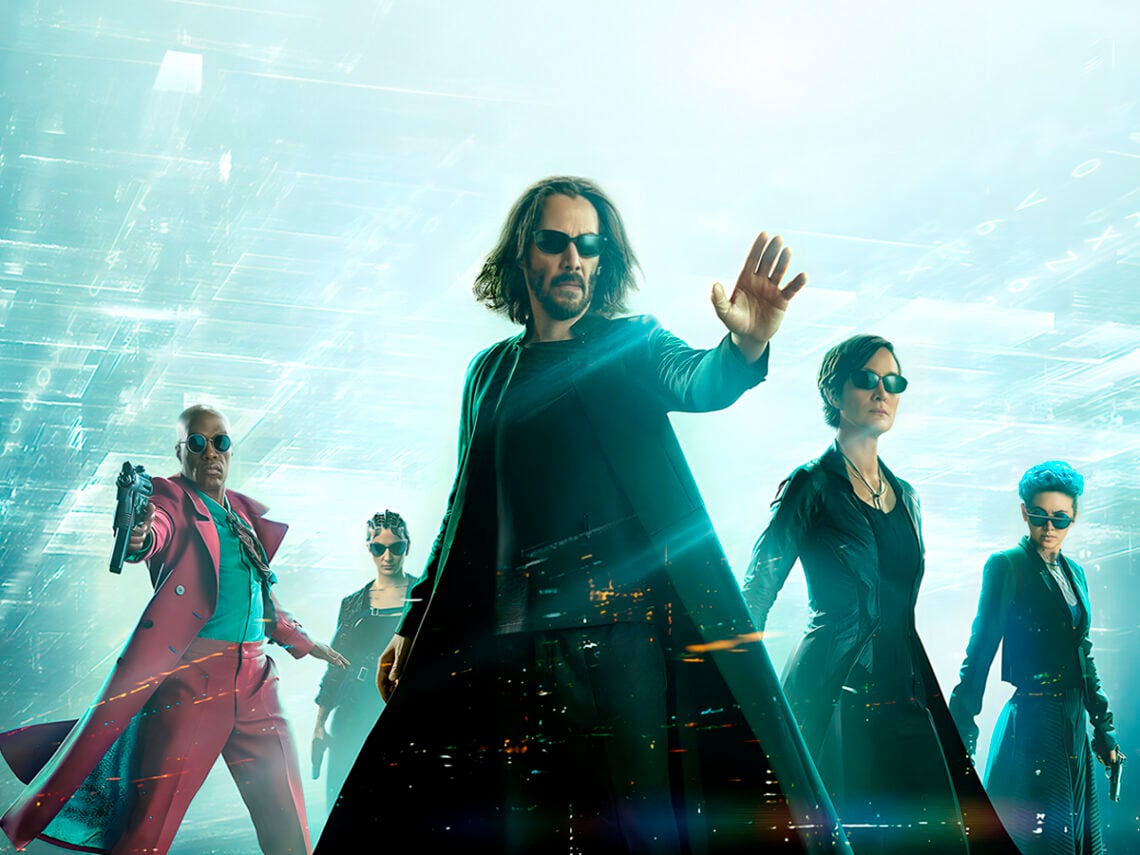
For every 21 Jump Street, Adaptation, or Being John Malkovich that shows the best way to use self-reflexiveness, there’s a Matrix Resurrections, Jurassic World, or miscellaneous Marvel movie that exudes the worst. Focusing on those latter three in particular, it’s symptomatic of how filmmakers and studios are so increasingly desperate to point out their own shortcomings that it sucks the fun out of the experience.

Resurrections was at least ambitious to a point, but the constant prodding at Warner Bros being so desperate for a new Matrix grew old fast, especially when a fifth film was announced anyway. Jake Johnson’s entire role in Jurassic World is to drop exposition on how everyone stuck in a theme park full of dinosaurs keeps making things worse for themselves, which everyone had already known since 1993.
Marvel appears to have a cabal of screenwriters employed specifically for peppering one-liners into the scripts that point out the inconsistencies, absurdities, and recastings to have dogged the franchise, but as the single highest-grossing film series of all time, none of it is new information. Instead, it’s borderline apologetic, giving off the impression that a company that specialises exclusively in comic book adaptations feels the need to justify specialising exclusively in comic book adaptations.
Inconsequential clouds to be yelling at, sure, but what happened to just going along for the ride? Any work of cinema requires suspension of disbelief, although only recently has Hollywood felt the need to not only explain why that disbelief should be suspended, but subsequently list all of the reasons why movies operating under the same set of parameters required that disbelief to be suspended in the first place.
Nicolas Cage can deconstruct his entire career in The Unbearable Weight of Massive Talent and it’s fine, because the film can’t exist without it. However, Sylvester Stallone lamenting on Arnold Schwarzenegger’s desire to be president in The Expendables is an eye-roller that was included solely to stroke egos and stare directly down the lens with a shit-eating grin without having to do so literally.
Cinema is entertainment and escapism first and foremost, but unnecessary self-awareness is the equivalent of a sitcom’s live studio audience being cajoled by the guy in the background holding up the ‘applause’ card. The reactions generated by movies are supposed to be spontaneous, unexpected, and driven organically by the action unfolding on-screen. When moments have been explicitly scripted to shine a light on those imperfections, then it’s nowhere near as fun.
