


How ‘Rye Lane’ encapsulates the vibrancy of London

Anyone can go to Paris and film the Eiffel Tower, New York and capture the Statue of Liberty or Rome and take hundreds of minutes of footage of them circumnavigating the Colosseum, but bottling the essence of a particular place is a different task entirely. Although there have been countless movies about London, UK, including Mike Leigh’s 1993 film Naked and Andrea Arnold’s Fish Tank, few films have been able to capture the frenetic electricity of the city better than Raine Allen-Miller’s Rye Lane.
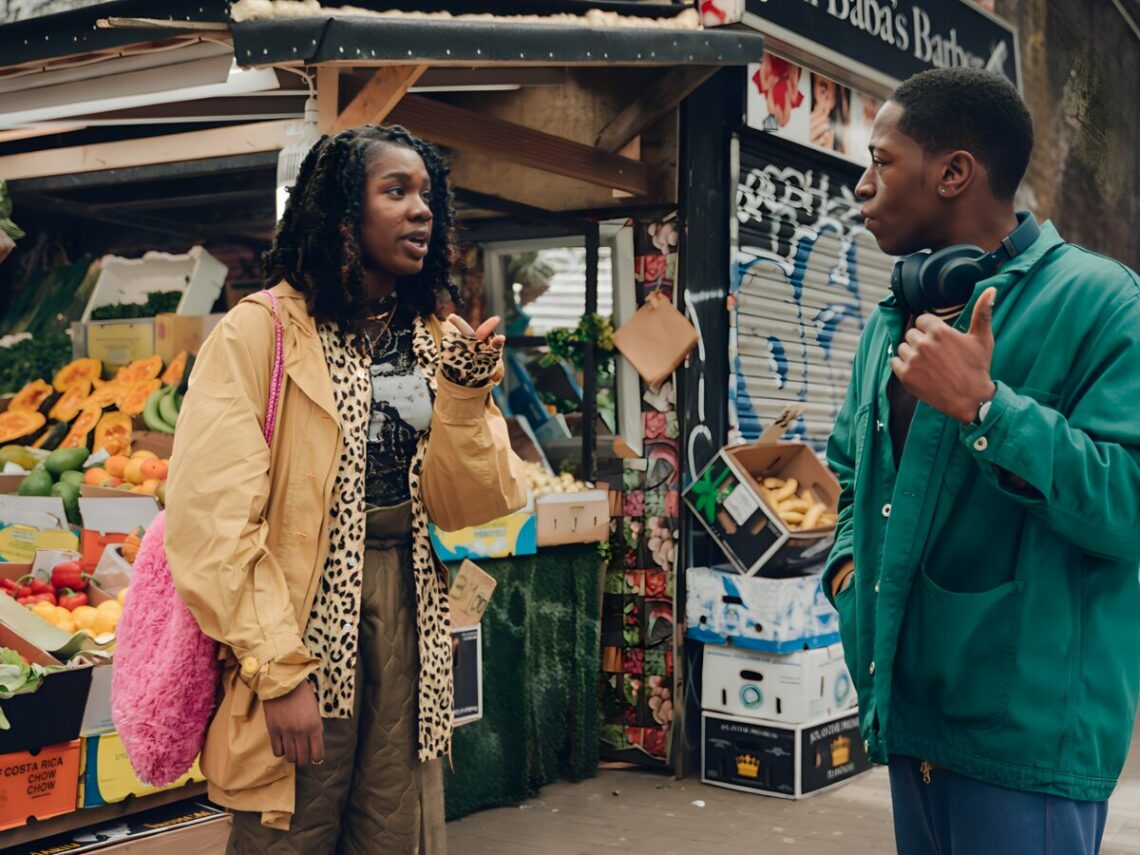
Set in modern-day Peckham, south London, the brand-new gem of British romance tells the story of Dom (David Jonsson), an introverted and recently heartbroken young man, and Yas (Vivian Oparah), a flamboyant woman who has just come out of a recent relationship herself. Meeting on either side of a toilet cubicle, the pair spark up an unlikely friendship and embark on an eventful day across the city, taking in the galvanising energy of their surroundings.
Starting off in Rye Lane Market, Peckham, the duo strut the streets, soaking in the city, with Allen-Miller keeping a steady rhythm to the film that well emulates the buzz of the capital itself. From the Rye Lane Market to Morley’s Restaurant to Brockwell Park, this energy is sufficiently sustained from the start of the film till the very end, with screenwriters Nathan Bryon and Tom Melia extracting a nuanced truth about the spontaneity of the city, thanks to a number of visual gags constantly firing in the background.
As much as Dom and Yas are the film’s main characters, they are also used as vehicles to explore the filmmaker’s main interest; the sight, sound and spirit of London.
“I really wanted to write a love letter to south London,” Allen-Miller told the BFI, “I hear people say it and I’m always like, ‘It’s cheesy’ – but it’s true, south London is a third character in the film. It was really a no-brainer: ‘I’m going to do this and it’s going to be in the ends’”. Inevitably, this led Rye Lane to become an advocate for the diversity and vigour of south London, with the director adding: “Production designer Anna Rhodes and I were like, ‘Everything has to be in south London. Let’s try and support all our businesses.’ That was important for us, to celebrate place”.
It should come as little surprise then that Allen-Miller looked towards the Swedish auteur Roy Andersson for inspiration about how to make the most of each and every frame, with the director behind 2019’s About Endlessness being known for his busy cinematography and careful pacing. “I love shots that are almost static and composed and playing to the frame. His work really inspires me,” she states, “He can do something that looks amazing but is also very funny. That’s something that I’m really interested in: making the filmmaking emphasise the comedy”.
The result is a film that pulses with energy, perfectly reflecting the vitality of south London, illustrating the many idiosyncratic individuals you come into contact with during a stroll through the markets, art galleries and suburbs. Avoiding pessimistic attitudes towards the city, which are often explored throughout art cinema, Rye Lane celebrates the city in all its glory, showing a city that oozes style, colour and creative freedom.
