


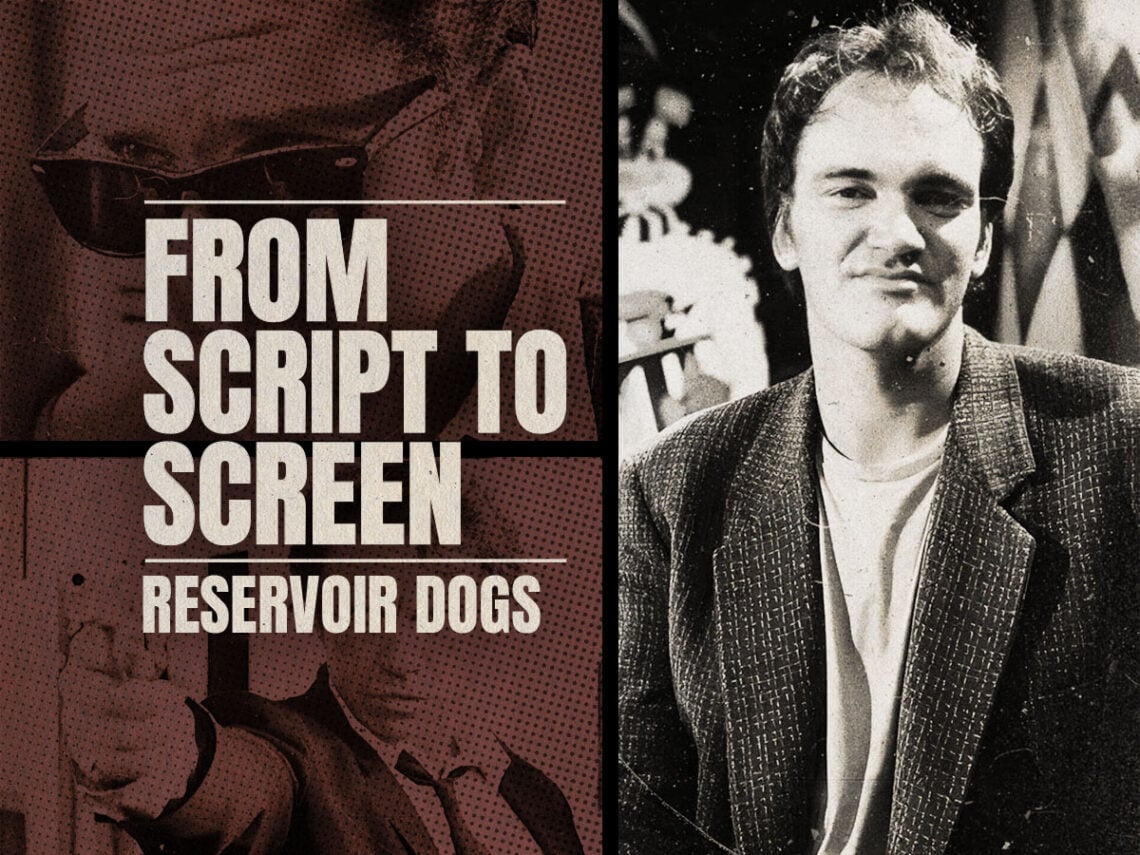
From Script to Screen: the making of Quentin Tarantino movie ‘Reservoir Dogs’

Quentin Tarantino’s roaring masterpiece of a debut, Reservoir Dogs, still remains one of the strongest films that a writer/director has released straight out of the gate. Before its release, Tarantino was just a little-known video rental store worker in his hometown of Los Angeles. By day, he stacked shelves. By night, you would find Tarantino tinkering away at scripts as well as struggling with the rejection from Hollywood he had faced.
Reservoir Dogs is nothing if not for its characters, and after over 30 years of being played across thousands of cinemas and millions of homes, you can still clearly picture the stoic Mr White, the obnoxious Mr Pink and the sadistic and deranged Mr Blonde. The intense, heart-racing scenes are always soundtracked by a 1970s bubblegum pop soundtrack, which counteracts the film’s darker and seedier moments allowing for a breath of fresh air.
Reservoir Dogs birthed a new wave of independent cinema in the 1990s, with the film going toe-to-toe on its release with the likes of The Bodyguard and A Few Good Men. Despite these strong releases, it still managed to have every head in the industry diving through archived scripts in search of anything written by this gawky, unknown ‘Tarantino’ who had made the best film of the year out of nowhere.
However, this wasn’t Tarantino’s first foray into the industry. He had been determined to become an actor from a young age but felt a strong disconnect with the other actors in his class. He said that he felt more possessive over movies than others seemed to, which made him lean towards filmmaking. In 1987, he attempted to shoot his very first movie, My Best Friend’s Birthday, but this remains largely unfinished, although plenty of the dialogue was repurposed for another Tarantino-written screenplay, True Romance. The experience he had directing this film completely crushed his confidence, and he kept at the video store where he worked for five years. He later called working there his form of “artistic expression” as he would curate his own personal shelf, which he deemed a “semi-film festival”. Noticing that the heist films he displayed were flying off the shelf and recognising there hadn’t been a good heist film in so long, sparks flew in his mind. What about a heist film where you don’t get to see the heist?
Ignited by this unique idea, he went out and bought felt-tip pens and a notebook, deeming that “true poetry can’t be written on a computer”. After only three-and-a-half weeks of writing, he turned to his partner in crime and future producer Lawrence Bender, asking what he thought. Lawrence was enchanted by the script, really enthusing to Quentin that they could make something of this and began passing the script down a chain which eventually landed in the hands of Scorsese-favourite Harvey Keitel (Bender’s acting teacher’s wife knew Keitel).
Tarantino returned home one evening with an answering machine message from Keitel, declaring his adoration of the script and his intentions to star in it and get it made. The filmmaker later said that while Keitel’s dedication to script didn’t solicit blank cheques from studios, it gave them a level of legitimacy that he and Bender didn’t have. Keitel was desperate to find new actors perfect for the script, so he paid for Tarantino and Bender to meet with a casting agent friend of his in New York, covering flight expenses and a hotel. It was in New York they cast Buscemi as Mr Pink, a role Tarantino had earmarked for himself.
Tim Roth, coming off a BAFTA award as ‘Most Promising Newcomer’, had been sent the script by his agent with a note on the script simply saying, “what do you think about Orange?”. Roth didn’t want to read for the director, rather urging him to view his other works and make the decision based on those. Tarantino, Keitel and Roth all went out drinking one night in LA, and after several hours of intoxication, Roth and Tarantino read the script together in the former’s apartment over more beers, and the actor agreed to the iconic role of Mr Orange.
With the main cast assembled, they were ready to shoot the film. Monte Hellman, director of Ride in the Whirlwind and Two-Lane Blacktop, had been in very early talks to direct the script, but as his career was on a slight downward spiral, Tarantino stepped up to direct. Tarantino’s first time managing such a large production wasn’t smooth sailing and was plagued with woes, but he didn’t allow that to stop him from bringing his creative vision to life. One of these was that Laurence Tierney, Joe, was a nightmare on set, and his lack of professionalism led to altercations with Micheal Madsen and Tarantino himself.
After the film premiered at Sundance and was picked up by Miramax, Harvey Weinstein, the former Hollywood producer and convicted rapist, pleaded with Tarantino not to include the famous ‘Stuck in the Middle With You’ torture scene, but Tarantino stuck to his guns. Had Weinstein gotten his way, the film would have lost its most iconic moment.
The success of the box office led to the film more than doubling its $1.5million budget domestically while garnering even more financial success in Europe, especially the UK. It allowed Tarantino to never return to the infamous Video Archives, go and write arguably the greatest film of all time, and become a permanent filmmaker who would continue to shape pop culture forever.

Never Miss A Take
The Far Out Quentin Tarantino Newsletter
All the latest Quentin Tarantino content from the independent voice of culture.
Straight to your inbox.