


How did Primavera become the world’s most celebrated festival?

Not long after the voluntary litter pickers have pierced every crumpled Tuborg on the end of their sticks during a hungover Monday shift at End of the Road, anticipation for the UK’s season of festivals can start in earnest, not long after Dorset’s bookend of the British music calendar. In the case of Glastonbury, military operations may well have already been drawn up by eager ravers and musos in preparation for the adrenaline-fuelled, panic-stricken exercise in nabbing those golden deposits a solid eight months in advance.
It’s also most people’s financial lot. With tickets typically a few hundred quid, coupled with the spending on site and camping gear lugged to some far-flung corner of the country, it’s becoming increasingly the case that one’s annual leave week is often a choice between a European city break or Bring Me the Horizon’s Main Stage Reading headliner. How about both? The UK has seen an explosion of acclaimed multi-venue jamborees across the last ten years, from Bristol’s Simple Things, Manchester Psych Fest, Cardiff Music City Festival, and Brighton’s The Great Escape—now an option again, having severed their sponsorship links with Barclays last year.
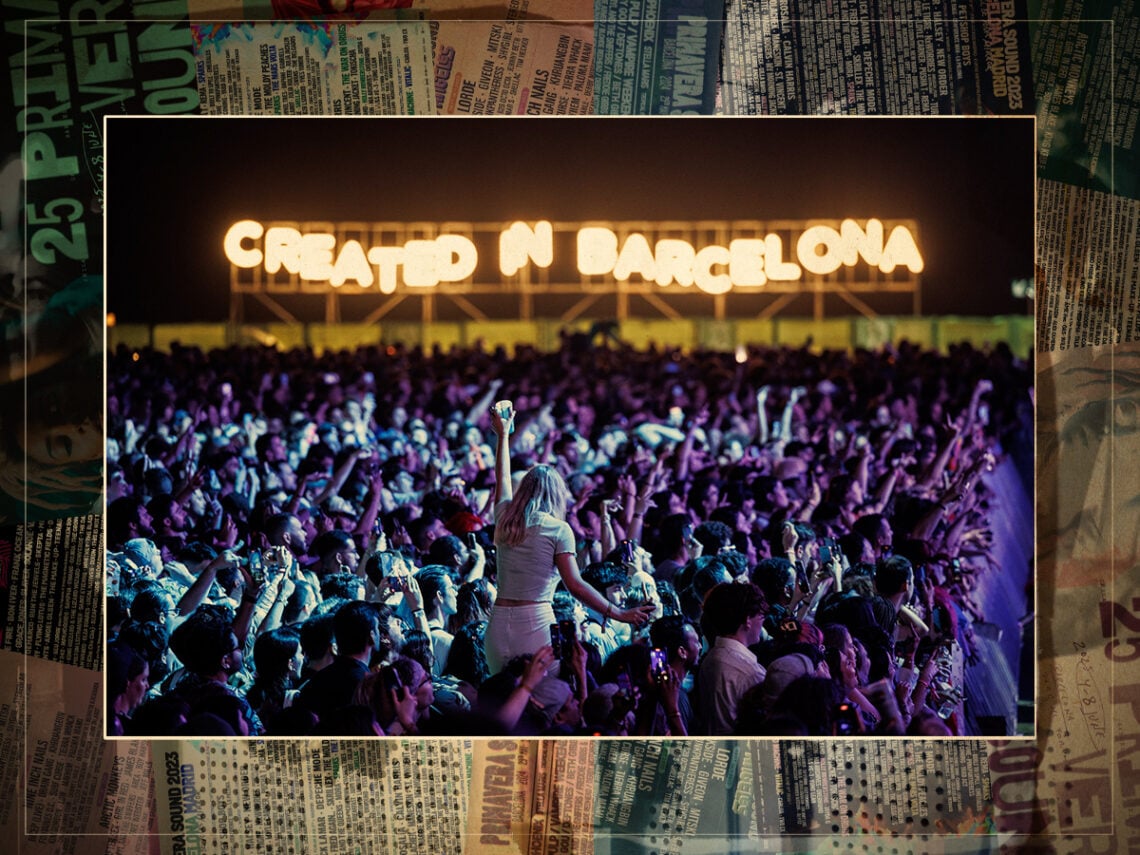
The contemporary standard for the city music festival is Barcelona’s Primavera Sound. Taking cues from America’s Lollapalooza touring monster in the 1990s, Primavera’s annual descent upon Parc del Fòrum’s seafront park has thrust the festival to one of the key music events of the world, as well as overseeing sister events and boasting a bespoke record label. With this year’s festival featuring Charli XCX, Sabrina Carpenter and Chappell Roan as the headliners above a plethora of huge names in the world of alternative, dance and pop, Primavera’s global prestige marks an extraordinary success story from its humble beginnings.
On April 9th, 1994, Gràcia’s KGB venue participated in a seven-weekend series of concerts celebrating the local indie scene, featuring upcoming names of the day like Australian Blonde, Beef, Penelope Trip, and Patrullero Mancuso. Dubbed Primavera Sound—translating as “Spring’s sound” in English—the promotional banner persisted throughout the decade, exchanging various management hands before falling into the orbit of Inane Records honcho and later Nast club director Pablo Soler. Having specialised in noise acts, Soler organised the first official Primavera in Montjuïc’s Poble Espanyol in 2001, across four stages and boasting Armand van Helden, Carl Craig, Los Planetas, and UNKLE on its billing, already diversifying its programme.
Soler’s vision would only grow. Across the next three years, line-ups would expand and stages would be added to accommodate the upstart Primavera’s swift rise on the European music map. With a veritable array of artists that truly straddled the spectrum of mainstream and underground—pulling in the likes of Dizzee Rascal to Swans frontman Michael Gira—Primavera’s 2005 upgrade to the Parc del Fòrum blew the festival size sevenfold and introduced The Auditori for indoor sets better suited to acoustic and downbeat performers.

The event that surrounds Primavera began to reach beyond its official parameters by 2008. Organising official Primavera a la Ciutat nights across Barcelona, the drum-up to the main event would be smattered with club nights or smaller shows across the week til the main weekend. Following Neil Young‘s 2009 coup booking, Soler had pushed Primavera to an international festival go-to that rubbed shoulders with Glastonbury or Benicàssim for the musical bucket list.
By the arrival of the 2010s, Primavera was a well-established puller of music’s biggest names, yet, alongside its world-class programmes, Soler sought to innovate the festival industry too. Labelled “The New Normal”, 2019’s Primavera led the way in tackling the typical gender imbalances that plagued the festival circuit, with over half of that year’s billing female-fronted, a booking ethos they’ve maintained ever since. Primavera also pioneered mobile-only tickets, an effort to curb scalping while also committing to environmentally sustainable business practices.
Primavera’s grown into an international operation of late. While efforts in London were dashed and many other cities are now defunct, Portugal’s edition in Porto’s Parque da Cidade has become another success story, taking place a week before the Barcelona main event and hosting all three of its headliners. São Paulo, Buenos Aires, Santiago de Chile, and Los Angeles have all hosted Primavera events in some fashion, Paraguay’s Asunción event witnessing The Cure’s first-ever show in the country.
As with any creative enterprise which balloons to such industry heights, a corporate proximity to some of capital’s most villainous giants does call Primavera’s integrity into question. While official champions of the Bono Cultural Joven initiative – a grant for Spain’s youth to access the arts and cultural activities -officially parading Amazon Music as a streaming partner severely undermines any efforts to ensure equitable and viable paths into music by engaging with such a ruthlessly exploitative company. Listing Coca-Cola as a collaborator, the beverage company’s commercial activities in the occupied territories of the West Bank surely implicate the festival in Israel‘s global culture-washing?
Whatever its future, Primavera looks here to stay. Swiftly establishing itself as a festival giant through economic crises and pandemic closures, the recent co-director Alfonso Lanza should be inspired by Primavera’s pioneering spirit and steer the festival in a direction that meaningfully protects culture and the arts in a corporate industry, as well as arrange knockout programmes. “…(we want to be) able to cater for everyone from younger fans, underprivileged kids, and those who are 70 years old,” Primavera press head Marta Pallerès extoled at the 2024 International Festival Forum keynote.
“I want girls, guys, everyone to come and see their favourite artists!”
