


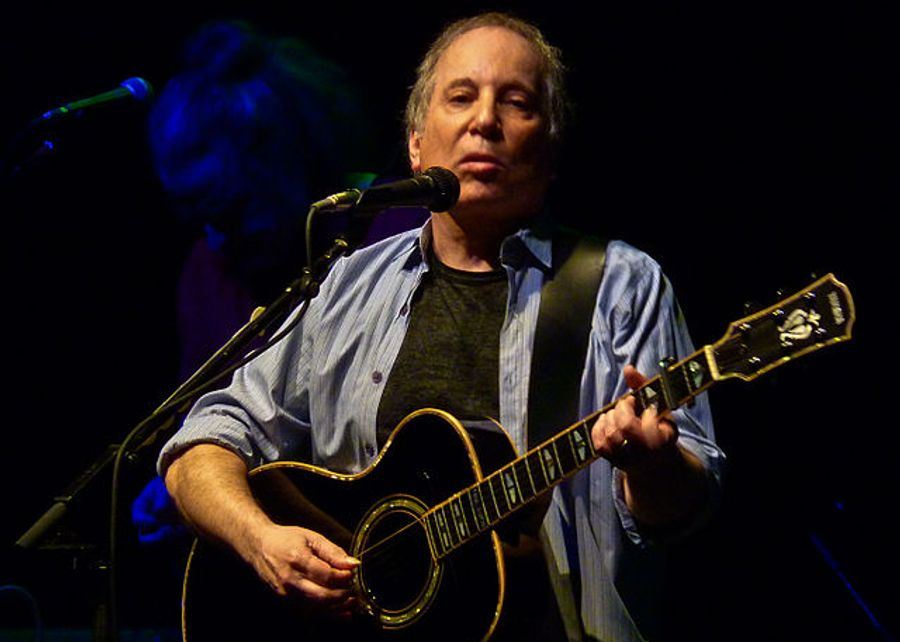
How Paul Simon used the influence of the Bible to write ‘The Boxer’

Paul Simon has an extensive oeuvre, brimming with many iconic moments that rank amongst the finest of his generation, with the Newark native possessing a knack for writing catchy but thought-provoking songs that fuse folk instrumentation with sugary pop melodies to create a sound that has inspired many, including his equally eminent peers such as Nick Drake and Graham Nash.
Given his long career and propensity for experimentation, Simon has a wide variety of different songs. Understandably, this ranges from the straight-up-and-down folk of his early years to the heady world music of his 1986 album Graceland. The record was such a success that even boomers such as my Gilbert and Sullivan-loving grandfather picked up a copy and, it has to be said, still cherishes its sunny wonders to this day.
A master wordsmith and musician, Simon is so revered that The Beatles tried to emulate his style on one of their most significant pieces, a latter cut that never fails to pull on the heartstrings.
Espousing an extensive degree of self-awareness, this internal battle impacted the success and decline of Simon’s career before he went solo. In the folk duo Simon & Garfunkel, a tempestuous but consequential act that delivered a range of quintessential 1960s cuts that ranged from countercultural anthems to film soundtracks. Fusing the influences of Lead Belly, Woody Guthrie, and The Everly Brothers, the pair’s back catalogue is one of the most glittering of the period, with the majority of this down to the brilliance of Paul Simon.
One of the best songs the duo released courtesy of Paul Simon is 1969’s ‘The Boxer’ from their fifth studio album, Bridge over Troubled Water. Complete with one of Simon’s best guitar performances, it is famous for the dream-like story it tells by switching between a first-person lament and a third-person description of the titular sportsman.
During a discussion with Playboy in 1984, Simon explained the song’s origins, revealing that it is somewhat autobiographical, with the track acting as a defiant message to his critics.
“I think the song was about me: everybody’s beating me up, and I’m telling you now I’m going to go away if you don’t stop,” he expressed. “By that time we had encountered our first criticism. For the first few years, it was just pure praise. It took two or three years for people to realize that we weren’t strange creatures that emerged from England but just two guys from Queens who used to sing rock ‘n’ roll. And maybe we weren’t real folkies at all! Maybe we weren’t even hippies!”
However, the most surprising reveal came afterwards, when he said that some of its lyrics were inspired by a Bible that he read when travelling on a plane. “I had taken a Bible from one of the hotels. And I was skimming the Bible,” he said. “That’s where I think phrases such as ‘workman’s wages’ came from, and ‘seeking out the poorer quarters.’ That was biblical”.

Never Miss A Beat
The Far Out Beatles Newsletter
All the latest stories about The Beatles from the independent voice of culture.
Straight to your inbox.