


How one serial killer inspired three fictional horror villains

The horror genre is home to the most visceral real-life terrors, from apocalyptic plagues to psychotic serial killers, with the very best terrifying tales going on to inspire countless imitators. Evidence of such came in 1978 when John Carpenter released Halloween and started a whole sub-genre of horror in the following decade, with the likes of Freddy Krueger and Jason Voorhees thriving with as much popularity as modern-day superheroes.
These movies were undoubtedly created in direct response to the real-life horrors on display in America throughout the preceding 1970s, with race riots raging and the Vietnam war coming to a bloody end. Stabbing at the national zeitgeist to awaken a new dawn for horror cinema, filmmakers such as John Carpenter, Wes Craven and Tobe Hooper exposed the facade of American peace, justice and liberty, opening the door for an influx of nasty cinematic villains.
Indeed, many of these aforementioned villains became popular icons as they hacked and slashed their way through hordes of young teenagers, only to see their constant demise at the hands of a plucky ‘final girl’. Handed countless sequels and spin-offs, as well as a bounty of strange merchandise, the emergence of such 1980s horror icons brought a new set of rules for the contemporary genre.
In addition to contemporary global atrocities, some horrors a little closer to home also inspired the horror genre in the late 20th century. More specifically, the serial killer Ed Gein, who terrorised rural Wisconsin in the 1950s and stole women’s corpses for his own grisly anatomy study, became the inspiration for several influential names of the horror genre, whose barbarity only marginally compared to the real-life killer.
The first movie he influenced was way back in 1960 when British filmmaker Alfred Hitchcock made his iconic genre flick Psycho. Starring Anthony Perkins and Janet Leigh, the movie is based on Robert Bloch’s 1959 novel of the same name, which itself was inspired by the murderer and grave robber Ed Gein. The similarities between Gein and Perkins’ Norman Bates in the movie are similar too, with both men being solitary murderers who had domineering mothers and dressed in women’s clothes.
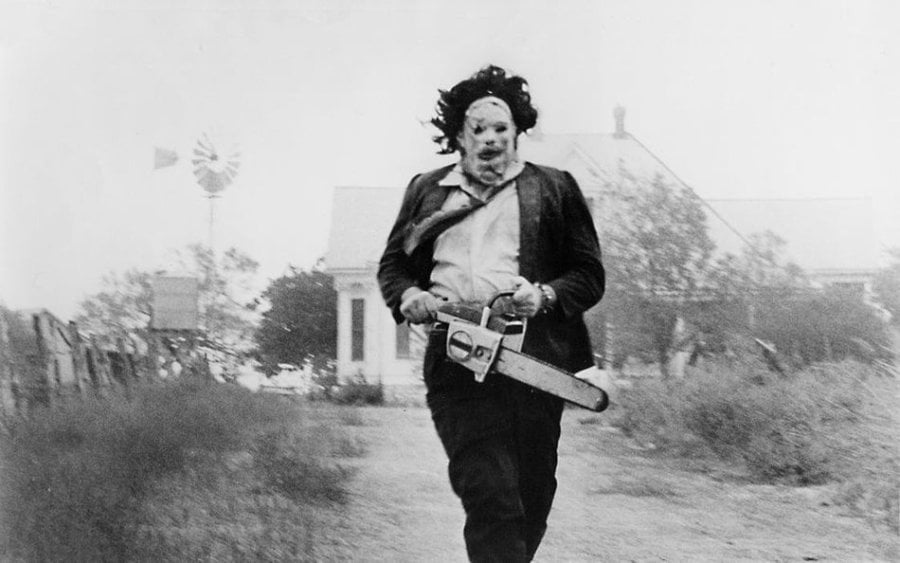
The second film to be directly inspired by Gein was the 1974 Tobe Hooper movie, The Texas Chainsaw Massacre, a horror that is often considered to be the greatest of all time. Influenced by Gein, Hooper was developing a horror movie in the early 1970s when he began researching the details of the serial killer, eventually crediting his crimes for the plot of his horrific classic.
Jonathan Demme’s iconic horror thriller, The Silence of the Lambs is the final serial killer flick to have taken direct inspiration from Gein, also drawing details from the lives of Ted Bundy, Gary Heidnik and Ed Kemper to create the Oscar-winning movie. A direct nod to Gein can be seen in Buffalo Bill’s obsession with female human flesh in the movie, making suits out of his victims’ skin, just like Gein.
