

45 years later and ‘The Man Who Fell To Earth’ is as divisive as ever
Read More


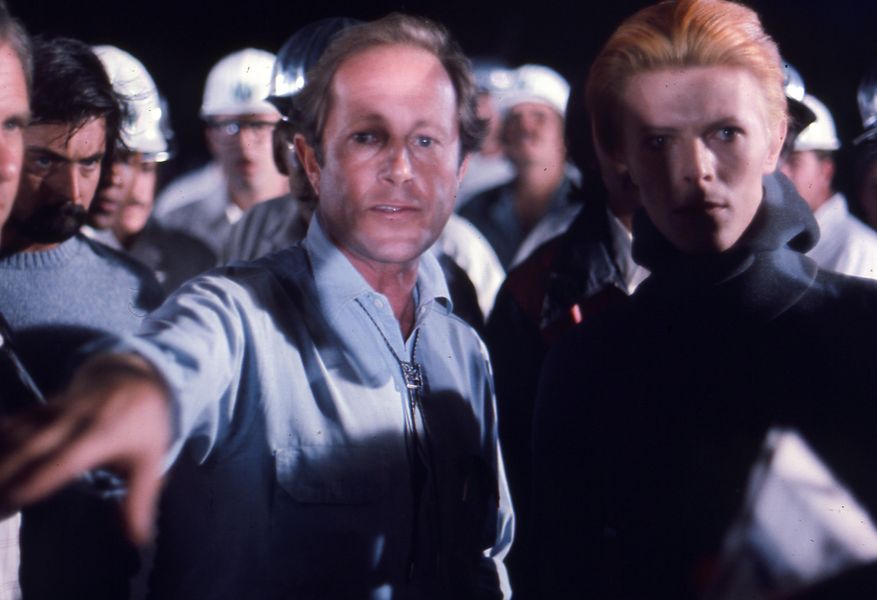
The Man Who Fell to Earth, Nicolas Roeg‘s 1976 science fiction film is most noted for David Bowie’s unsettling performance as the extraterrestrial Thomas Jerome Newton who lands on Earth seeking a way to export water to his planet that is experiencing a ruinous drought. Undoubtedly one the most surreal pictures of the decade, it has long been one of the most polarising films in Roeg’s filmography, as some regard it as preposterous, and at the very worst, pretentious.
Despite these criticisms, it remains a must-watch, as the Roeg-Bowie partnership is a fascinating one. Interestingly, at the time Roeg hired Bowie as Newton, the British musician was enduring one of his most testing times, locked in a phase of metamorphoses, transitioning from his breakout persona of Ziggy Stardust into the more refined Thin White Duke.
A deciding factor in this change was that Bowie was grappling with the effects of having achieved the level of fame he’d always graved, as well as an all-encompassing cocaine addiction, and together they were making the alter ego of David Jones crack mentally and physically, producing a stick-thin artist whose mind was clouded.
Luckily for Bowie, it was by pure chance that he was cast by Nicolas Roeg, and although he was continuing to take copious amounts of cocaine, the film turned out to be a saving grace, helping him to refocus. “I didn’t want an actor,” Roeg would later say. “I wanted someone who had the possibility of being unique.”
Roeg got the most unique person on the planet. He first saw the pale-skinned, alien-looking Bowie in a television documentary one day when browsing the channels. He was immediately struck by Bowie’s otherworldly presence. One segment of the documentary particularly affected him; it followed Bowie riding around in a limo, drinking milk from the carton, and watching the world go about its business from the window. It was possibly the most isolated account of modern human existence that the director had ever seen.
Recalling this moment, Roeg explained: “(Bowie’s) actual social behaviour was extraordinary—he hardly mixed with anyone at all. He seemed to be alone—which is what Newton is in the film—isolated and alone.”
By pure chance, Roeg had found the man to play Newton, and a copy of the script was sent to Bowie and a meeting arranged. However, getting him to commit to the project wasn’t easy.
Roeg arrived on time at the meeting in New York where Bowie was working on his latest album. He was told that Bowie would be finished at ten o’clock, and was asked to be there a half hour prior. He ordered a couple of Martinis and wondered where in world he’d ended up as a myriad of intriguing characters came and went.
There was no sign of Bowie at ten, but Roeg received a phone call assuring him that the musician would be there by eleven. He waited till half past, then till midnight, until he was finally informed, “He’ll be with you by two.”
Then he arrived. It was five in the morning. Looking at him through a haze of tiredness and Martinis, Roeg thought that the pale Bowie was odd-looking. Regardless, he got down to business. He enquired about whether the musician really wanted to do the film and asked him for his thoughts on the script and certain scenes.
Of course, Bowie was keen. He’d recently made headlines when speaking to Tina Brown from the Sunday Times, explaining why he’d left the UK for Los Angeles in the hope of ditching music for the film industry. “Me and rock-and-roll have parted company,” he told her.
“Don’t worry, I’ll still make albums with love and with fun, but my effect is finished. I’m very pleased. I think I’ve caused quite enough rumpus for someone who’s not even convinced he’s a good musician. Now I’m going to be a film director”, Bowie maintained. “I’ve always been a screenwriter, my songs have just been practice for scripts.”
His foray into film came, but it wasn’t from behind the camera, but in front of it. He appeared keen, agreeing with the ideas about the film that Roeg put forward. However, he was also very nervous. He agreed to do the movie, but was trying his best to hurry Roeg out of the studio as he was worried that the director might realise that he hadn’t actually read the script.
Luckily for both, Bowie eventually read the script. After watching Roeg’s celebrated 1971 survival film Walkabout, he decided he was ready to commit fully. The Man Who Fell to Earth became one of the highlights of both his and Roeg’s careers.
