


How much did a synthesiser cost in the 1960s?

Placing the means of musical production in the hands of the artistic proletariat, the advent of the synthesiser changed music and musical expression forever. Allowing artists to simulate the sounds of an entire orchestra, in addition to experimenting with countless otherworldly, futuristic sounds in the process, synthesisers inspired something of a cultural revolution when they were first introduced to the mainstream market back in the 1960s. But just how accessible were these anachronistic new instruments back in their early days?
Although the synthesiser had various precursors and influences – including the Telharmonium of the late-19th century or, perhaps most notably, the Hammond Organ, which emerged during the mid-1930s – it wasn’t until the late 1950s that the first bona fide, working synthesiser was created. Completed in 1957 at Princeton University in New Jersey, the RCA Mark II Sound Synthesiser was a huge beast of a machine and was predominantly used by researcher Milton Babbitt at the Columbia-Princeton Electronic Music Center. The world would have to wait a few more years before the first truly commercial synthesiser emerged.
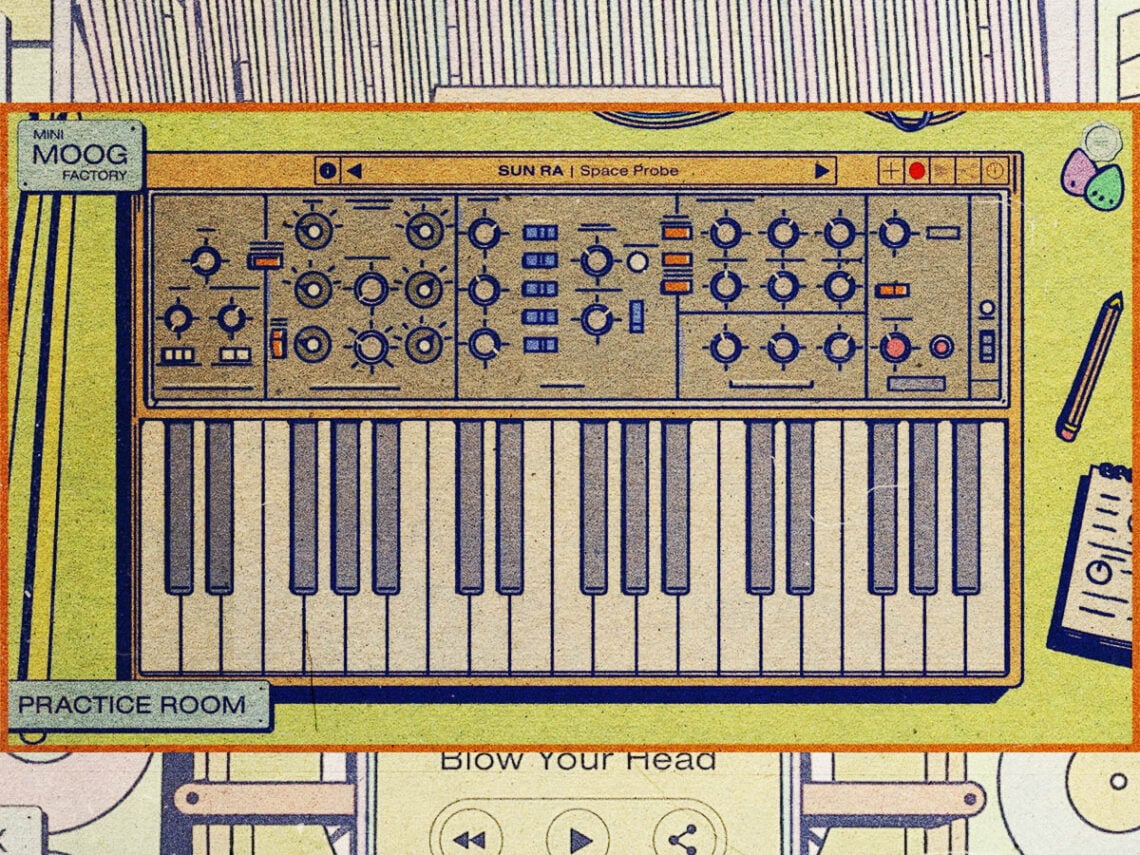
The introduction of the Moog Synthesiser in 1964 truly changed the game. Developed by Robert Moog using a modular system, the synthesiser was much smaller than previous models, including the RCA Sound Synthesiser, and had much more potential as an instrument rather than a tool for electronic research. Almost immediately, the Moog was adopted by a wealth of different artists, all hoping to imbue their work with a new, never-heard-before electronic influence.
Within only a few years of its initial release, the distinctive sounds of those early Moog synths could be heard in everything from The Beatles’ Abbey Road to Mort Garson’s The Zodiac. Other early adopters of the pioneering electronic sounds included The Doors, The Rolling Stones, Grateful Dead, and Sun Ra, among countless others. Not to mention the colossal importance of Moog synthesisers on the world of progressive rock, which began to emerge around the turn of the 1970s.
Robert Moog reportedly set out to make his synthesisers accessible to as many artists as possible, and, unlike most new technologies within music, artists seemed to take to the instrument immediately. Nevertheless, the inaugural model carried a pretty hefty price tag upon its release.
The high price of innovation: Was the synthesiser really accessible?
In the modern day, you can pick up a second-hand Moog with relative ease, with prices ranging from a couple of hundred pounds to a couple of thousand, depending on the specific model and year of manufacture, but the original pricetag back in 1964 was an eye-watering $10,000.
Although this price made the Moog much cheaper than previous models of synthesiser, which fetched six-figure sums in many cases – hence why they were most often used for research, rather than by artists and musicians – it is difficult to view the price as being particularly ‘accessible’ to ordinary musicians. After all, $10,000 in 1964 is roughly equivalent to $100,000 in 2025, when adjusted for inflation. For that price, you could get a pretty nice grand piano, never mind a synthesiser.
Still, the price was affordable enough for certain studios and successful artists like The Beatles to view the Moog as a worthy investment. Inevitably, as technology progressed and more models of modular synthesisers were introduced, prices eventually came down, making the instrument much more accessible to grassroots artists. In fact, this newfound accessibility led to the formation of entire music scenes, such as the synthpop revolution of the late 1970s and early 1980s, which helped to change the landscape of pop and electronic music forever.
