


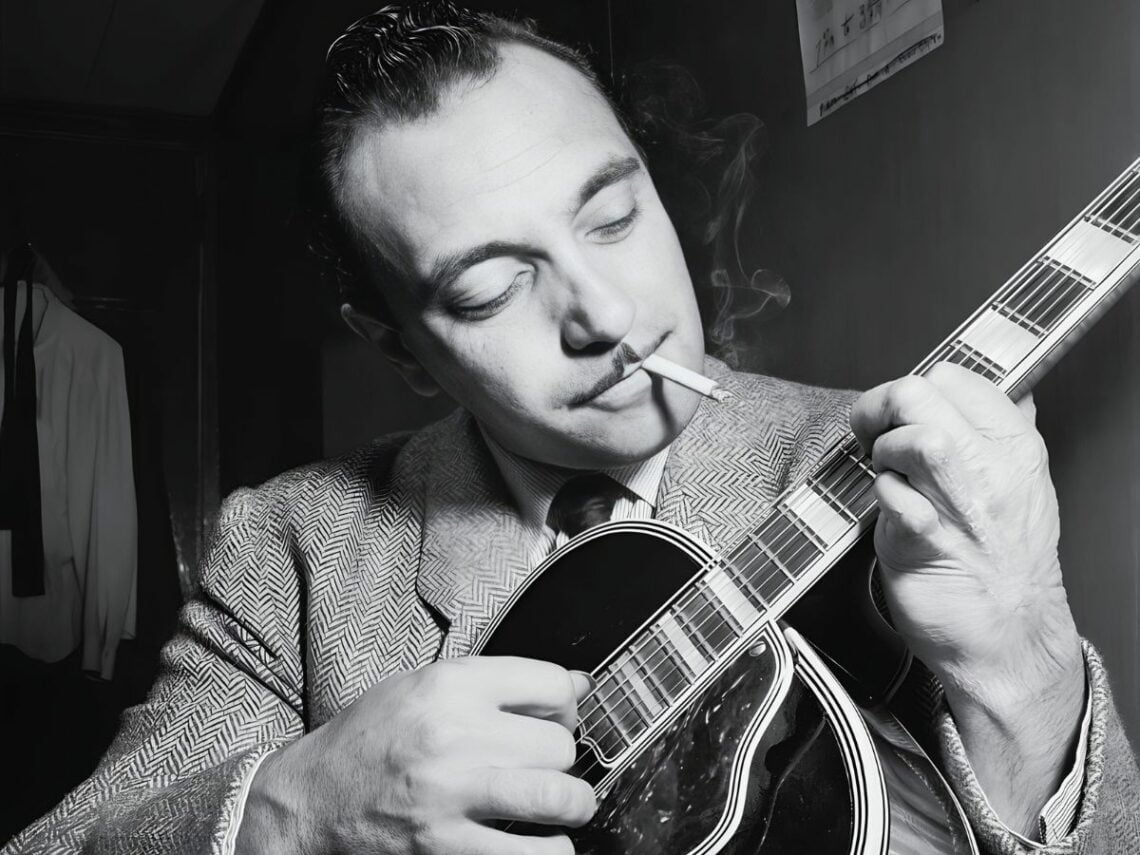
How losing two fingers shaped Django Reinhardt’s influential career

Many musicians have needed to overcome adversity to make it as big, and even more people had excellent talent but never rose to the levels they should have done due to circumstances beyond their control. One of those musicians was nearly Django Reinhardt, who, on the brink of stardom, suffered life-changing injuries.
Reinhardt was a Romani-Belgian jazz guitarist on the front foot of jazz as it left America and went through Europe. Reinhardt had an upbeat playing technique that sold out dancehalls throughout Paris. He was loved by fans of jazz and the legendary players who were currently making their way through Europe, so much so that they asked him to join them on tour.
Every band leader who heard him play wanted to make him a part of their outfit. People would fight and try to outbid one another to get him to play with them. At just 18, it was clear that Reinhardt was destined for greatness. Then, one fateful night nearly proved to be the end of his career.
He returned to his camp after a show, and a candle flickered. It fumbled, fell to the ground, and everything went up in smoke. Django was caught up in the blaze and, after waking up in hospital, was left with only three working fingers on his left hand.
He wasn’t used to playing with only three fingers, of course, and given he was becoming famous for an upbeat and exciting playing style, Reinhardt found it tremendously difficult to carry on with less reach over the neck of the guitar. It looked as though he would have been lost and that his dream of stardom would have remained just that, a dream, but Reinhardt was a different kind of musician and determined to keep playing.
He couldn’t play how he used to; it was up to him to discover a new style with his new-found limitation. In doing so, he discovered various harmonies and melodies that he could play with just his three working fingers. He created never-before-heard licks, riffs and chords as a result, not only continuing with his upbeat style but now providing a unique sound. He became one of the most loved jazz guitarists in the world and inspired many more after him.
When Tony Iommi lost three fingertips when working in a sheet metal factory, the story of Django Reinhardt encouraged him to relearn the guitar and continue playing. In short, we would have never had any Black Sabbath had it not been for Reinhardt.
He also inspired Willie Nelson, not in his ability to relearn, although that no doubt will be a story Nelson holds dear, but the unique sound of his guitar is what the country musician set to achieve when putting together his iconic guitar, ‘Trigger’.
For Django Reinhardt to overcome his accident in the way that he did is a testament to him as a player and a contributing factor to how music has been shaped ever since. A lesser musician would have called it a day after the fire, but not Django and the world of music has nothing to do except thank him for it.
