


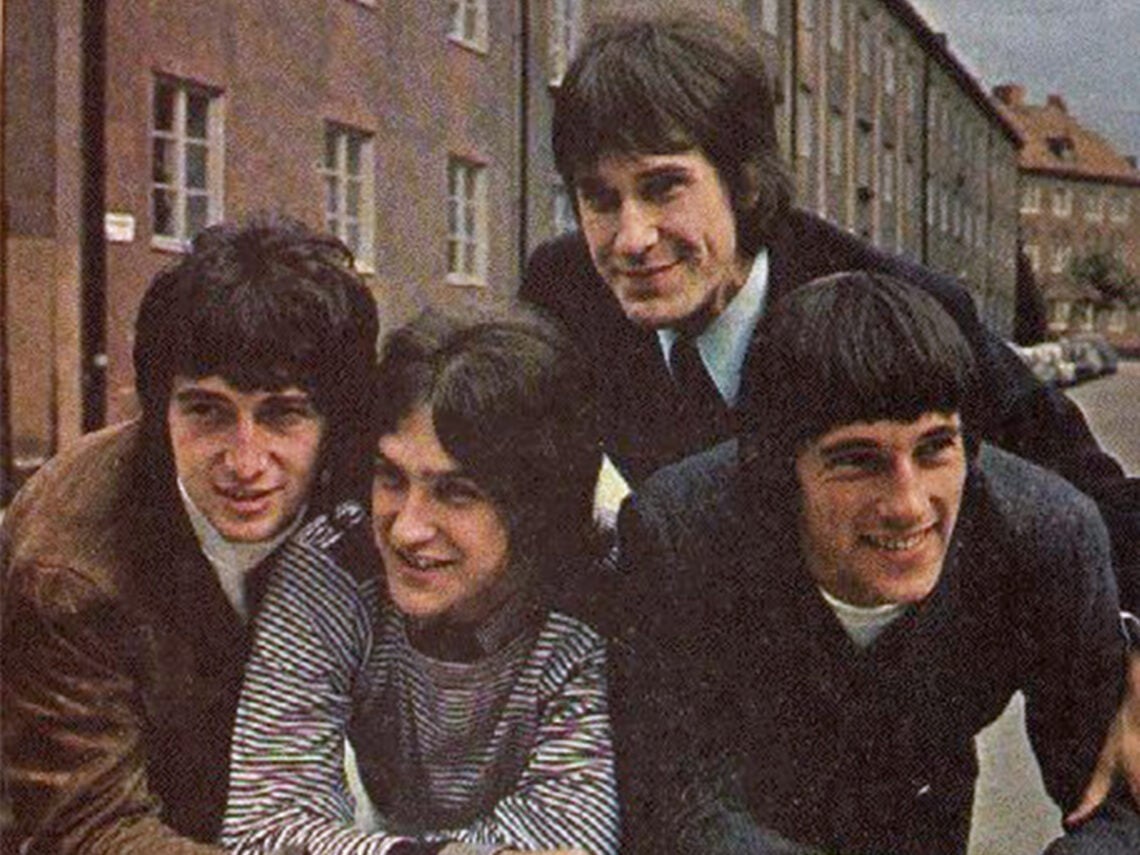
How a London train station inspired The Kinks’ greatest song

Despite already standing as one of the era’s most celebrated songsmiths, by 1967, The Kinks frontman Ray Davies cared little for much of the counterculture’s heady trajectory away from the country he knew and loved.
He was too much of a dyed-in-the-wool Anglophile to allow himself to be swept up in the day’s lysergic pop explosion. While the surrounding psychedelia brewed in the UK was still often tethered to a firmly English plain, from Small Faces’ surrealist theatre, early Pink Floyd’s eccentric charms of the Syd Barrett Mk I era, and The Beatles’ evoking the old music hall tradition on ‘Penny Lane’, Davies felt America’s cultural pull growing ever more pervasive.
His instincts weren’t wrong. Once pop’s LSD conjurings began to ebb in the charts, roots revivalism would shoo away the era’s trippy wanderings, following Bob Dylan’s John Wesley Harding example and yielding The Rolling Stones’ mine of Americana’s musical DNA, The Beatles abandoning colourful military band costumes, and the wider blues rock exploding across both sides of the Atlantic.
In response, Davies unleashed his ode to the English idyll with 1968’s The Kinks Are the Village Green Preservation Society, an album that dwells firmly across the hamlets and countryside of a romantic home counties untouched by the US’ cultural influence.
Such musical resistance had already been declared the previous year. Writing in his Muswell Hill semi-detached in London’s north, the surrounding leafy suburbia triggered a memory of his Fortis Road upbringing, when a spell at St Thomas’ Hospital for a tracheotomy as a boy resulted in the nurses wheeling Davies out to the balcony to overlook the River Thames.
The nearby Waterloo Station served as a key backdrop to Davies’ life. As well as the aforementioned hospital near the South London station, Davies allegedly used to pass the ornate façade when travelling to Croydon Art School, met his first wife Rasa Didzpetris along Embankment, and recalled another early memory of visiting 1951’s Festival of Britain along the South Bank.
Such nostalgic affection planted the lyrical seeds for what would stand as The Kinks’ defining number. Leading 1967’s Something Else by the Kinks, ‘Waterloo Sunset’s glittering whimsy would dream up a lyrical vignette of Terry and Julie, two lovers embracing beside the totemic Waterloo Station, so central to Davies’ life and daydreaming reverie. On one hand, it’s a love song, but Davies would later unveil the song’s utopian yearning years later.
“It’s about the two characters in the song and the aspirations of my sisters’ generation before me, who grew up during the Second World War,” Davies told The Independent in 2011. “It’s about the world I wanted them to have.”
The Kinks would continue to grow into a touring rock giant by the end of the decade, and Davies’ romantic songcraft would endure thirty years later as the Britpop generation all expressed a debt to the former R&B outfit. But ‘Waterloo Sunset’ sits inscribed in the London songbook with deeper authority, bottling all the magic that can occasionally strike every Londoner beginning to doubt the capital’s hectic pace and colossal size, reminding them why they’re there in the first place.
