


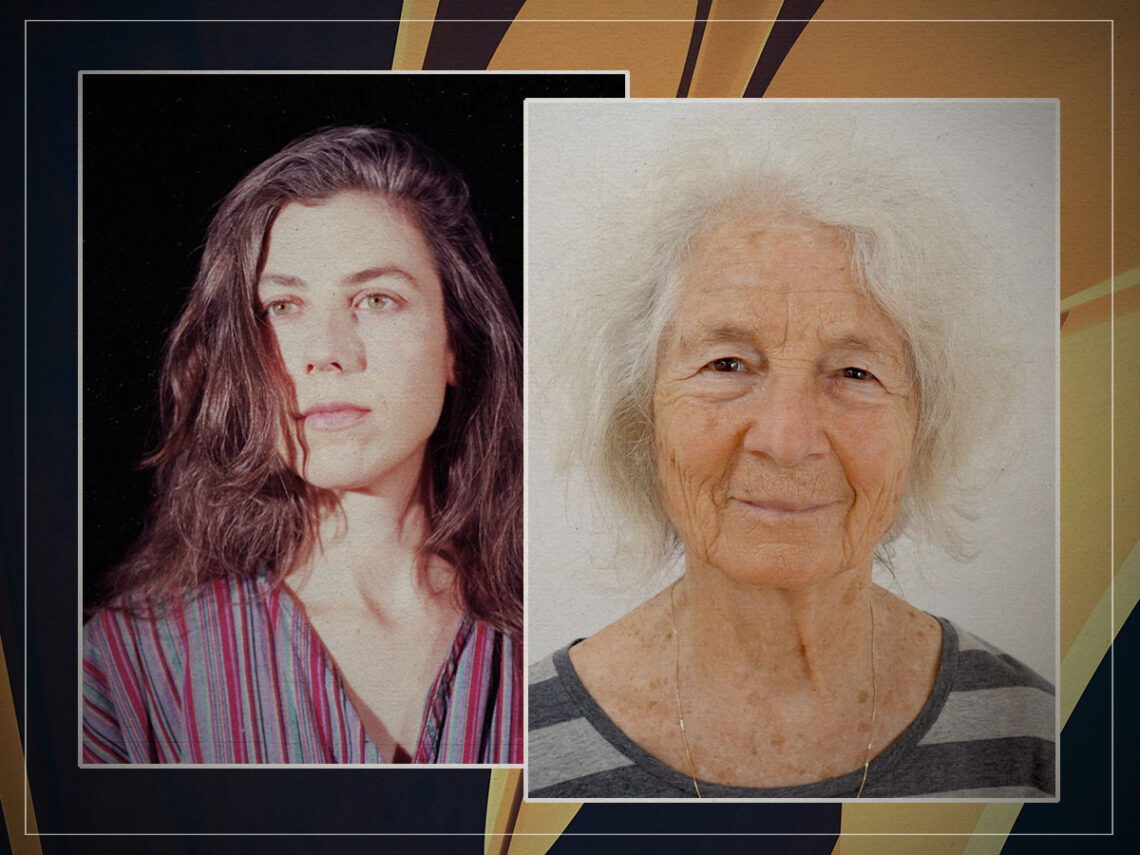
“So multifacted”: How Julia Holter was inspired by Simone Forti

Julia Holter’s work consistently dances between the borders of experimental pop and abstract composition, forged by her vast range of influences, much of which comes from outside the music world. One of these inspirations is Simone Forti, a postmodern artist, dancer, choreographer and writer, who has performed, exhibited and taught workshops all over the world since the 1950s. The connection between the two isn’t purely artistic but also personal.
Holter first encountered Forti’s work through her partner, composer Tashi Wada. His father, the late sound artist Yoshi Wada, had moved in the same downtown art circles as Forti in Los Angeles. When she returned to LA after some time away, Tashi made an effort to reconnect with her. That friendship eventually introduced Holter to Forti’s world, and it left a lasting impression.
“She’s so multifaceted,” Holter told Line of Best Fit in a recent interview. “She’s not just a dancer or choreographer – she’s a writer, a poet, a sound artist. Everything she does has this visual and sonic element. There’s a humour to it, too.”
That wide-ranging creativity came into full view in February 2020, just weeks before the pandemic brought live shows to a halt. Holter and Wada joined Forti onstage to perform some of her lesser-known sound works, including one piece featuring the ‘molimo’, a bendy, corrugated tube that Forti plays like a makeshift flute.
According to Holter, the tube looks like a shower hose, but thanks to Forti’s talent, it can transform into an incredibly complex musical instrument capable of producing rich notes and fascinating sounds. Forti’s ingenuity and prowess not only captivated Holter but also earned the artist fans all over the world.
For Holter, Forti’s use of humble materials and unrefined performance styles is deeply philosophical. There is no pretentiousness in the way she repurposes these everyday objects into tools for the creation of art, which hit Holter like a breath of fresh air and broadened her horizons when it came to what art could be.
One performance Holter recalls vividly is ‘News Animations’, in which Forti moves through a room while speaking freely about current events in a stream-of-consciousness style. According to Holter, it’s a brilliant blend of spontaneity and structure, which is a reflection of Forti’s deep thinking and bodily intuition. “I don’t know exactly how to explain it,” she says, “But it’s very poetic. It explores how we respond to things in an immediate way — like the impulses of the body — while still being thoughtful.”
Despite Simone Forti’s legendary status in the world of dance and performance art, her name rarely surfaces in music circles—something Holter finds both curious and unfortunate. Forti’s work, though not always musical in a traditional sense, offers a wealth of inspiration for musicians willing to look beyond the confines of their usual creative spaces.
In Forti, Holter found not just an artistic collaborator, but a visionary whose strange instruments and even stranger performances continue to shape how she hears and sees the world. Like Holter, there are many others who find the same value in Holter’s mesmerising art.
