


How Jonathan Lynn movie ‘Clue’ made hybrid cinema into art

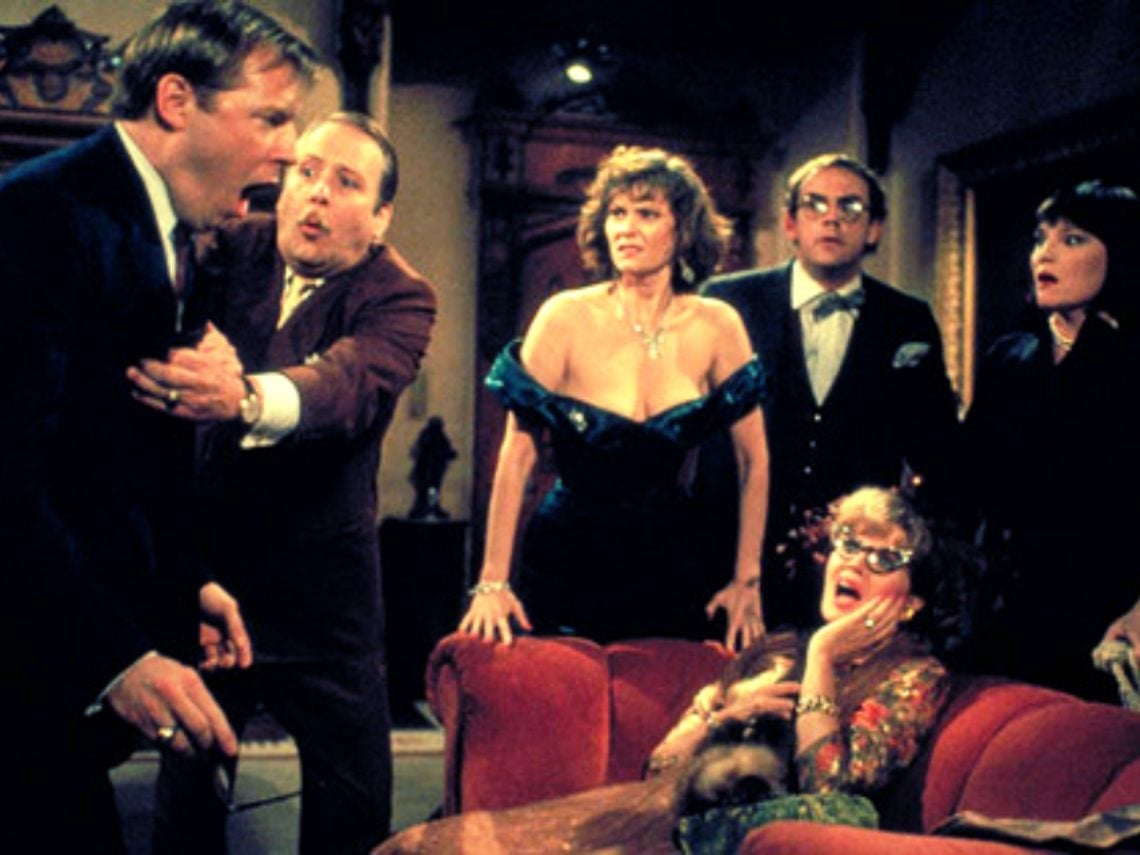
Clue is the 1985 mystery black-comedy film based on the iconic board game Cluedo, the three-to-six-player game in which players are tasked with finding out who murdered the game’s victim, where the crime occurred, and which weapon was used in the killing. Each player assumes the role of one of the six suspects and attempts to deduce the correct answer. The film adaptation’s ensemble cast, Eileen Brennan, Tim Curry, Madeline Kahn, Christopher Lloyd, Michael McKean, Martin Mull, Lesley Ann Warren, and Colleen Camp, fill the role of the game players. Clue was directed by Jonathan Lynn, who co-wrote the script with John Landis, with Debra Hill as the producer.
Due to the nature of the board game, the film’s initial release had three different endings. Each of the three endings is presented sequentially in the home media releases. While the movie initially received mixed reviews and failed to meet its budget of $15 million at the box office, it eventually became a cult hit, and Curry has often cited the project as one of his favourite performances. Clue is a prominent example of a hybrid genre film, where filmmakers fuse themes, iconography and elements to vary storylines and audience engagement. The film mixes a black comedic tone with a crime thriller style, making a joke out of its seemingly disturbing and unsettling content. Its direction, writing, performances and execution harmonise to illustrate its multiple genres and build from its peculiar source material.
Director Lynn initially viewed this transition from the board game to the big screen as challenging, sharing during an interview with Yahoo his thoughts when the industry approached him with the idea. “It struck me as absolutely nuts,” he revealed. “I thought, ‘How can you write a movie based on a board game?'” However, Clue‘s visuals and writing effectively utilised and illustrated the source of inspiration.
As expected in assembled cast-driven films, Clue exhibits an engaging and contrasting scope of personalities and outlooks, with its characters coming together in one space and being forced to work together to solve the mystery and survive. As inspired by the board game, the characters are each given false names formatted as Mr or Mrs, such as Mr Green and Miss Scarlet. These characters immediately demonstrate juxtaposition, with some being more extroverted than others. This clash in personalities is another source of hybridity, with comedy and suspense channelling through the interactions when needed for the plot. It is soon revealed that most of the guests work in politics, something that alludes to a residing conflict through a clash in political outlooks and the hypocrisies of politicians. Lynn expressed his approach to Clue’s political subtext, showing contrast in tone regarding seedy political figures getting caught up in blackmail. “I don’t know how else you can write about politics except treating it as comedy,” Lynn says. “It’s too awful otherwise. I think it’s the duty of comedy writers to make people laugh at those who want to govern us.”
Through poking fun at these political figures and their antics, Clue further crosses tones, as an element of critical satire ties in with the overall slapstick comedy and mystery elements.
Furthermore, Curry gives a terrific performance as Wadsworth, the butler seeking justice, conveying a solid amount of the film’s mystery. It is immediately established that he knows more than the rest of the characters and, therefore, the audience. Once the plot takes flight, Curry’s role demonstrates the story’s contribution of humour with immense effort and just the right amount of campness, becoming the key figure and one of the actor’s most definitive roles. Most of the characters’ interactions and reactions maintain the film’s comedy and, in the long run, its cult legacy. Lynn and Landis’s writing involves quotes that have become referenced several times in other forms of media and the film’s fans, as elevated by the dedicated and diverse performances. The brief scene where Mrs Peacock asks Colonel Mustard, “everything alright?” after he says he’s checking a room, to which he replies, “yes, two corpses. Everything’s alright”, is an exchange of dialogue that encapsulates the film’s overall tone.
Clue also utilises its visual style tremendously, perfecting the decor and costumes heavily associated with the original game and the film’s murder mystery elements. Lynn’s camerawork makes great use of its grand setting of a mansion, framing the background in wide shots to accentuate the setting where the characters accuse each other of being the murderer. Essentially, audiences can read the film as contrasting the appearance of a classic and slick murder crime story with the exposition of a “could things get any worse” comedy.
Clue goes further in establishing its mystery status in having three different endings. Thus, only some audience members watched the same story and knew what could have happened. One conclusion presents Mrs Peacock as the killer, while another pins the blame on the maid. There was also a fourth ending where Wadsworth committed the murders out of a motive of perfectionism; however, Lynn removed it. He told Abnormal Use: “It really wasn’t very good. I looked at it, and I thought, ‘No, no, no, we’ve got to get rid of that.'”
However, this was not the only issue with all the film’s endings, as Lynn told Yahoo that once word spread that different endings were being shown in different theatres, audiences stayed away from Clue. Even though success and a sense of hype were expected to be the outcome, the director shared: “In fact, the opposite happened!”
“People didn’t know which ending to go see, so they didn’t go. So it was a massive marketing mistake, which I went along with,” Lynn adds. “I think that’s been demonstrated by the fact that nobody in the ensuing 35 years has done a film with multiple endings, and I feel they never will.”
In the 37 years since it was released, Clue has become a quintessential black comedy, making well-executed jokes about the body count and political undertone. Curry’s performance carries the film’s spirit, helping to introduce the mystery before delving into the humour. Lynn’s film is original and thorough in its portrayal of cliche subject matter, accentuating its success as a hybrid genre film that proposes its artistic properties and potential. Clue is never just one thing at a time, as a hilarious joke or antic will break the tense and shocking discovery of a body. The two extremes are balanced effectively and complement one another at just the right moments, creating a timeless watch for when you need a laugh and a good old whodunnit.
To celebrate its anniversary, watch Clue‘s funniest moments below.
