


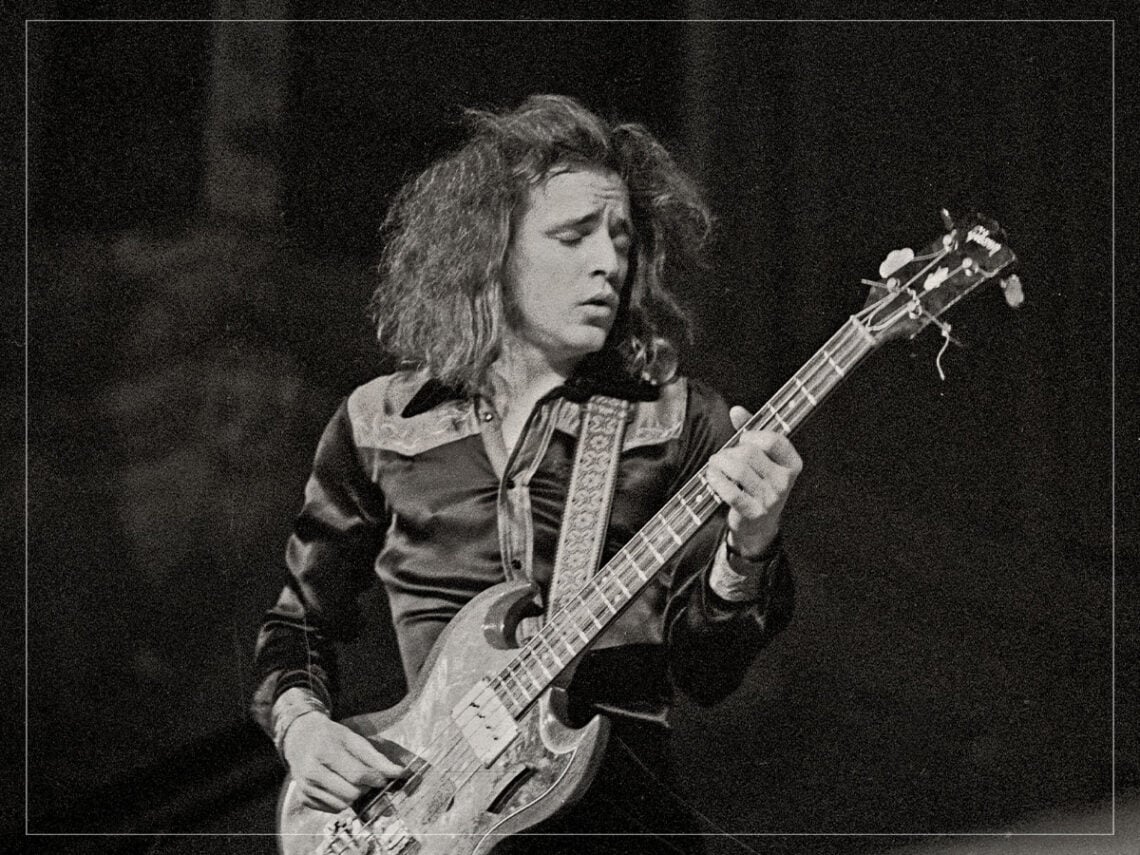
How Jack Bruce almost chose Marvin Gaye over Cream: “That was very important to me”

People talk about sliding doors moments a lot. Those times in your life when a decision could ultimately change the course of your life, and if you don’t take it there and then, the chance will never arise again.
But in the 1960s, the doors presented to members of Cream always seemed to be gateways into stardom.
Such was the health of the rock scene in the 1960s that each member of Cream had cultivated their own reputations individually before forming what would become quietly one of music’s most influential bands. Eric Clapton had emerged as one of music’s most captivating guitarists with The Yardbirds, while Ginger Baker had transfixed audiences with his genre-fusion drumming.
Jack Bruce had run alongside Baker in The Graham Bond Organisation, forming a truly formidable rhythm section. Individually, they had already experienced the sort of life-changing experiences all of us are hoping those sliding doors might conceal, but clearly that wasn’t enough.
As Clapton watched Baker and Bruce from afar, it dawned on him that undoubted greatness awaited if he combined his skills with theirs. Together, they formed one of the most imperious and prolific supergroups in music, spending just two years releasing some of the most famous songs that helped them sell what now sits at 15 million copies sold.
They were three titans of music who joined together to capture lightning in a bottle. But as tales of music history have taught us, greatness was intertwined with fraught conflict, particularly between the two rhythm players. Baker and Bruce’s brilliance consistently rubbed against one another, which ultimately led to Bruce’s exile from The Graham Bond Organisation.
They were two geniuses trapped in their own stubbornness, and so their musical dialogue would sound like a beautiful argument. While that conflict provided us with the captivating underbelly of Cream’s sound, it was almost what drove them apart, in turn giving us the opportunity to see Bruce play with yet another musical icon.
Speaking of his musical differences with Baker, Bruce explained, “We had some very strong musical differences in those days. That’s when I was trying to formulate my bass style. He thought I was playing too much. But I was being influenced by great bass players like James Jamerson. I wanted to come up with my own approach to the instrument. I was very discouraged when I was fired from that band.”
It was a conflict that almost prevented Cream from ever being, particularly if Bruce’s schedules had lined up better. Because when he cooled off after his firing from the band, yet another sliding door of riches stopped in front of him.
He continued, “But then I worked with Marvin Gaye in London and that was very encouraging. He asked me to join his band, which I unfortunately was unable to do because I was about to get married, it wasn’t possible. But he was certainly very encouraging and told me the direction I was going in was great. That was very important to me. Quite often, I think with players who are trying to do new things, you meet somebody. You might be very discouraged by people saying what you’re trying to do is wrong. But if you’re fortunate, you meet someone who encourages you enough to keep going.”
While it goes against every fibre of my instinct, particularly as a Marvin Gaye fan, I’m glad Bruce turned down what may have been an opportunity of a lifetime. It may have caused greater suffering at the hands of his unpredictable relationships, but Bruce’s decision to join Cream provided us with some of music’s greatest moments.
