


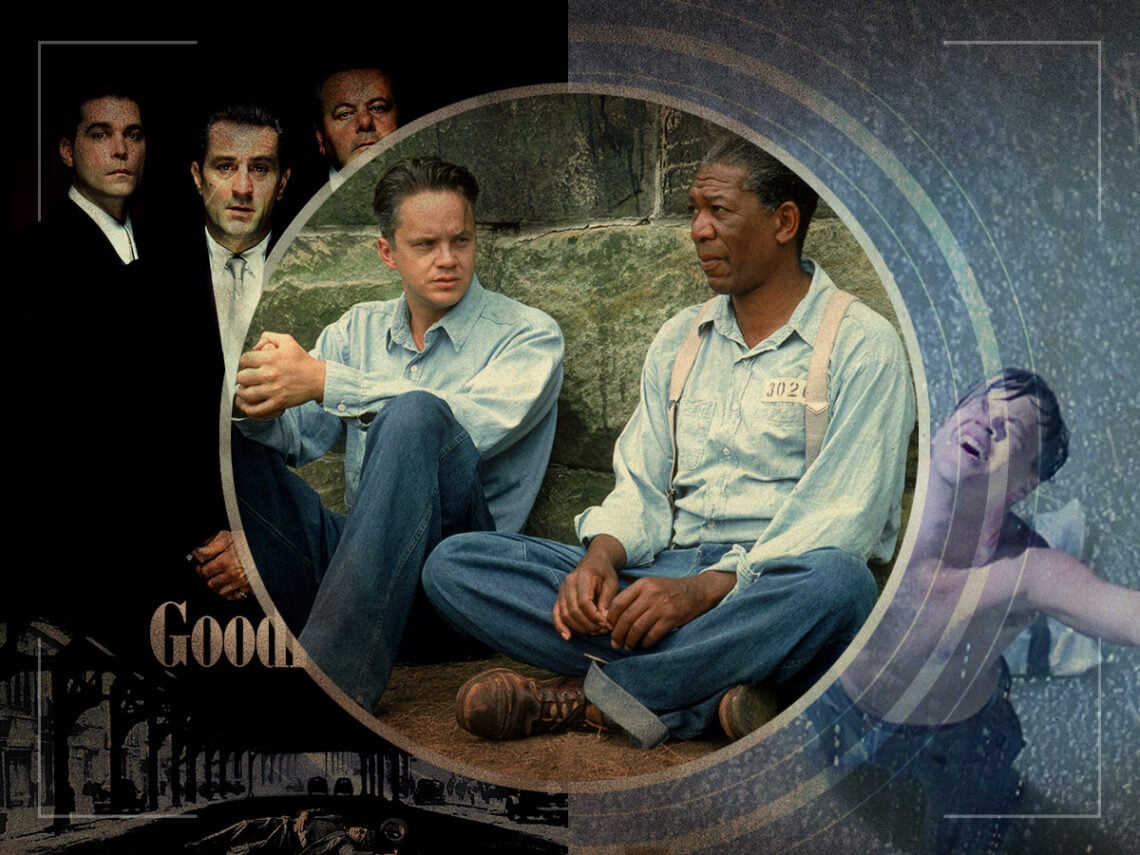
How ‘Goodfellas’ saved ‘The Shawshank Redemption’: “I’m going to be damned to movie hell”

As one of the most beloved, uplifting, endearing, and endlessly rewatchable movies in cinema history, it’s safe to say that The Shawshank Redemption turned out just fine. However, Frank Darabont needed a nudge in the right direction from a Martin Scorsese masterpiece to convince himself.
Quite possibly the greatest film to ever bomb at the box office, at least during its initial theatrical run until everyone caught on to its many merits, the Stephen King adaptation took a while to enter the cultural consciousness. When it did, though, it refused to leave.
Morgan Freeman may have grown tired of talking about it a long time ago, not that people are going to stop asking him about it because it’s arguably the single most iconic picture he’s ever been involved with and it continues to win over new audiences with each passing generation, but the rest of the key creatives have no issues taking a trip down memory lane.
Having optioned the rights to the source material for the princely sum of one dollar, Darabont made one of the most impressive feature-length directorial debuts in recent memory with an assured, engaging, and altogether engrossing story of hope, hardship, and the human condition. It also launched a lucrative sideline for Freeman, with Shawshank marking his first time using those sonorous tones for narration.
It’s impossible to imagine the movie without Red’s syrupy smooth intonations, but Darabont was concerned that he was overdoing it. It began to gnaw at him that he was blatantly disregarding one of the most important unspoken rules of filmmaking, and he was teetering on the edge of scaling back the voiceover until Scorsese’s Goodfellas convinced him otherwise.
“I got really freaked out halfway through,” he told Creative Screenwriting. “I suddenly thought, ‘Oh my god, I’m breaking the rule. I’m going to be damned to movie hell. I’m telling instead of showing. I’m relying too much on it.” Fortunately, a coincidence, or a sign from above as Darabont saw it, convinced him to continue telling.
“As if a sign from God, I turned on cable that night, and it’s the premiere of Goodfellas,” he recalled. “And I thought, ‘This is a really great movie, and it has a lot of voiceover.’ It had been about a year since I had seen it in theatres, and I sat and watched it again. And I thought, ‘I’m a stingy little bastard when it comes to narration compared to these guys.'”
Darabont was seriously considering excising great swathes of Freeman’s voiceover from the script, which became one of The Shawshank Redemption‘s most iconic elements, until he realised that Scorsese had no such issues relying heavily on narration to power Goodfellas, which didn’t harm the film in the slightest.
“My talisman was my tape of Goodfellas,” he declared. “I took it with me, and on weekends, my weekend was on Sunday, I’d sit there totally blown out and depressed, and I’d pop in Goodfellas and get inspired again.” Shawshank without Red’s narration sounds unthinkable, but it might have been the case if it weren’t for Scorsese’s epic crime classic.
