


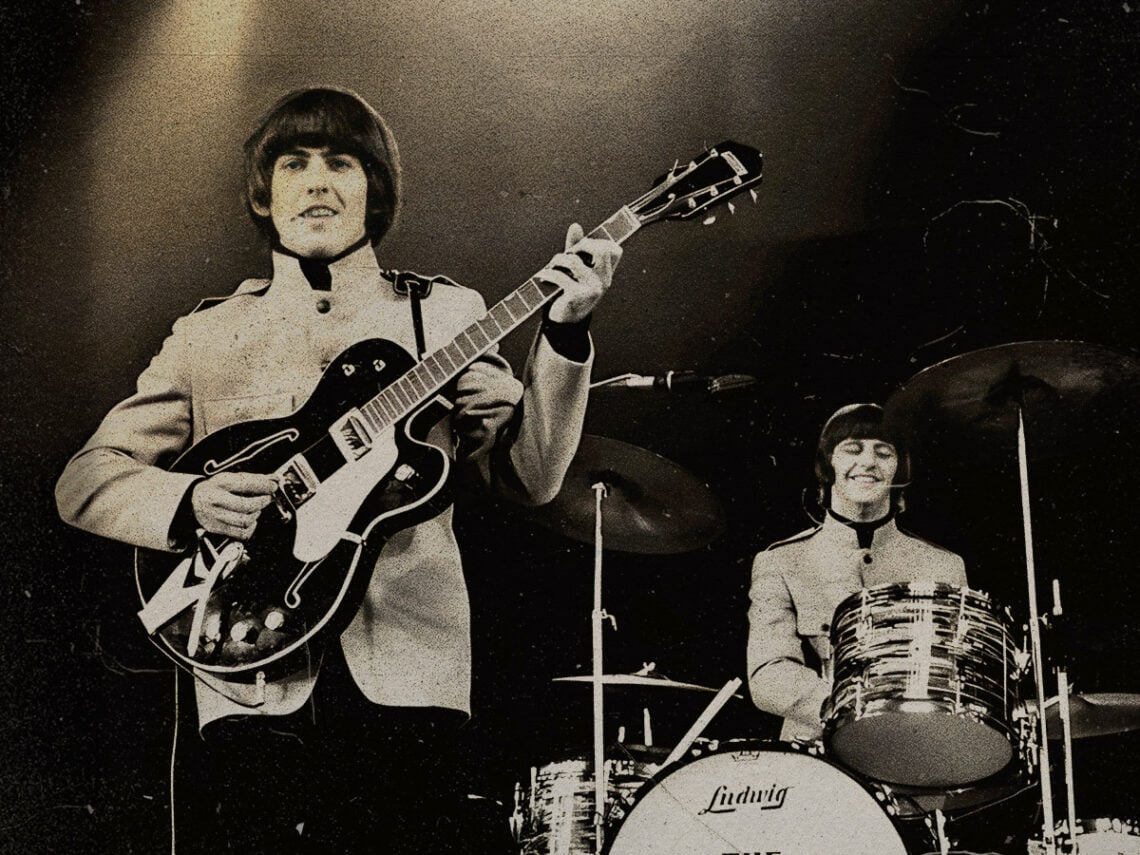
How George Harrison used his songs to process being a Beatle

George Harrison never intended to have a career as one of the biggest pop stars alive. From the moment The Beatles became the biggest rock band of all time, the ‘Quiet Beatle’ was always sheepish about his place in the world and would often cater to the back of the stage and be immersed in his guitar rather than pushed to the front. When Harrison spoke up with his own songs, he always wrote about what he knew.
Towards the end of the band’s tenure, Harrison began writing songs that had more and more to do with his bandmates’ internal squabbling. In the track ‘I Me Mine’ on Let It Be, Harrison dwells on the concept of ego and how it could eat away at someone if they don’t look out for the people around them. This could easily be a philosophical belief that Harrison held onto, but his position in the group looms large over the song as well.
Even when not writing about his band properly, Harrison would write songs about the pleasures of not seeing his old friends. When playing hooky on a day when he was supposed to be at the Apple offices, Harrison penned ‘Here Comes the Sun’ about the joy of not worrying about any of his commitments.
Those commitments had to be dealt with occasionally, and the aftermath of The Beatles’ breakup wasn’t going to be overlooked by Harrison. As the Let It Be sessions wore on, Harrison became increasingly frustrated that none of his songs was being taken seriously, eventually writing the tune ‘Wah Wah’ about how Paul McCartney was ignoring him throughout most of the sessions. As the lawsuits began after Allen Klein was brought into the picture, Harrison took out his frustration on ‘Sue Me Sue You Blues’, which talks about the headache of having to see his lawyers for yet another meeting.
The clearest indication of where Harrison’s state of mind was is ‘Run of the Mill’, which depicts the Fab Four reaching their bitter end. For all of the jabs at each other made in the press, Harrison blames their dissolution on subtle miscommunications and their friendships slowly falling apart. Well into his career, the fans’ refusal to accept the band’s demise began to weigh on Harrison, with ‘The Light That Has Lighted the World’ shedding some light on certain people who will never accept change.
While Harrison and John Lennon looked back on their Beatle years with a certain amount of disdain, Harrison learned that it was alright to embrace the good times that had also happened. In light of Lennon’s tragic death, Harrison wrote ‘All Those Years Ago’ to commemorate all of their happy memories as one of the biggest acts in the world. Even after the mile-long stretches of paperwork, Harrison still remembered the unbreakable bond that each of the four musicians still had for each other.
After taking a rest through most of the 1980s, Harrison’s reinvention of Cloud Nine brought with it the final track about The Beatles. Titled ‘When We Was Fab’, this is a cheeky vision of how Harrison sees his old band, complete with Jeff Lynne’s production echoing the sounds of hits like ‘I Am The Walrus’. It’s nearly impossible for Harrison to outrun his years in The Beatles, but seeing him make peace with his celebrity rather than seeing it as a burden throughout his entire life is nice.
