


Understanding how ‘Gangnam Style’ became so popular

There has never been anything like PSY’s ‘Gangnam Style’ before or since its release. After conquering YouTube back in the 2010s, the song lingered around and became one of the biggest memes of 2012, with millions of people adopting the same horse-riding dance that PSY popularised in the music video. Given the campy nature of the tune, though, what made it the biggest thing in the world?
Like all viral hits, it’s never easy to pin down the X-factor that sent the song over the top. While the hit about a sexy lady did well in PSY’s native South Korea, it piqued the interest of the West by going against the grain of a typical K-pop song. Though most K-pop at the time worked like an assembly line of pitch-perfect musicians, PSY’s embrace of electronic dance elements was a change of pace for what most listeners expected from the genre.
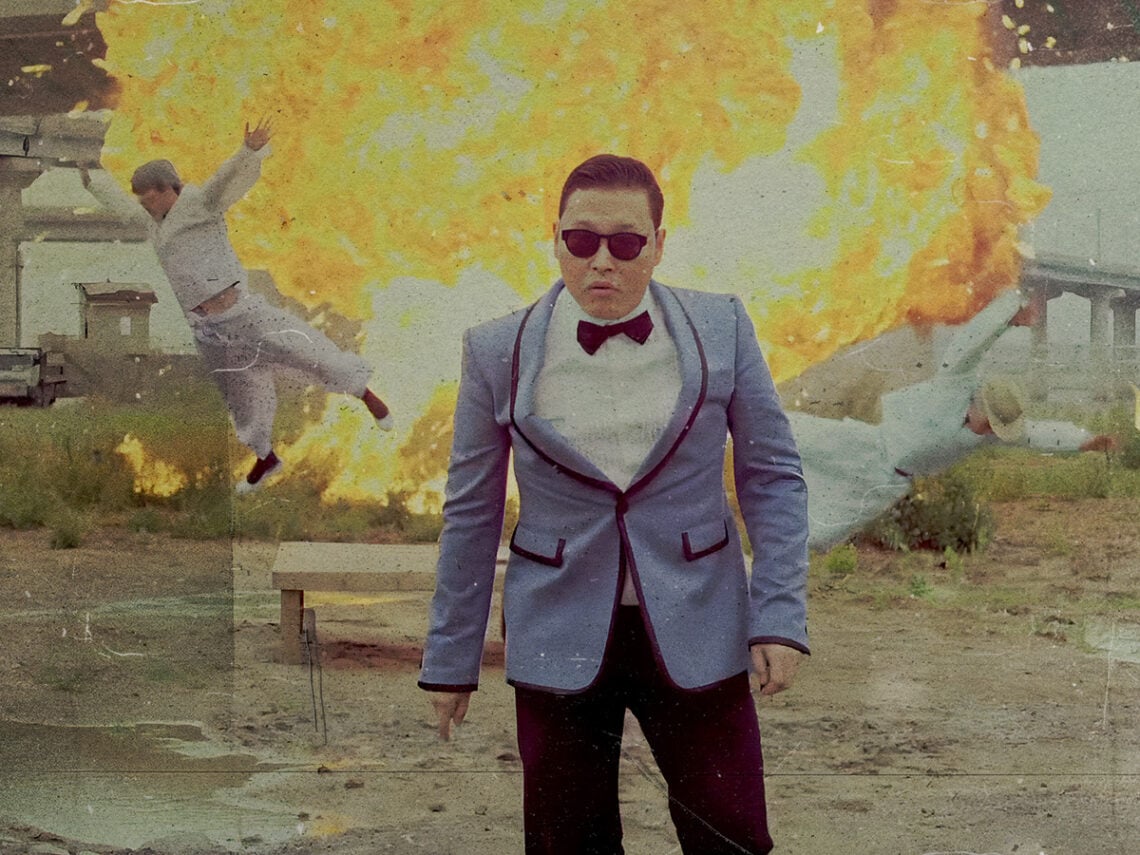
After getting the co-sign from other pop legends like Britney Spears, what set everything in motion involved the music video. Given the overwhelming visuals and the now-infamous horse dance, the song became a novelty on the Western charts, being kept off the number one spot in the US by Maroon 5’s ‘One More Night’. The song even became a guilty pleasure among rockers, with Dave Grohl claiming to be a big fan.
So how did the strength of the ‘Gangnam Style’ video translate to the charts?
At the time, Billboard wasn’t counting YouTube plays as a part of their criteria for chart success, but the three billion views on the video made them reconsider. When talking to the AV Club, Billboard’s director of charts Silvio Pietroluongo mentioned including YouTube views as part of their figures and pointed to ‘Gangnam Style’ directly, explaining: “You saw it with Psy. We didn’t have YouTube on the charts when he was on, but everything that was borne out of that play, from sales to streaming, was certainly displayed and got that song to number two. These are avenues for people to have success now”.
This new outlook on the charts led to other off-the-wall songs gaining major traction on the hit parade, including Baauer’s ‘Harlem Shake’ raking in huge numbers the year after. PSY was also a game changer for not compromising his native tongue on his tracks, as Bernie Cho of DFSB Collective told Pitchfork: “He proved that a Korean artist didn’t have to be young, pretty, and skinny to become a global K-Pop star… He also proved that a contagious worldwide hit wasn’t contingent on singing a song entirely in English”.
Since this was the first song in decades to hit the charts that wasn’t in English, it paved the way for other non-English speaking cultures to work their way onto the charts. Though PSY might not have been looking to crack the Western market like this, it flipped the game to where genres like reggaeton gave far more airplay on the charts.
Despite all of the accolades, PSY has remained as humble as one could be when having a hit like ‘Gangnam Style’ telling Pitchfor:, “It was probably the biggest trophy the world could have given me. It’s now something on the shelf I can admire from time to time”. Though PSY hasn’t had another single come close to his worldwide smash, he seems happy with his status as the Internet sensation that changed 2010s music.
