


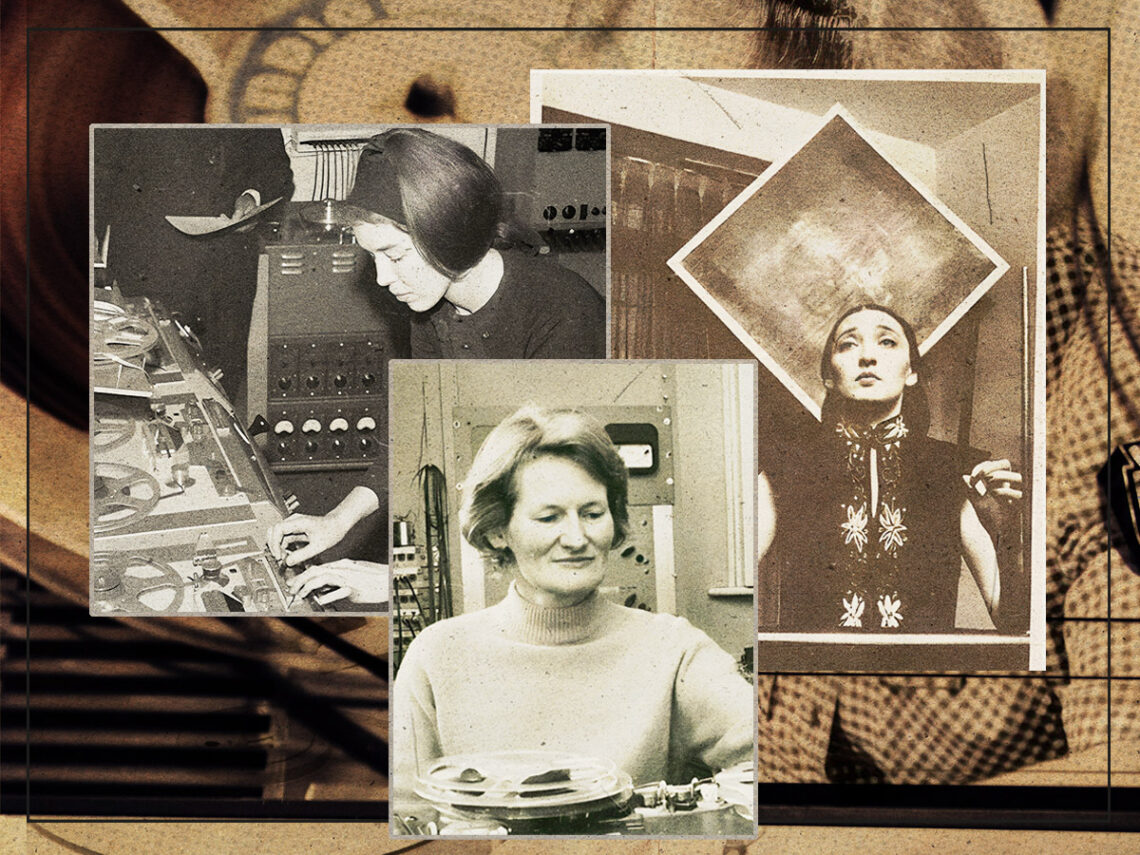
How electronic music gave women a pioneering platform

Electronic music emerged in the early 20th century and has since become one of the world’s most popular genres. By the 1960s, electronic music was no longer a strictly avant-garde practice, with electronic instruments making their way into the mainstream. In the 1970s, artists such as Kraftwerk popularised the genre, and electronic sounds could be found in genres like rock, hip-hop, disco, house, new wave and plenty more. From Brian Eno to The Chemical Brothers and Aphex Twin, numerous artists have utilised synthesisers and other electronic instruments to create unique and influential sounds that have defined the genre.
However, the history of electronic music is irrevocably female, with most of the genre’s most important pioneers being women. Unsurprisingly, many female progenitors of electronic music have been forgotten or their impact minimised, reflecting the music industry’s blatant misogyny, perpetuating the myth that men have strictly been the ones to pioneer new musical developments. While there were certainly several men that aided the progression of electronic music, some of the genre’s most significant contributions came from women.
It’s important to highlight these forgotten or lesser-known artists who found freedom in electronic instruments, which often acted as an alternative to the male-dominated spaces of other genres. The first female-composed electronic score, Music of the Spheres, was written by Johanna Magdalena Beyer as far back as 1938. Since then, many women have dominated the electronic scene, from Björk to Kelly Lee Owens. However, the current state of electronic music wouldn’t have been achieved without the work of women such as Daphne Oram, Delia Derbyshire, Jacqueline Nova, Clara Rockmore, and many more.
Suzanne Ciani, who helped bring electronic sounds to the mainstream through her commercial work using synths by creating sounds for the likes of Coca-Cola and Atari, explained to NME why she was drawn to the genre. “I think for women, [electronic music] gave us independence. I studied classical composition, conducting, the whole thing, and it was a man’s world – and still is today, really, annoying as it is. But in electronic music, you could do the whole thing yourself. That’s what attracted women. This is a story of intimacy, in a way, with these machines.”
She continued: “I think of electronic music in very feminine terms. A lot of my inspiration is the sea and the rhythm of the ocean. That’s a rhythm that is slow, and [with synths] those long, sustained sounds are possible… I see electronic music as flowing… Sexually speaking, if you look at dynamics, men have this pounding rhythm and then – boom. Women have this very slow build and release. The wave, to me, symbolises that form, emotion and energy system.”
One of the earliest pioneers of electronic music was Clara Rockmore, who aided the development of the Theremin, an instrument often used to score horror movies, thanks to its haunting sound. Since it was invented by Leon Theremin in 1928, it has been used by artists such as The Rolling Stones, Led Zeppelin and Frank Zappa. However, back in the early days of its conception, many people were sceptical of the instrument’s capabilities.
Yet Rockmore, a highly-skilled and classically-trained violinist, transferred her musical knowledge onto the theremin, demonstrating the brilliance of the instrument to large audiences. With that, she proposed many alterations to Theremin, who modified the instrument to suit Rockmore’s suggestions. Her contributions towards advancing the instrument and her subsequent performances helped “electronic and experimental music” become recognised “as a viable art form in the public imagination,” claims author Tara Rodgers.
Another significant female electronic musician was Daphne Oram, who founded the BBC Radiophonic Workshop. Oram was an incredibly gifted musician who worked on some of the first significant electronic film scores, contributing to the likes of Dr No and The Innocents in the early 1960s. She was one of the first people in the country to create electronic music, and she also pioneered the Oramics technique, a form of drawn sound. She created the sizeable electronic machine after leaving the BBC Radiophonic Workshop due to a clash of creative differences. Still, the Radiophonic Workshop, a sound effects unit, was incredibly important to the development of electronic music, giving a career to Delia Derbyshire, another essential artist in the canon.
Derbyshire’s most recognisable work is the iconic Dr Who theme, which has scored the show for decades. Like Oram, Derbyshire was an early adopter of the musique concrète technique, which predates sampling. However, Derbyshire’s career began with a series of obstacles wagered against her because of her gender. Rejected from Decca Records, she ended up at the BBC Radiophonic Workshop, where she was able to experiment with tape recorders and electronic instruments. The sounds Derbyshire produced were revolutionary, and she has influenced some incredibly successful artists since, from Aphex Twin to Broadcast. However, most significantly, her work has been vital to the development of sounds associated with sci-fi and movie scores.
Then there was Jacqueline Nova, who pioneered Columbian electroacoustic music in the 1960s, becoming the first woman to graduate with a degree in music composition from the Colombian National Conservatory of Music. She challenged musical norms by experimenting with different electronic instruments and frequently centred Indigenous voices in her work. Nova, who identified as a lesbian, subverted expectations and worked in a male-dominated music industry, yet she didn’t let that stop her from experimenting with new and innovative processes. According to Professor Ana María Romano G, “She had questions about sound, about the here and now. Hers was not the kind of music we could hear in the streets, but she was interested in the freedom to engage in the world of sound — acoustics, physics, timbre, orchestration.”
As the years progressed, women continued to pioneer electronic music in new and exciting ways. Over in ‘70s New York, the disco scene was dominated by male DJs. However, Sharon White was one of the scene’s most prominent female DJs, becoming the only woman to perform at Paradise Garage, and she was the first female DJ to play at The Saint. Although White, a queer black woman, experienced prejudice as she cut her teeth in the industry, hearing men exclaim such statements as (via MixMag) “There’s no way I’m gonna have a woman at the helm at this club,” she persevered, becoming a champion of the disco scene.
Evidently, electronic music has significantly developed over the years, encompassing a wide range of genres, from experimental ambient music to dance and techno. However, behind all of these developments were women across the globe who found liberation in the singularity yet never-ending possibilities of electronic instruments. There are so many other significant female electronic pioneers we could mention, from Michiko Toyama and Bebe Barron. The list is extensive, yet many have been (rather conveniently) forgotten by the music industry, no doubt due to rampant sexism. It’s vital that these female pioneers are celebrated, no longer should they be forgotten or glossed over in retellings of music history.
