


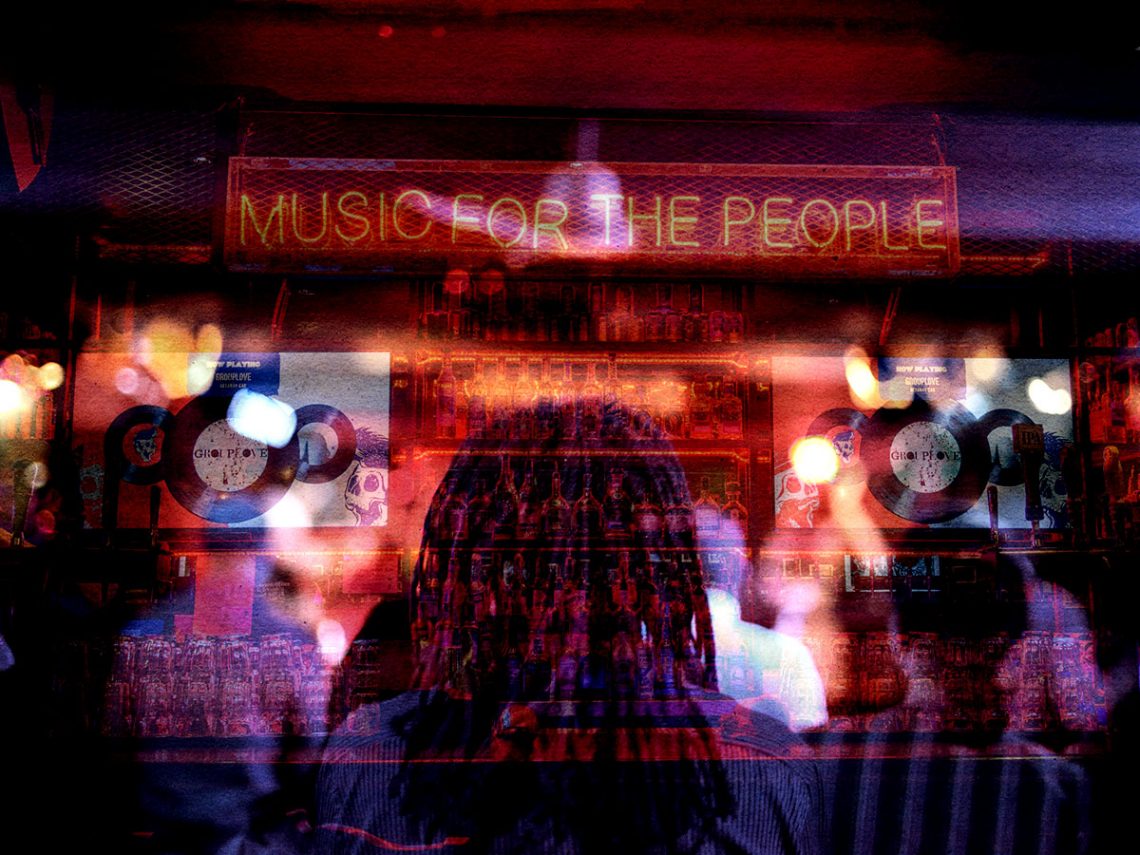
The cost-of-living permacrisis: How do small venues survive?

To say we’re feeling the pinch right now would be an understatement, we’re feeling the whole damn clutching handful. This todd-clobbered period was aptly defined by Collins Dictionary which selected ‘permacrisis’ as their word of the year. The definition: “An extended period of instability and insecurity.” Sadly, small venues have been experiencing this for even longer than the rest of us. Their prognosis is not quite a permacrisis, it’s more of a crisis crustaceous period.
When we recently spoke to Music Venue Trust, they gave us the damning lowdown. With a lack of support and exacerbating issues, a whopping 35% of UK Grassroots Music Venues (GMVs) have closed in the last 20 years. This is partly because 93% of GMVs are tenants, paying exorbitant commercial rent to landlords who do not share their aims. This is a problem specific to GMVs and not to other cultural institutions (theatres, art centres etc) in the UK which usually receive external funding or own the land.
This is damning for culture in this country in general. As the Music Venue Trust told us: “GMVs are at the heart of their local communities, providing early-stage access for artists and creatives to experiment, grow their skills and develop their talent. They are the Research and Development labs of the £5.8 billion per annum UK Music Industry – a world leader in music and culture. They foster and develop new talent in an open, non-profit driven model which enables creativity to flourish. In many locations, they provide an outlet for people otherwise left behind by other local creative and cultural offerings.”
While the boon they provide in terms of brightening up our daily lives can’t be underestimated, the statistic also shows that they are a vital cog in society. Not only did they host 231,379 performances in 2021, but over 15 million people attended these shows. This resulted in a gross turnover of £371 million and helped to directly employ 12,051 people. This is all community-based income and vital for any ground-up economy to flourish. The funds and fruits of small venues stay in the area and help to create a ripple effect in the arts.
However, they must be supported by the economy at large, and with that taking a nosedive and then some, GMVs are particularly vulnerable. They are, in short, the ultimate brunt of an ongoing permacrisis that has already claimed countless sacred spaces in recent years. These are the places where couples have met, bands like the Arctic Monkeys have been born, and thousands have been given a leg-up to success where they wouldn’t otherwise find it.
Fortunately, the factor that the Collins Dictionary somewhat misses, is that during periods of insecurity and instability, innovation comes to the fore. “The nights we do with This Feeling, you get so much bang for your buck,” The Feens told us. “There will be like four acts on one night and it’s £7. There is so much value for money there it is unreal. That’s when you know that Mike at This Feeling and all the other bands are only purely doing it for the love.” This benevolent, looking out for each other tenet is something that typifies the outlooks of GMVs, and this has been amplified further amid the recent challenges.
The Adelphi Club in Hull has been running since 1984 and has welcomed its doors to the likes of Oasis, The Stone Roses, Green Day, Pavement, Pulp, Idles, Franz Ferdinand and Radiohead. And venue head Paul Sapel told us how he’s keeping it afloat: “We’ve been a bit smart with it, we saw it coming, and have kept adjusting. Often, we are doing free entry rather than ticketed or pay-on-the-door offers, whereas, normally, we would never do that. We’re not in the habit of putting on free shows, but essentially, we want people in the doors, watching the gigs, and buying beer because that’s where we make our money.”
On this front, many venues have also kept with the community spirit and liked up with local breweries helping to create unique evenings. This will hopefully pull back punters who are having to be savvy with their cash at the moment too. But it’s this collectivism and one hand washing the other that is helping to keep everyone afloat. This has also been apparent with big crowd-drawing names returning to the venues that made them for charitable shows.
While this offers hope for the future amid the GMV permacrisis. It’s worth noting that this buoyant attitude is upheld by the tireless work of those involved. “Most grassroots venues are on the bones of their arse all the time anyway,” Sapel added. “I’m on less wages now than I was 20 years ago, I put in more hours than I get paid for, but it’s a labour of love, and across venues, you’ve got highly skilled people who can react to events because that’s what we’ve always done.”
