


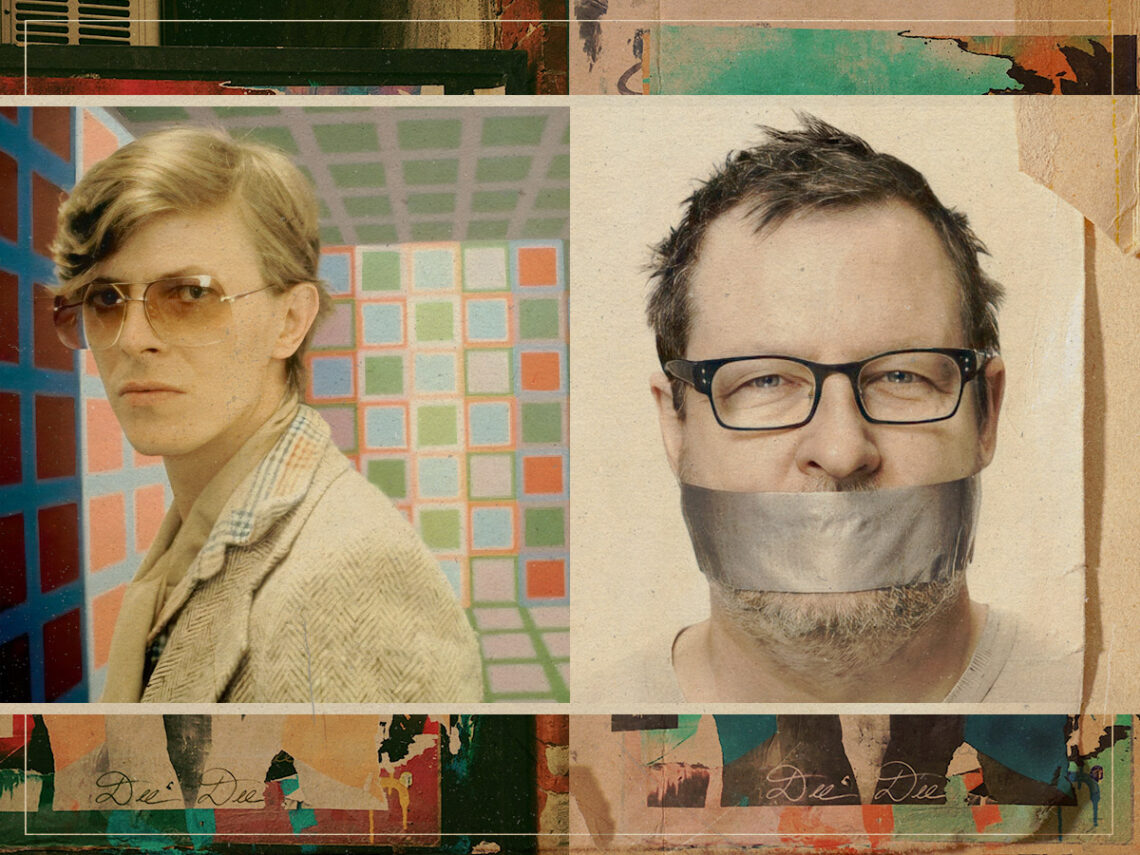
How David Bowie inspired Lars von Trier’s filmmaking philosophy: “He created a myth”

There are countless actors, directors, writers, musicians, artists, and creatives who have been inspired by the inimitable David Bowie, but Lars von Trier doesn’t jump out as one of the most obvious.
One of the most distinctive cinematic voices of the modern era, the Danish provocateur has made a career out of pushing the limits of cinematic acceptability. The results have often been spectacular, but they’re also regularly hard to stomach. He’s not one to beat around the bush, is our Lars, and the mythology he built around himself didn’t happen by accident.
Von Trier’s films have always dealt heavily in existentialism, psychosexuality, and the notion of sacrifice, with his technical virtuosity and imaginative sense of ambition often overlooked in favour of the controversy he constantly finds himself battling against for a number of reasons.
From the Europa trilogy to The Golden Heart trio and the Depression triptych via the integration of the Dogme 95 manifesto into not only his filmography but those of his peers, like many artistic minds before him, von Trier has embarked on a myriad of distinct and disparate eras without sacrificing his core tenets.
In that respect, it certainly sounds Bowie-esque, but it wouldn’t be a logical conclusion most people would jump to if it wasn’t for von Trier pointing it out. “When I was younger, I was fascinated by David Bowie, for example,” he told the British Film Institute. “He had created an entire myth around himself. It was as important as his music.”
The legend of von Trier grows stronger with each new headline-grabbing work, similar to how Bowie’s own mythos deepened and enhanced each time he underwent his latest reinvention. However, one key difference is that whereas Bowie regularly wrote songs performed by other artists, von Trier wouldn’t consider creating art for anyone else.
“I don’t see why one shouldn’t be credited for a work,” he explained. “It’s something important in the relationship between the artist and his public. The importance lies in the process through which the work of art comes into being. The manifesto is pure theory. But at the same time, the theory is more important than the individual.”
Von Trier even incorporated Bowie’s ‘Life on Mars’ into the powerful psychological melodrama Breaking the Waves, not that he would ever see himself as celluloid’s version of ‘The Thin White Duke’. That doesn’t mean the influence wasn’t there, though, with the Dogme figurehead opting to channel the spirit of constant cycles and rebirths that defined Bowie’s chameleonic career by navigating his own way through cinema that saw him make a point of refusing to settle into anything that even resembled a formula.
Two peas in a pod they most definitely are not, then, but Bowie and von Trier nonetheless shared a constant refusal to stand still for too long.
