


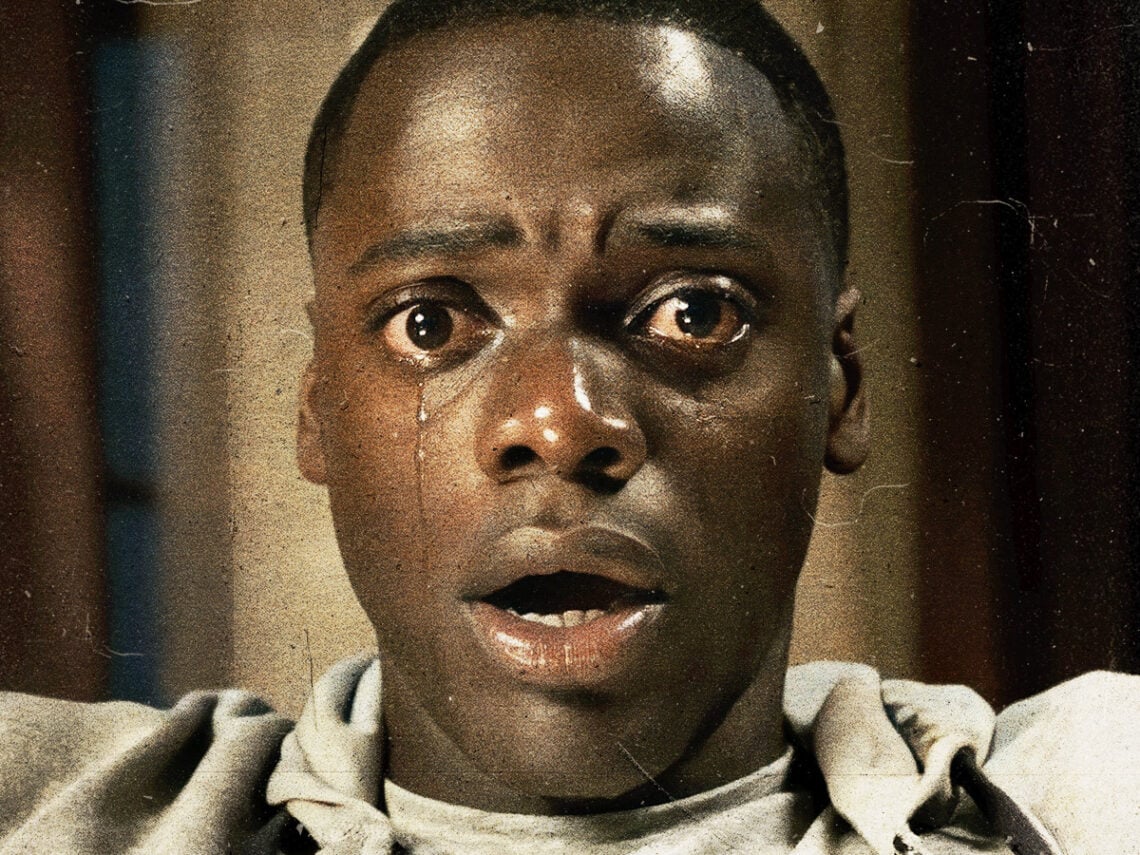
How did Daniel Kaluuya prepare for his iconic ‘Get Out’ scene?

In 2017, well-loved comedian Jordan Peele made his directorial debut with Get Out. The film quickly became a defining cultural moment. Combining horror with political commentary, Get Out was praised for its criticism of continuing racism in America, slick storytelling, and a spectacular lead performance from Daniel Kaluuya.
Kaluuya’s starring role has become one of the most celebrated horror performances in recent memory, gaining him a ‘Best Actor’ nomination at the 2018 Academy Awards. Although his work in the film is consistently excellent, one scene was particularly memorable.
After Chris, played by Kaluuya, arrives at the Armitages’ house, he is subject to a hypnotherapy session with his girlfriend’s mother, Missy, who claims to want to treat his smoking addiction. The session quickly devolves into a discussion of Chris’ late mother and the shame he harbours surrounding her death. As Missy taps her teaspoon against her mug, she declares, “Sink into the floor”. We see Chris falling through a dark abyss before the scene concludes with the now iconic shot of a wide-eyed, teary Kaluuya.
Kaluuya discussed the scene in an appearance on Variety’s Actors on Actors series alongside Timothée Chalamet. He was shocked by the audience’s enthusiastic reaction to the scene but recalled that director Jordan Peele predicted the success of the sunken place: “Jordan did say on set, ‘Yo, this is iconic.’ But he said that a lot on set, and I was like, ‘Aw, he’s amping us up.'”
He explained how he conjured up the intensity of emotion required for the heavy scene, stating: “It felt like an intense day ‘cos it was just that scene that day. So it was like a five-page scene that day, and we’d blocked it out, and it was just, you had to be on. So I knew that I couldn’t really, like, joke around.”
Kaluuya, who states that he usually jokes around on set with the crew, recalls that he “had to go into a space”. Chalamet asks if he used headphones, but the actor instead took a more raw approach, “I’d just walk away. I just walk away and won’t talk to anyone. I think it’s more intense if you just kinda sit there and don’t wanna talk to anyone. That’s even darker. I can listen to music, but I don’t even wanna talk to you.”
Jordan Peele’s masterful writing also seems to have helped ease him into the intensity of the scene: “The writing was so good, and I just tapped into that darkness in me, and pain, that I’ve kind of felt in my life and I kind of was just like, ‘Cool, let’s let loose.'”
Alongside isolating himself from the cast and crew, Kaluuya insisted that empathy was key to his preparation for the scene: “It’s just, empathising with someone that is going through so much and has suppressed it… Suppressed his guilt of a really bad situation. It’s shame, do you know what I mean? And also, there’s reluctance to face it. He’s paralysed. He’s paralysed emotionally, and I identify that in all walks of life.”
Kaluuya noted how this paralysis can extend beyond Chris’s situation with sexism: “If something’s happened and a woman can’t say anything because she’ll lose her job, do you know what I mean? She’s paralysed, situationally.”
He was able to tap into this universal experience in his performance, adding: “I kind of thought that, that’s such a dynamic that everyone, kind of, identified with, and I’ve identified in so many different ways, in this kind of release of emotion, it’s uncontrollable, which I just kind of really identified with.”
Utilising the seemingly contrasting states of isolation and empathy, Kaluuya was able to fully embody the emotional paralysis of his character and, ultimately, deliver one of the most remarkable performances in modern cinema.
