


How Boy Scouts, dentists and gamblers came across ‘Cleopatra’

The Boy Scouts of America’s code of conduct states scouts must “exercise sound judgment and demonstrate good leadership” when faced with practical problems. When a two-tonne marble sculpture from the 19th century mysteriously presented itself to them, their Scout instincts kicked in. Having been left in a storage facility, Edmonia Lewis’ masterpiece, which took four years to sculpt, was covered in graffiti, and the well-intentioned Scouts decided to paint it white, in a naïve move that wound up costing conservators $30,000 to restore to its original form.
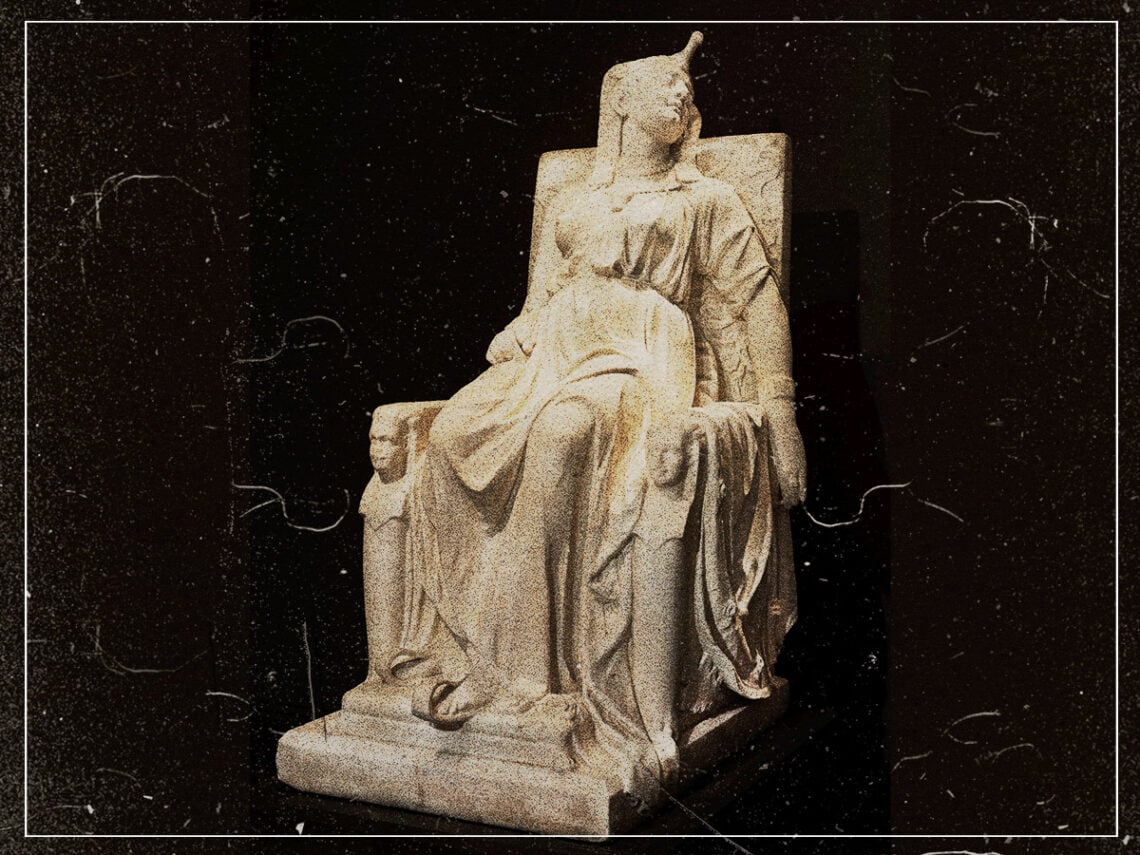
It’s one of many bizarre occurrences related to The Death of Cleopatra statue. First exhibited at the 1886 Philadelphia Centennial Exposition, Lewis’ depiction of Cleopatra in a deceased state was revolutionary, given a majority of neo-classical artists found most success in depicting her as alive. But her dramatic death at the hand of a snake was so tragic, it seemed perfect to distil in marble, just as Michelangelo has done with Pietà.
The beauty and sensuality often associated with Cleopatra is maintained, and her death seems tranquil, almost like she is slumped asleep. Lewis had spent most of her career in Rome, and it was far too difficult and expensive to ship there, so the depiction of Cleopatra’s peaceful death was placed for safe-keeping in a Chicago storage facility.
Historians aren’t sure how, but the statue wound up in a saloon in 1892, and then into the hands of notorious gambler and horseracing fanatic, “Blind John” Condon. Condon used the statue as a gravestone for his beloved horse, naturally named Cleopatra. The grave stood in front of the grandstand of Condon’s Harlem race track in Chicago’s Forest Park, where the sculpture remained for nearly a century.
When the racetrack closed, both Cleopatra’s entered their eternal rest in the grounds of what turned into a USPS service facility in the 1970s. Then, the statue was moved to storage yet again. It was there that a well-meaning fire inspector and his son’s Boy Scout group decided it needed some cleaning up. They soon got to work painting the statue white, which has to be one of the most fitting odes to the constant white-washing of Cleopatra in modern art to date.
Dentist Dr. James Orland, a keen member of the Forest Park Historical Society, then acquired the sculpture and held it in private storage at the Forest Park Mall. It wasn’t until Lewis’ biographer, Marilyn Richardson, connected with Dr. Orland that the sculpture could even be confirmed as Lewis’ work. The Forest Park Historical Society donated the piece to the Smithsonian American Art Museum in 1994, where elaborate restorations began on Cleopatra’s nose, chin, and general wear after decades in open air.
Although it’s thought it will never be returned to its genuine original form, it remains a ground-breaking sculpture – thought to be the only one in existence that actually dared to show Cleopatra dead. In some ways, this makes the erosion of its form rather fitting too.
