


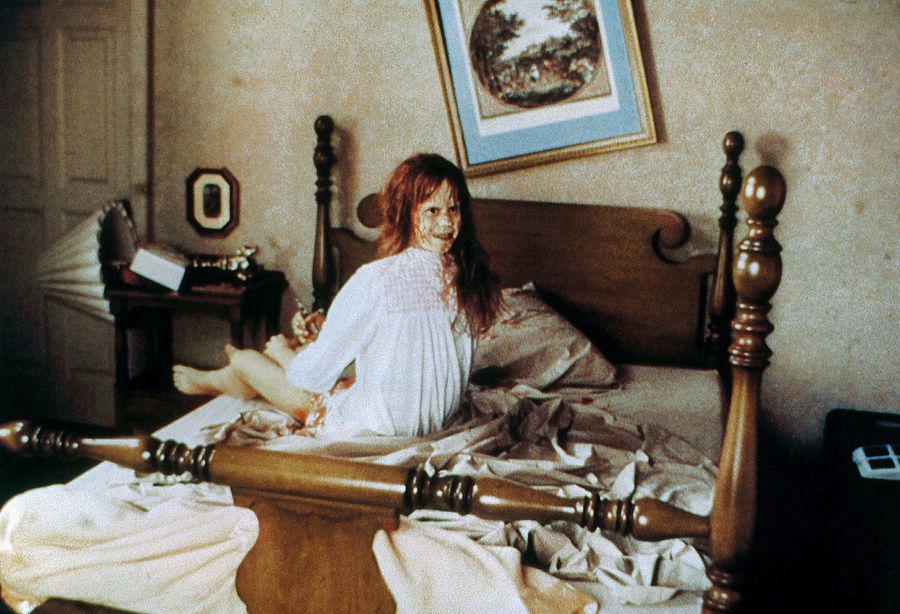
How a progressive rock instrumental became the theme for ‘The Exorcist’

The Exorcist remains perhaps the de facto horror movie of the 1970s. A highly progressive and intensely unsettling experience to this day, William Friedkin’s masterpiece has disturbing elements baked into its DNA. It’s the visuals that get most of the acclaim, but everything from the special effects to the score keeps The Exorcist from getting stale even 50 years later.
The music in the film isn’t a score by traditional means. Most of the music used is from already-released classical compositions, strategically placed for maximum effect. Rock pianist Jack Nitzsche composed a brief score to use as transitional music during the parts where no established music fit the bill. Friedkin has stated that everyone from Psycho composer Bernard Herrmann to electronic rock pioneers Tangerine Dream was given the opportunity to score the film, but ultimately it was Nitzsche who was given credit.
The most famous piece of music from the film wasn’t composed by Nitzsche, however. In fact, if you were a fan of English progressive rock in the early 1970s, there’s a chance that you could have heard the main theme for The Exorcist before the film was even released. That’s because the piano motif that’s most commonly associated with The Exorcist was the opening motif from Mike Oldfield’s Tubular Bells.
The original Tubular Bells album was recorded by the then-19-year-old Oldfield. He sought to mix the traditional drama of classical music with the increasingly popular genre of progressive rock, ultimately creating a full-album suite on which Oldfield himself overdubbed most of the instruments. Oldfield couldn’t get a traditional major label to take him up on his concept, so he turned to entrepreneur Richard Brandon, who had only recently created Virgin Records. Tubular Bells would become the label’s inaugural release.
Tubular Bells was not a major success upon release in May of 1973, eventually peaking at number seven on the UK Album Charts but otherwise struggling to find an audience. Branson partnered with Atlantic Records in the United States in order to distribute the album, and it was while taking a meeting with Ahmet Ertegun that Friedkin first heard Tubular Bells. According to Friedkin, the album was a white label release bearing no artist information, and Friedkin simply put on the album, heard the opening piano, and decided that it was perfect for his film.
Oldfield was initially unhappy with the motif’s inclusion in The Exorcist, but its association with the film caused a massive surge in sales for Tubular Bells. Without Oldfield’s knowledge, Atlantic Records released a single featuring the motif with the subtitle “now the original theme from The Exorcist“. Oldfield refused to release the cut in the UK, instead supervising his own edit of the ‘Part II’ suite and putting it out as ‘Mike Oldfield’s Single’.
Check out the opening motif to ‘Tubular Bells’ down below.
