


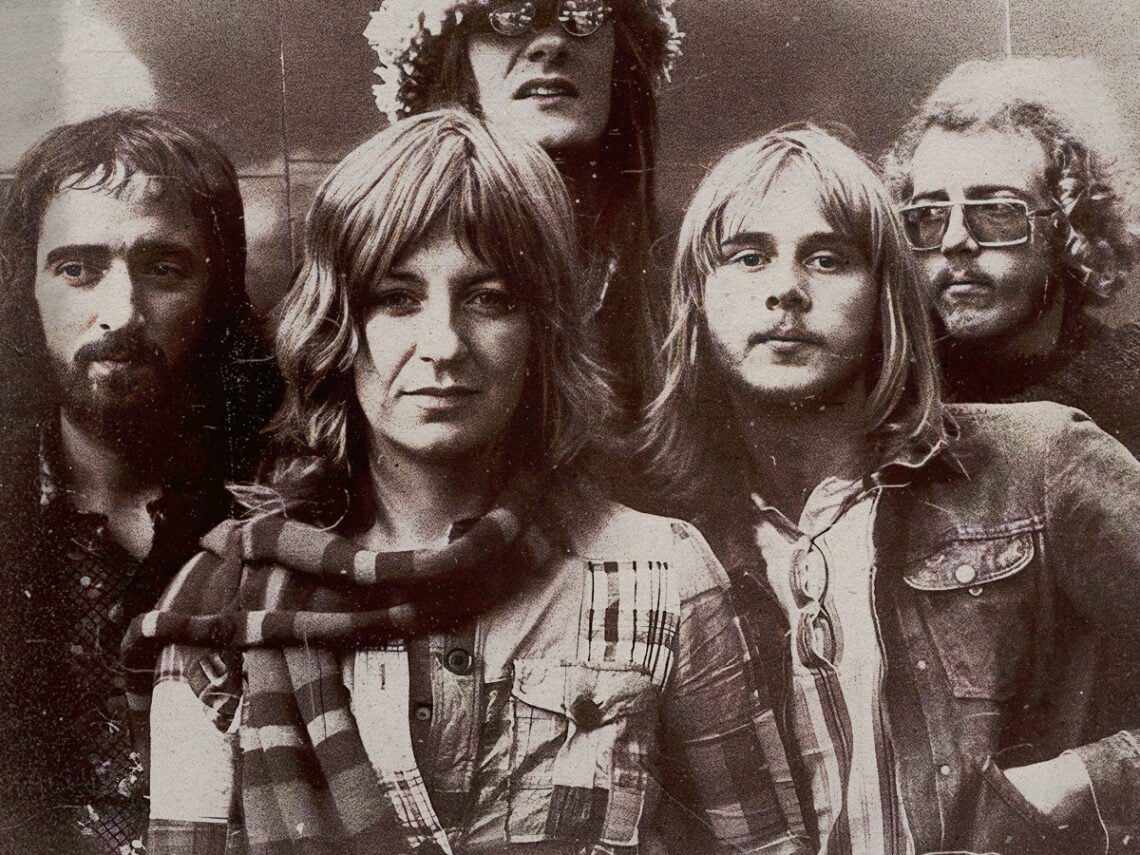
How a contract dispute saved Fleetwood Mac

By the end of 1973, Fleetwood Mac was kaput. The British rockers had gone through endless lineup changes and stylistic shifts across their near-decade of existence, but the group was hardly recognisable. Guitarist and singer Peter Green had left in 1970, and a series of new singers/guitarists had come and gone since then. When the Mac arrived in the US to promote their most recent album, Mystery to Me, the lineup included Mick Fleetwood, Christine McVie, John McVie, guitarist Bob Weston, and American guitarist Bob Welch.
At the outset of the tour, an affair between Weston and Fleetwood’s wife Jenny was discovered. Weston was fired, but the exhaustion of touring and the fragile relationships between the remaining members eventually caused the band to split up. Following an October 20th show in Lincoln, Nebraska, Fleetwood Mac officially broke up, with most members flying back to England. The only problem was that the group still had a series of tour dates scheduled.
In the years since Green’s departure, Fleetwood Mac had become more anonymous in their image, especially to American audiences. In order to fulfil their touring commitments, manager Clifford Davis concocted a plan: assemble a group of substitute musicians and send them out to see if they could fool audiences. Davis promoted the group as “The New Fleetwood Mac”, but plenty of promoters simply used the band’s standard name.
According to Bob Brunning’s biography Fleetwood Mac – The First 30 Years, audiences initially didn’t know that “The New Fleetwood Mac” wasn’t the genuine article and reacted positively to the group. However, once it was discovered that this group was assembled by the band’s manager, the tides began to turn. In a 1974 Rolling Stone article, Davis remained adamant that he owned the group’s name and that any band he put out on tour was indeed “Fleetwood Mac”.
“I want to get this out of the public’s mind as far as the band being Mick Fleetwood’s band,” Davis told the magazine. “This band is my band. This band has always been my band… I just decided it was time to change the band, certainly onstage, and that’s what I did. I’ve always been sort of the leader. I’ve always sort of picked who was going to be in it and who wasn’t. I decided to keep Mick.”
Fleetwood himself denied that he was involved in putting together the new group. At the same time, Welch consulted with lawyers in Los Angeles to see if the members could halt the fake version of the band from touring. At the time, no one had any definitive idea about who owned the name “Fleetwood Mac”. Even though the band was named after Fleetwood and McVie, the band’s record company, Warner Bros, believed that Davis was the owner of the name and wasn’t sure who specifically made up the band.
“It is a rip-off. The manager put together a group real fast using the name Fleetwood Mac before we had a chance to do anything about it,” Welch told Rolling Stone. “We all got letters from Clifford Davis indicating his intentions to put a new band back on the road. He issued an ultimatum to all of us. In effect, what happened was that we got offered gigs, which is not really his place to do.”
As audiences began to turn to “The New Fleetwood Mac”, David filed a lawsuit attempting to secure himself as the owner of the band’s name. With the help of concert promoter Bill Graham, the real members of Fleetwood Mac were able to negotiate a new contract with Warner Bros that let them reclaim their name. Davis was ousted but later received a settlement as the band’s name lawsuit dragged on to 1978. Instead of hiring a new manager, Fleetwood took on the role as the band’s de facto manager.
After releasing Heroes Are Hard To Find in 1974, Welch began to tire of the circus that surrounded Fleetwood Mac. Not wanting to be a musical leader, manager, singer, songwriter, and frontman for a band still struggling to succeed, Welch opted to leave the group toward the end of the year. By chance, Fleetwood had stumbled upon Lindsey Buckingham and Stevie Nicks around that time, and a new lineup of Fleetwood Mac was formed by 1975. The name lawsuit was still ongoing, but the trial served to rally the band members to continue Fleetwood Mac into the future.
Check out ‘Heroes Are Hard To Find’ down below.
