


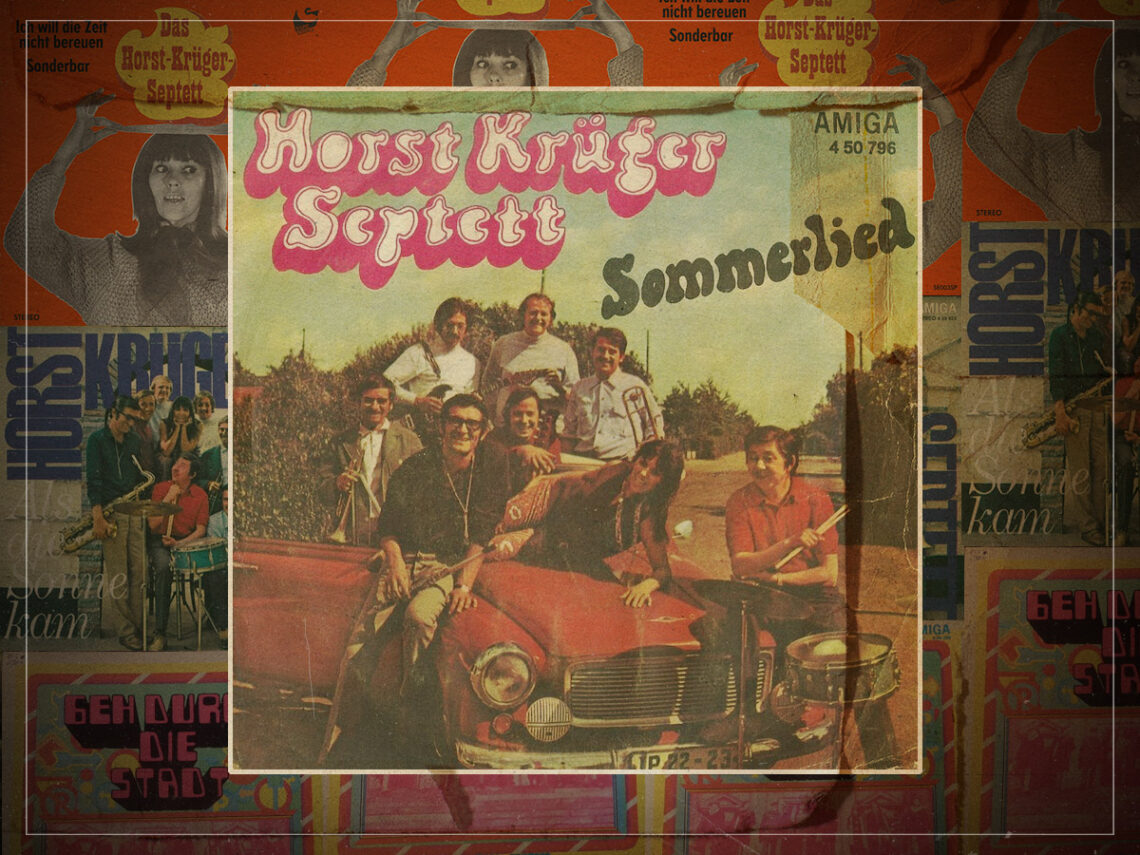
Horst Krüger Septett: Soul-jazz mastery from behind the Berlin Wall

Barbed wire, brutalism, and banned music: the Eastern Bloc is not afforded a very glamorous image in the history books. The Cold War saw Europe divided into East and West, with the East remaining shrouded in mystery for much of the 20th century. Life behind the Iron Curtain was dominated by totalitarianism and strict regulations on things like art, literature, and music. As such, perceptions of East German music are severely limited, usually composed of propagandist classical music or a handful of rebellious punk anthems, but the music scene of the DDR was far more diverse than it is often given credit for.
Particularly during the early days of the Eastern Bloc, the USSR – of which East Germany was a satellite state – heavily regulated the music that its citizens consumed. The only official releases available to the public were via state-owned record labels and radio stations, and music from outside the East was usually viewed with suspicion. The advent of rock and roll during the 1950s heightened this suspicion, with the state deeming the rebellious sounds of rock a threat to the sanctity of communist life and promptly banning these records from distribution in the USSR.
However, the Soviet state did not count on people’s endless urge for rock and roll. Soon, an extensive network of bootleggers, importers, and black market sellers sprang up, smuggling Western records into countries like East Germany under the radar of the restrictive state. By the 1970s, groups like The Beatles, Led Zeppelin, and Pink Floyd had been extensively bootlegged and shared around the Eastern Bloc – either through reel-to-reel tape bootlegs, scratchy second-hand vinyl, or unsuspecting postcard flexi-discs.
As a result of this black market, musicians in East Germany were exposed to these mind-expanding sounds occurring on the other side of the Iron Curtain and were keen to join in on the cultural revolution of the 1960s. This newfound avenue of inspiration explains the existence of endlessly inventive outfits like Horst Krüger Septett, who emerged from the DDR’s limited music scene during the early 1970s.
Originally formed in 1967 as the Horst Krüger Sextett, before gaining another member and renaming themselves in 1970, the Horst Krüger Septett pioneered a style combining influences of soul-jazz, funk, psychedelic, and beat rock. The resulting sound was captivating and unlike anything that audiences in East Germany had heard prior. Their first releases as a band came in 1970 and were published by the state-owned record label Amiga. However, these records weren’t always a true reflection of the band’s true quality.
Perhaps in an effort to appease the censors at Amiga, Horst Krüger Septett tended to tone their radical psychedelic soul-jazz offerings down for the final mixes of their studio work. During their outtakes and live performances, on the other hand, the band was as wild and revolutionary as anybody on the bill at Woodstock, capturing the spirit of musical rebellion that would rise to the forefront of East Germany’s musical output in later decades.
Thanks to the efforts of independent record labels like Sound Essence, who recently announced the release of two previously unheard tracks by the band, these revolutionary anthems are finally seeing the light of day. Clearly taking cues from the American hippie age, garage rock, and the budding soul and R&B scene, which was sweeping Western Europe at the time, the band acted as true individuals within a state obsessed by conformity.
When thinking about East German music, it is easy to reduce the nation’s output to the defiant punk rock that helped to topple the regime during the 1980s, but the inspiring soul-jazz tones of the Horst Krüger Septett are rarely afforded the same reverence. Their music reflects the everyday defiance of artists behind the Iron Curtain and the universal, regime-defying power of soul-jazz music.
