


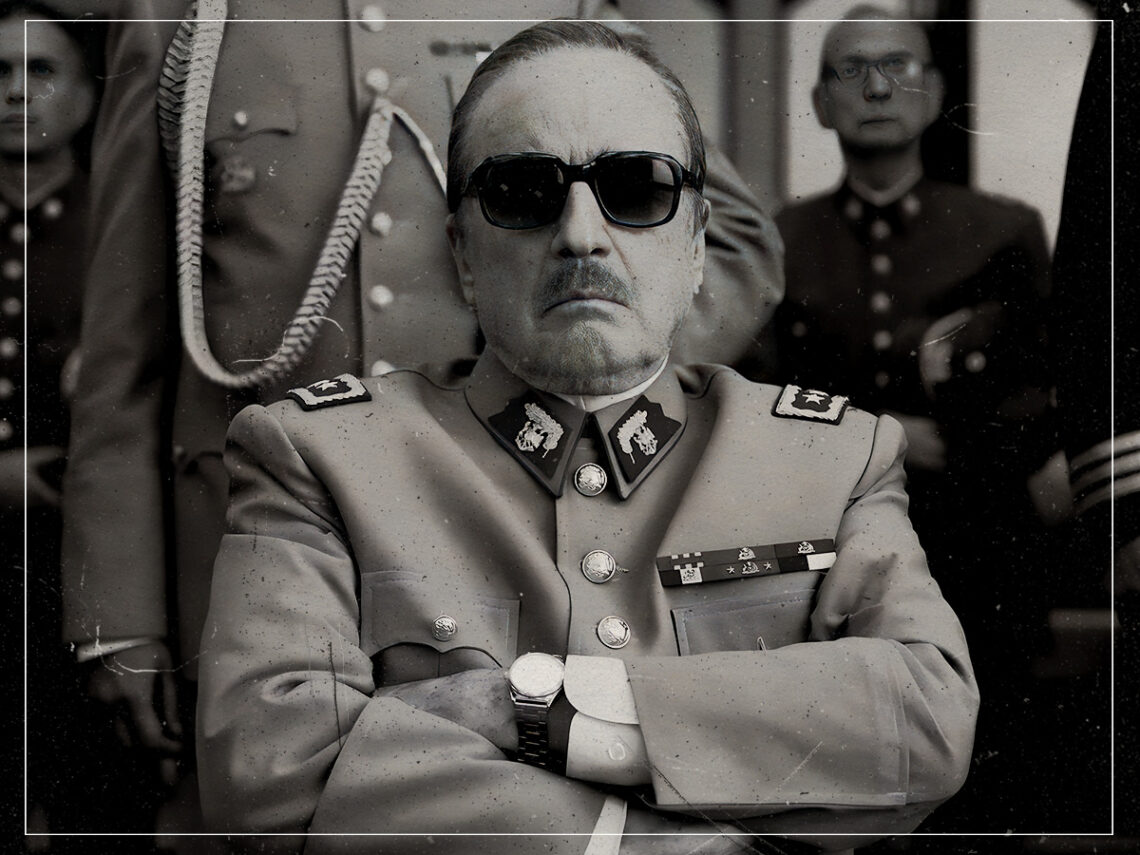
The Oscar-nominated horror comedy that turned a real-life dictator into a vampire

Having already directed Jackie and Spencer – with Maria on the way – Pablo Larraín knows his way around a biographical drama. Still, his most recent foray into real-world subjects took the distinctly unique approach of occupying the realm of horror comedy.
His explorations of Jacqueline Kennedy Onassis, Princess Diana, and soprano Maria Callas are all rooted in realism, truth, and historical facts. However, that wasn’t on the agenda when the filmmaker co-wrote the script for El Conde with Guillermo Calderón. Instead, Larraín painted Chilean dictator Augusto Pinochet as an immortal vampire.
The surreal black-and-white movie finds Pinochet at 250 years old, tired of his existence as a bloodsucking creature of the undead. He seeks to find a way out of his eternal predicament by concocting a way to end his extended lifespan after being caught up in personal and political disgrace.
It would have been the more obvious and straightforward option for Larraín to hew to the conventions of the standard biopic. Still, given the shadow Pinochet cast over the director’s home country both during his dictatorship that spanned from 1973 until his death in 1990 and in the decades since, a by-the-numbers feature never appealed to his personal beliefs or stylistic sensibilities.
“He’s an overwhelming figure who has such an impact in our society. He introduced elements of horror and tragedy and violence that kind of broke our country,” Larraín explained to IndieWire. “I was really trying to face him this time. I don’t think there’s another movie or TV show that has Pinochet as the main character. For a number of reasons, we have not been ready to do it, and I felt that this was a good opportunity to put a camera right on his face.”
As for the vampiric element, the filmmaker described Pinochet as “a man who never faced trial for what he did,” and as a result, “that impunity made him eternal.” El Conde may be fantastical in nature, but for Larraín and the way its subject affected his upbringing, he never viewed his off-kilter portrayal of the main character as a transparent act of defiance.
“I honestly don’t think this is an act of rage or indiscipline against my family,” he continued. “I’m not trying to be the weird rebel or the black sheep. I don’t do these films because of that. I do them because they’re necessary.” In the end, it was the right call, with El Conde winning praise for its satirical and otherworldly approach to a figure that impacted so many lives over such a long period of time.
It culminated in an Academy Award nomination for ‘Best Cinematography’, with Edward Lachman’s stark compositions being singled out by the Oscars as among the very best cinema has had to offer in the last 12 months.
