


‘Hlib el Ghoula’: how repurposed African vinyl created one of the most unique albums of all time

Despite his plays being written in the 1500s, the work of William Shakespeare continues to have cultural relevance. While they’re considered classics, they can also be reimagined with modern themes, as weapons in Coriolanus are switched from knives to machine guns, Romeo and Juliet’s clothes are changed, and Richard III is reimagined as a spider. The repurposed nature of the works of Shakespeare stands as a testament not only to the ongoing relevance of the bard but also to the beautiful remodelling of art in general.
The creative process is not a straight line but a series of intertwining and overlapping circles. Many people think that someone has an idea, and they create something as a result of that idea, going from A to B; however, that is never how the artistic process is carried out. An idea doesn’t simply ‘come’; it results from millions of other ideas that arrived before, all directly and indirectly acting on inspiration. Pieces of art go into another piece of art and subsequently go on to inspire and play a part in what will come after it, circles and circles and circles, all turning in a beautiful and messy cohesion that is impossible to fully understand but beautiful to be a part of.
Music is an excellent way to explain this, especially in the modern day when sampling is so prevalent. You have a song sampled using another track, a cover of a previous piece, inspired by a specific artist, who another artist inspired, and so it goes. There is an incredibly meta attitude towards music in that sense. While some people might turn their noses up at sampling, it uses music as the foundation for new music, expanding sound’s capabilities by contorting what we already have rather than creating something new entirely.
Ghoula takes this approach towards music and expands upon it on the album Hlib El Ghoula. Many people will listen to a record and say that it is unlike anything they have ever heard, but this record fits that description more than any other LP that has had it assigned. The recording process further highlights the intertwining circles of art, as old rare vinyl was repurposed to create something completely unique.
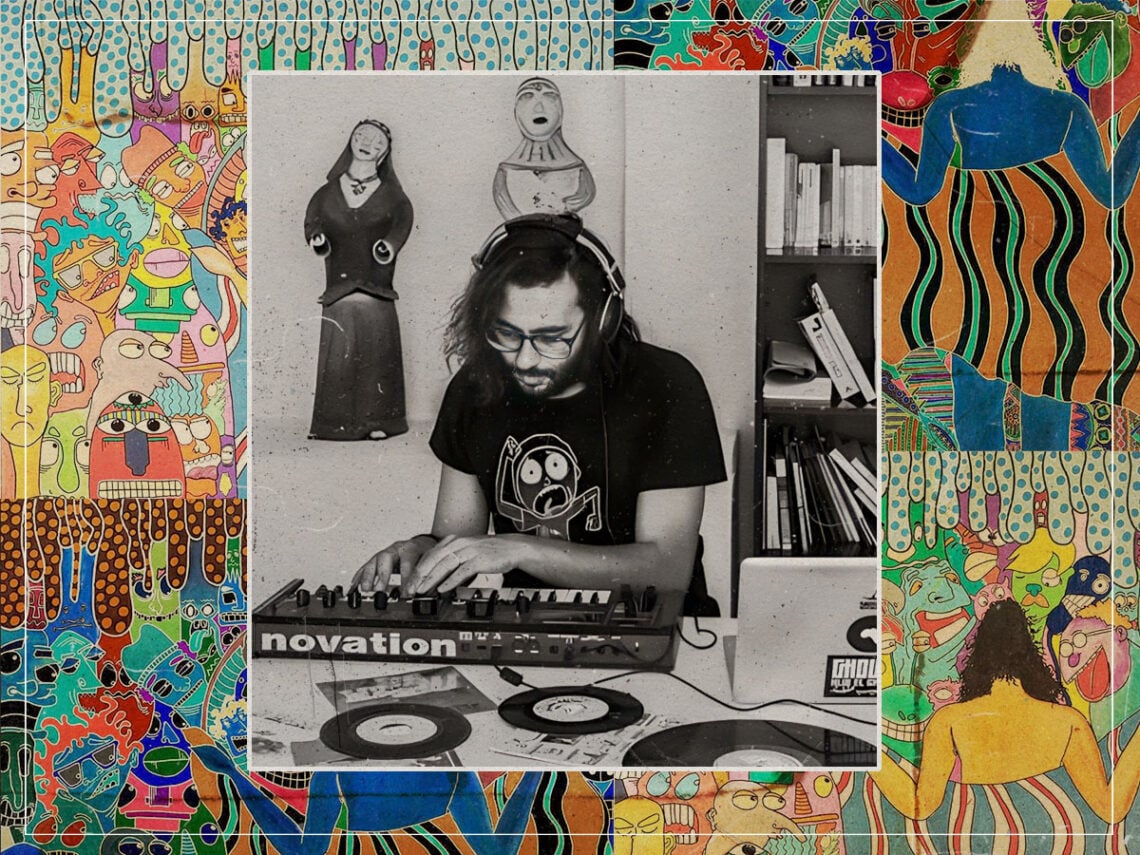
Ghoula is obsessed with vinyl and collected records as a hobby. He would frequently go to markets to find some of the rarest African vinyl he could in order to expand upon his collection. One day, when he was looking at the hundreds of records that flooded his home, he had the idea to morph existing art into something else.
To do this, he would repurpose some of the old and rare vinyl he had, either by scratching it to give it a different sound, finding a specific section and repeating it or merging the sound with another vinyl he had. On top of this, he would play live instruments and record them over some of the samples of music he had created. The result sounds like the kind of music time travellers would listen to, genuinely individual but a lot of fun.
Ghoula is a testament to the immortal nature of art. Just because a project is finished doesn’t mean it no longer has its place in the ever-changing landscape of art. All full stops are written in pencil, and the ability for different things to be repurposed or drawn from as inspiration remains, while the creative world continues to alter and remain culturally relevant because of it.
The creative process is not and never has been a straight line. Like the repurposed vinyl that Ghoula used to create his masterpiece, it’s all just circles, overlapping and intertwining. Forever endless and better for it.
