


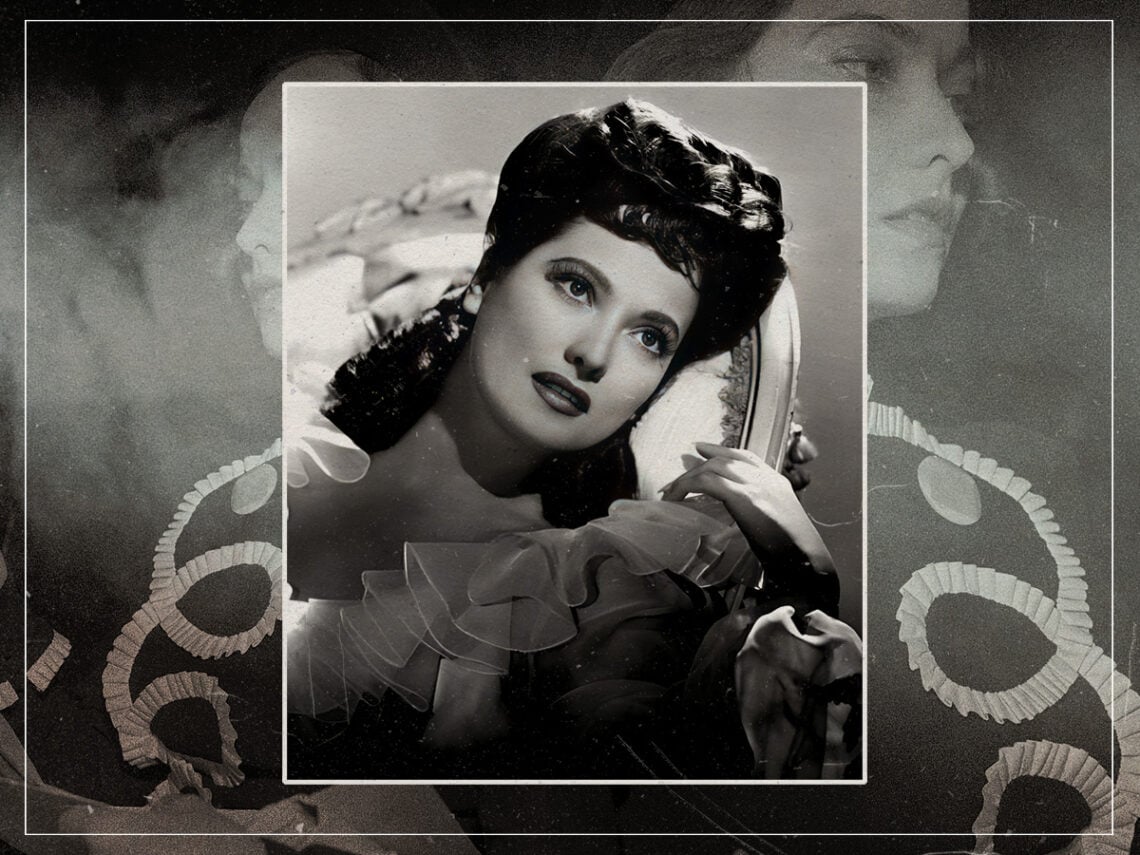
Merle Oberon: the history-making Oscar nominee who denied her heritage

There were unfounded claims of identity politics gone mad when Michelle Yeoh was named the first Asian-identifying performer nominated for an Oscar in the ‘Best Actress’ category for Everything Everywhere All at Once. However, that only reinforced how far Merle Oberon had fallen through the cracks of history.
Beginning her career in the late 1920s through a string of uncredited performances in silent films, Oberon continued gaining stardom once she’d transitioned into the talkies. 1934’s The Scarlet Pimpernel served as a breakthrough that captured the attention of studio mogul Samuel Goldwyn.
Her burgeoning relationship – and eventual marriage – with writer, director, and producer Alexander Korda also lent her nascent career an assist. Oberon’s Hollywood debut couldn’t have gone much better after the Goldwyn-produced drama The Dark Angel landed her on the shortlist for ‘Best Actress’ at the Academy Awards.
Unbeknownst to everyone but her, though, Oberon had just made history. Throughout her time in the spotlight, she was billed as having been born in Tasmania, Australia, but there was no birth certificate because the records had been destroyed in a fire. However, the truth about her real heritage was hidden so well from the public that the facts didn’t emerge until after her death in November 1979 at the age of 68.
Oberon was born Estelle Merle O’Brien Thompson in Bombay, the daughter of Welsh mechanical engineer Arthur Terrence O’Brien Thompson and his wife Charlotte Selby. Despite having an Anglicised name, Oberon’s mother was from Sri Lanka, and she lived in India until the age of 17, when she set foot on British soil for the very first time.
Nobody had any idea at the time, but her Oscar nomination for The Dark Angel made her the first female performer of Asian descent to be shortlisted in the category. Under the assumption having a biracial background could hamper her career prospects, Oberon concocted an entirely fabricated backstory to keep the information from coming out and affecting her reputation, standing, or the choice of roles she was offered.
Such was her dedication to maintaining the façade that Oberon honed an upper-class British accent to perfection and began using skin-bleaching creams full of ammoniated mercury. This ended up causing noticeable damage to her face that had to be obscured by makeup and offset by the lights of a film set.
A car crash in 1937 caused further disfigurement to her features, which saw her make another lasting impact on cinema. In an effort to hide her scars and make the most of her eyes, cinematographer Lucien Ballard developed a new technique in 1944’s The Lodger. To this day, the catchlight is referred to within the industry as ‘The Obie’. Oberon ensured that nobody discovered the truth behind her history-making Oscars moment, but the truth always prevails in the end.
