


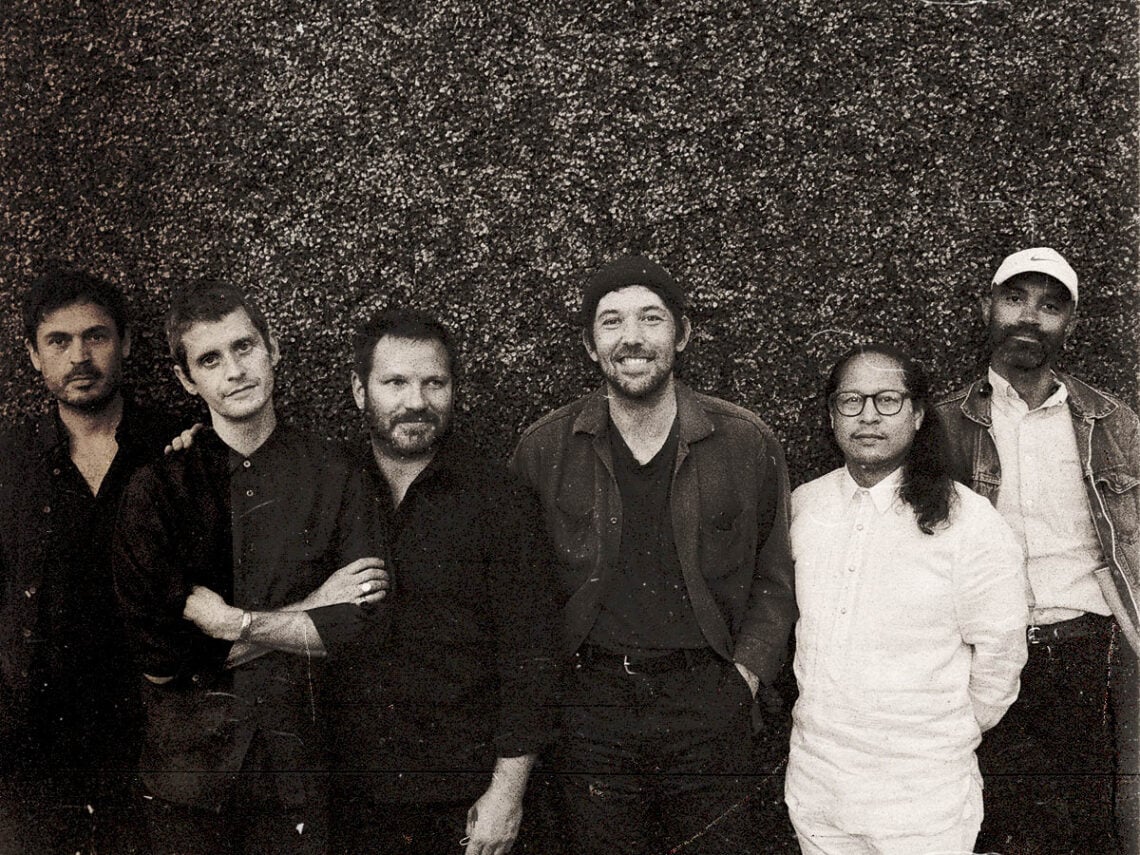
‘Helplessness Blues’: Fleet Foxes’ groundbreaking “anti-protest song”

Over the course of four albums, Fleet Foxes have released nothing but the purest reimaginings of folk music and are one of the finest modern examples of an act that has twisted a genre so rooted in tradition to become more contemporary without losing its original purpose. If poignant and poetic lyrics are your wheelhouse, then the words of Robin Pecknold are sure to stir all kinds of emphatic emotional responses, and if tight vocal harmonies and lush instrumentation are your bag, then the rest of the band will have you covered on that front as well.
Their second album, Helplessness Blues, was released in 2011 to widespread critical acclaim and stands tall as not just one of the best modern folk records but one of the greatest records of the 2010s. While this record was outstanding in its own right, the band had already begun their trajectory towards this masterpiece on their 2008 EP Sun Giant and self-titled debut album from later in the same year.
On both of those releases, the band played to their lyrical and sonic strengths to conjure landscapes that felt as meticulously detailed as the Pieter Bruegel painting that adorns the cover art of the debut record, with so many distinct focal points combining to create an intricate image. However, this would only expand on the subsequent album, which comprises 12 songs that each build their own distinct worlds but all revel in the joys of being alive.
As its lead single and title track, ‘Helplessness Blues’ is perhaps the most celebratory and anthemic song on the record. According to Pecknold, it comes from wanting to explore “the desire to cultivate something more than oneself,” he explained in an interview with The Independent in 2011.
Opening with the line “I was raised up believing I was somehow unique, like a snowflake distinct among snowflakes,” the song immediately tackles the perceived sense of individualism that Pecknold was brought up to pursue but ultimately comes to realise over the course of the song as the narrator grows older and wiser that what is more important is to embrace being a part of the world and working towards creating a better planet for all.
Pecknold continues by stating, “I guess I feel like in being a white male from America, a member of the most privileged sect on earth, I have everything that people all over the earth are fighting for, and sometimes I just feel like I’m not really doing enough with that.” With that, the song at its core can be seen as an ‘anti-protest song’, acting as the inverse of the kinds of songs Graham Nash would write, who was one of Pecknold’s greatest inspirations for penning the song.
In 2022, Pecknold revisited the song’s message in his book, Wading in Waist-High Water: The Lyrics of Fleet Foxes, asking the question, “Can I be so emotionally direct that it’s actually uncomfortable? Can a song be half rousing and half dreamlike?”
The song succeeds on both counts. While it is emotionally raw and personal, Pecknold displays a sense of catharsis that renders the listener uncontrollably filled with all of the same emotions and suddenly acutely aware of their position in the world.
“I meant every word of this song,” Pecknold concludes, “and still struggle with the same feelings, so I understand why it connected with listeners, but it leaves me in a vulnerable position of feeling too seen and having been too emotionally revealing.”
