


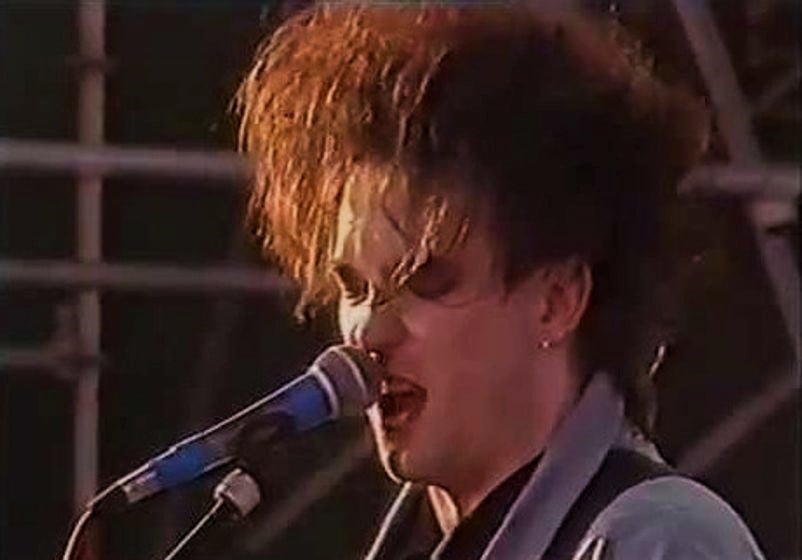
Hear the isolated vocals on The Cure song ‘Close to Me’

The uniqueness of Robert Smith comes out in many ways. There’s his songwriting, which has elevated The Cure to legendary status among the greatest bands of the post-punk, synthpop, and alternative rock movements. There’s his image, which almost single-handedly birthed the goth movement. There’s his guitar playing, which was so singular that he was hired specifically for it when he briefly joined Siouxsie and the Banshees in the early 1980s.
But Smith’s most unique trait very well could be his voice. Immediately recognisable, Smith’s voice is remarkably versatile. Although he became best known for his whispy and slightly sinister vocal tracks like ‘Lullaby’ and ‘Lovesong’, Smith is also capable of dynamic shouts, sparkling high notes, guttural growls, and even some silly animal noises that you can pick out on ‘The Lovecats’. Wherever his voice lands, it’s always uniquely Robert Smith.
Smith goes more for the quieter side on ‘Close to Me’, but it isn’t disconcerting the way it is on ‘Lullaby’. Instead, Smith’s vocal line on ‘Close to Me’ is intimate, using every trailed-off line as a way of bringing the listener closer to the tune. ‘Close to Me’ is, in essence, a love song, and Smith does all he can to make sure that the listener has to come to him in order to make out some of the more romantic lines hidden in the lyrics.
What the isolated vocal track also reveals is something that tends to get lost in the mix: Smith is scat-singing against his own lead vocal line throughout the entire song. Why he felt it was necessary to do this is anyone’s guess, but it does add a playful and tuneful singularity to the track. This was far removed from The Cure’s doom and gloom era, with Smith leaning hard into poppy melodies and synthesizers. Occasionally, the scat-singing vocal acts as a harmony line, but mostly, it’s just there to add colour.
Check out the isolated vocals from ‘Close to Me’ down below.
