


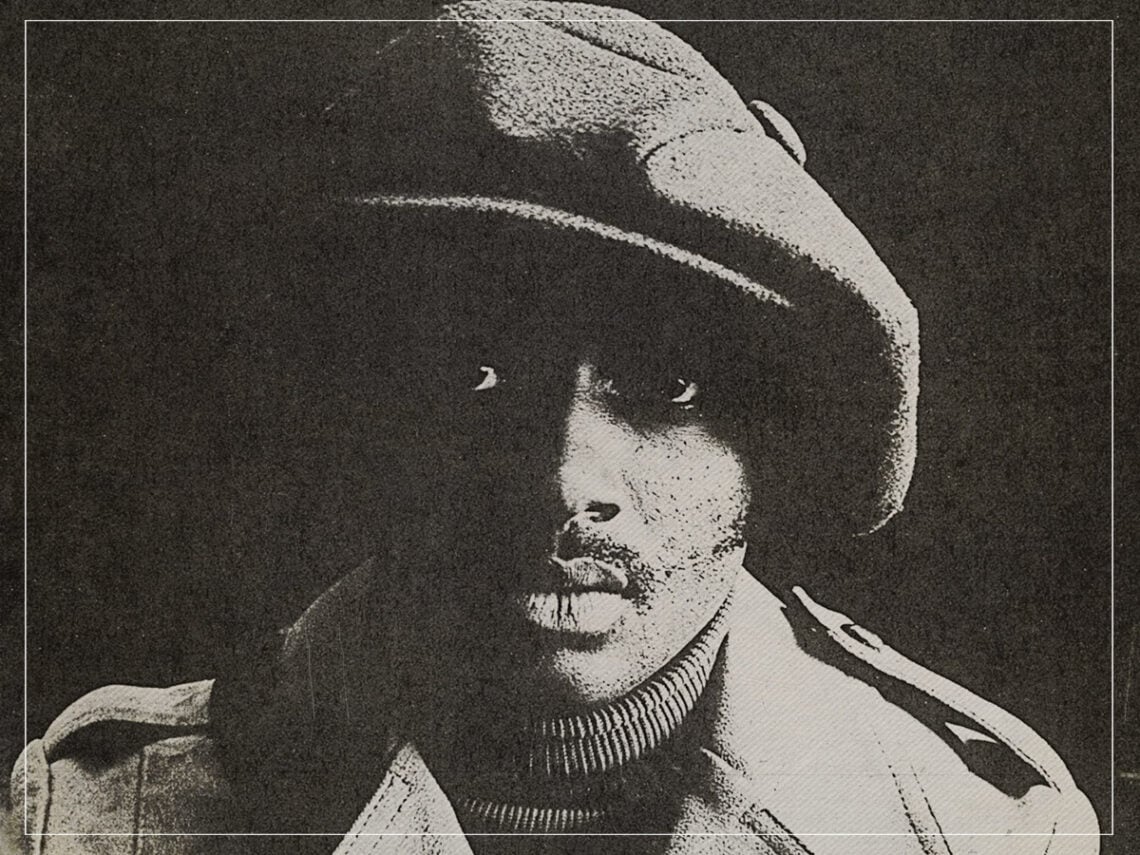
“He hears the music”: The bizarre way King Curtis discovered Donny Hathaway

“I used to think we had two geniuses on Atlantic: Aretha Franklin and Ray Charles,“ Atlantic Records producer Jerry Wexler once proclaimed on Unsung. “When Donny Hathaway signed up, I announced to one and all that I think we’ve found our third genius.” He was indeed a soul sensation like no other—one plagued by the schizophrenic visions that both ailed his output and fed into his artistry.
Remarkably, Hathaway had been a noted figure in music since he was three. At that time, when most can barely babble, he went by the name of Little Donny Pitts and toured the gospel circuit with his grandmother. He wasn’t just a novelty either, he became attuned to hearing melodies everywhere and anywhere from his infancy. His 1970 album Everything Is Everything would later signify this: music was his world.
So, it’s perhaps not all that surprising that he got his big break out of the most mundane of settings, proving music truly did come from everywhere for the late Chicagoan star. After a youth spent on the gospel circuit, Hathaway was trying to forge a more lucrative career in the billowing world of commercial soul. By pure chance, this search led him into an elevator one day.
While most of us silently stare forwards, as though incapable of head movement towards the strangers were trapped in there with, for those ever-long seconds before the merciful ding tells us we’ve reached our floor, Hathaway was a far more social beast than most. Even still, he broke the sacred sanctity of an elevators silence in the most subtle and beautiful of ways. After all, he was a man of great religious faith.
As the lift’s motor began to whirr, he started humming a tune, perfectly matching its fluctuating pitch. It just so happens that the great King Curtis, a jazz soul extraordinaire, was standing next to him. He heard this feat and was floored by it. ‘What are you doing, buddy?’ he mused, and the simple exchange that followed led to Hathaway handing over a rough cut of his masterpiece in the making, Everything Is Everything.
King Curtis couldn’t believe it. He’d met a maestro in an elevator, a realm where usually the most eventful unfolding is an unfortunate fart. On this occasion, it was a hint of heavenly beauty and unearthly musical skill. When he got his hands on Hathaway’s demo, he essentially sprinted it over to Wexler, and the rest, as they say, is ancient history.
Hathaway may have died in 1979 at the age of 39 when his mental health struggles overwhelmed him, and he leapt from his hotel balcony, but the gift he left behind – not despite his battles or even in spite of them, but in the soulful, transfiguring symbiosis of them – was enormous. As Eric Murphy, the producer who was with him hours before his death, put it, “He hears the music, he hears the strings, he hears the production, he hears the drums, he hears the lyrics all at the same time.” There’s perhaps nobody else in soul quite like that.
The continued influence of Donny Hathaway
When Far Out spoke to Charlie Steen of Shame, he explained how Hathaway is an influence even in the disparate realm of modern post-punk while hailing his 1973 album, Extension of a Man, as a masterpiece. Sadly, the release was his last studio album before his untimely death in 1979, a tragedy that imbues the record with a poignant sense of reverence. “I think that my favourite song by Hathaway would be ‘The Ghetto’,” Charlie explains, “You can’t beat it, but as an album, this is a work of art.”
“I remember at the age of 15 this would be playing through my headphones at all times, the voice of an angel and a poet bursting forth with honest and beautiful musicianship,“ he continues. “It seems that so many artists took influence from the work of Donny Hathaway; the sound of his voice alone stands out from any crowd and is completely his own. The album title reminds me of Pieces of a Man by Gil Scott-Heron, which came out two years earlier and is indeed another work of art. And as such, must be mentioned.”
