


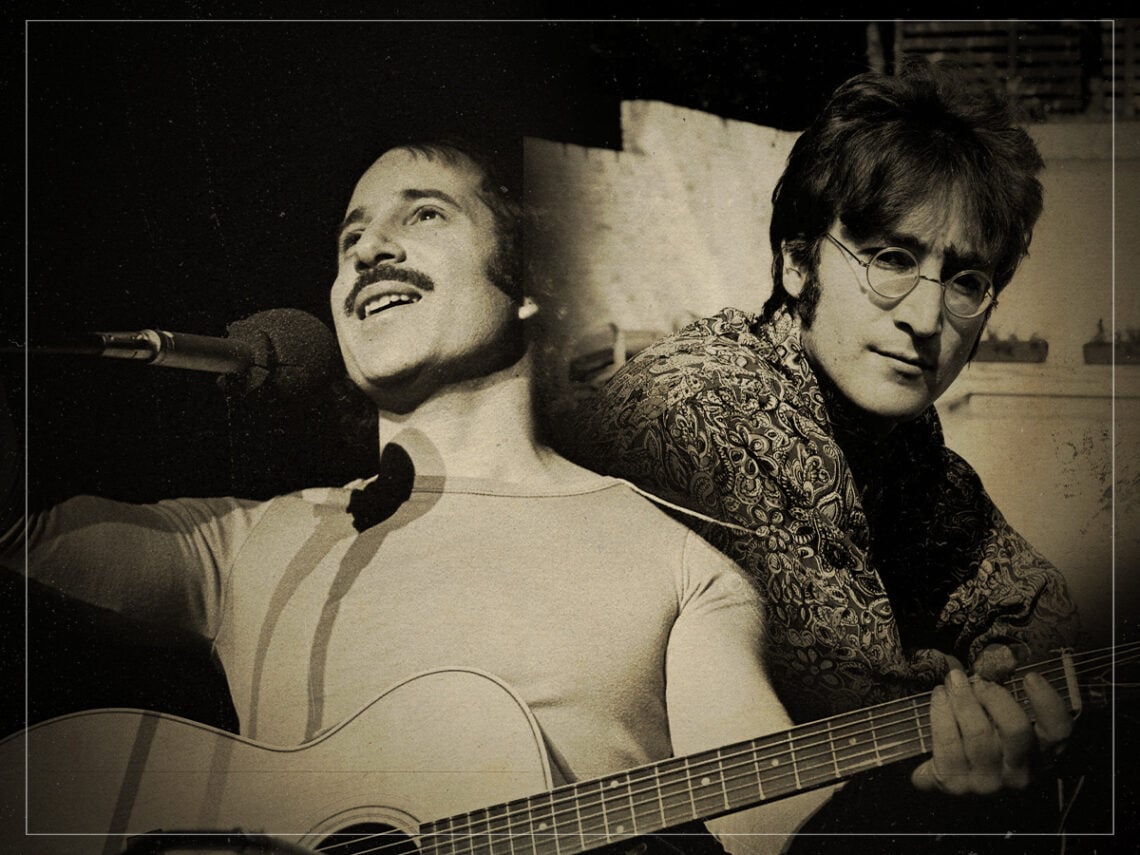
“A total record”: the 1967 Beatles song Paul Simon called perfection

The two most important factors that led to The Beatles‘ success were great songs and good timing.
The Beatles were making music two decades after World War II ended, and while that might sound like a long time, countries were still licking their wounds. People were recovering from their losses, nations were still in economic decline, and there wasn’t a whole lot of joy knocking about for those who needed it.
Imagine, then, how people reacted when four likeable lads from Liverpool took to the airwaves and started playing upbeat and beautiful songs like ‘She Loves You’, ‘Love Me Do’ and ‘I Want To Hold Your Hand’. Suddenly, there was joy in the world once again, as people were given permission to let their hair down and have fun, acknowledging that there was sadness, sure, but opting to brush it aside for dancefloors and sing-alongs.
It travelled around the world as well. While it might have first taken prominence in the UK, once audiences beyond that got an earful, there was no denying the band’s sound. Bruce Springsteen, for instance, recalls the first time The Beatles played on the radio, and all of a sudden, music took on new meaning, and he was given an idea of what kind of career he should pursue.
“‘I Wanna Hold Your Hand’ came on the radio in 1964, that was going to change my life because I was going to successfully pick the guitar up and learn how to play,” said Springsteen, “I saw Elvis on TV and when I first saw Elvis, I was nine but I was a little young, tried to play the guitar but it didn’t work out, I put it away […] The keeper was in 1964, ‘I Wanna Hold Your Hand’ on South Street with my mother driving.”
The Beatles couldn’t continue just making songs like ‘I Want To Hold Your Hand’, though. Their longevity is the result of a willingness to adapt and be open to the idea of embracing different styles of music, and they certainly did that. Throughout their run as a band, you can hear plenty of different styles and influences at play, as their music went from catchy pop songs to incredibly complex and intricate works of art.
Paul McCartney felt a real shift in the band’s music when they wrote ‘Eleanor Rigby’, a track which he called the first important one that they ever put together. “It’s difficult to discuss this without sounding immodest, but I think I started to feel it around the time of ‘Eleanor Rigby’,” he said, “Prior to that, I thought the music was very good, and I realised we were in a different league when we wrote ‘From Me To You’, because it had a middle eight in it and went somewhere we hadn’t been before, but you used the word ‘important’. For me, ‘Eleanor Rigby’ was the start of that.”

After that moment, The Beatles wrote a lot of songs which were intricate, layered, and are still celebrated as works of art to this day. Look at songs like ‘While My Guitar Gently Weeps’, ‘A Day In The Life’ and ‘Penny Lane’, to name a few. Every great musician and music lover has their favourite, and for Paul Simon, that came in the form of ‘Strawberry Fields Forever’.
Simon, who also knows a thing or two about writing a perfect song, said that while he was a fan of a lot of what The Beatles did, this was the track which was the most complete, and near enough perfect. “I would pick ‘Strawberry Fields [Forever]’, although there is your example of a total record,” said Simon, “A very important record to me, I like it a lot. You can’t even sing the song. It’s really hard to sing the song.”

Never Miss A Beat
The Far Out Beatles Newsletter
All the latest stories about The Beatles from the independent voice of culture.
Straight to your inbox.