


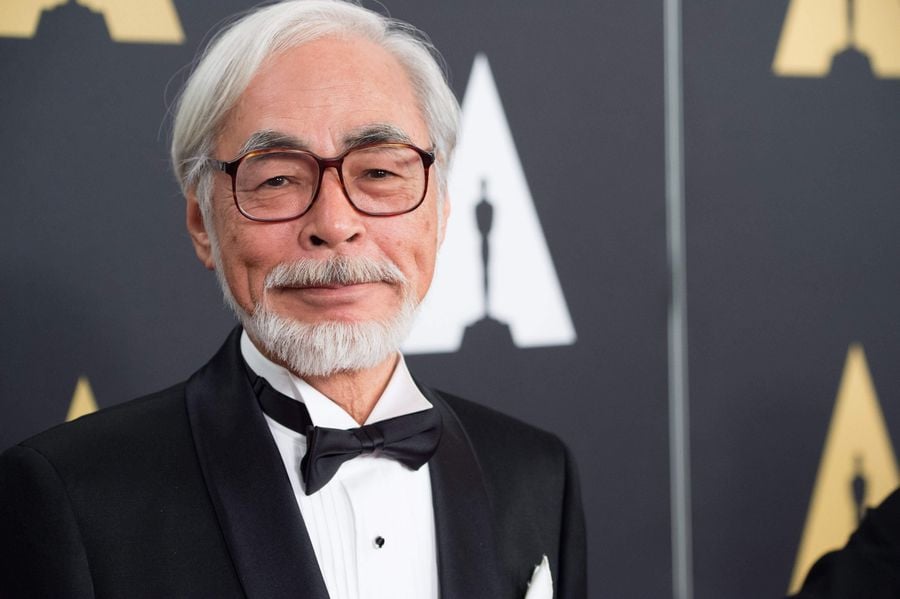
Hayao Miyazaki names his 25 favourite films of all time

Hayao Miyazaki might just be the most famous animator alive today, known for his pioneering experiments with the medium which have produced one masterpiece after another. Films like Princess Mononoke and Spirited Away have impressed audiences all over the world, inviting them to inhabit truly magical worlds for a couple of hours at a time.
Although Miyazaki had previously announced his retirement, Studio Ghibli fans can expect one final film from the Japanese auteur who is currently working on an adaptation of Yoshino Genzaburo’s novel How Do You Live? before retiring for good. Over the years, Miyazaki has drawn inspiration from animators from different parts of the world as well as legendary filmmakers.
For Miyazaki, Akira Kurosawa is one of the greatest directors in history and he definitely has some preferences when it comes to his filmography. Miyazaki once commented: “Among the works directed by Akira Kurosawa, Ikiru (To Live) is one of his all-time classics. It was created forty years ago, but it has lost none of its power. When viewed anew today I find it has an even greater ability to impart awe.”
While Miyazaki has previously shared his disapproval of Hollywood, he has included several American classics in some of his favourite films of all time – ranging from Charlie Chaplin and John Ford to Steven Spielberg. He has also been influenced by the Italian Neorealism movement as well as the works of Soviet artists.
Reflecting on his formative years, Miyazaki once wrote: “I came home amazed after seeing [Bicycle Thieves], and I trudged home heavy-hearted after watching films starring Isao Kimura—who always played overly earnest and sincere and never-very-good-at-life young characters—for they taught me how hard life is.”
Check out the full list below.
Hayao Miyazaki’s 25 favourite films:
- Jaws (Steven Spielberg, 1975)
- Bicycle Thieves (Vittorio De Sica, 1948)
- Modern Times (Charlie Chaplin, 1936)
- My Darling Clementine (John Ford, 1946)
- Babette’s Feast (Gabriel Axel, 1987)
- Tale of Tales (Yuri Norstein, 1979)
- The Spirit of the Beehive (Víctor Erice, 1973)
- Ikiru (Akira Kurosawa, 1952)
- Priest of Darkness (Sadao Yamanaka, 1936)
- Peter Pan (Clyde Geronimi, Wilfred Jackson and Hamilton Luske, 1953)
- The Snow Queen (Lev Atamanov, 1957)
- Animal Farm (Joy Batchelor and John Halas, 1954)
- The Old Mill (Wilfred Jackson, 1937)
- Ashes and Diamonds (Andrzej Wajda, 1958)
- How Green Was My Valley (John Ford, 1941)
- Ran (Akira Kurosawa, 1985)
- Ballad of a Soldier (Grigory Chukhray, 1959)
- The King and the Mockingbird (Paul Grimault, 1980)
- Flame and Women (Yoshishige Yoshida, 1967)
- Seven Samurai (Akira Kurosawa, 1954)
- The Little Mermaid (Ron Clements and John Musker, 1989)
- Nostalghia (Andrei Tarkovsky, 1983)
- The Curious Adventures of Mr. Wonderbird (Paul Grimault, 1952)
- Hedgehog in the Fog (Yuri Norstein, 1975)
- Chikemuri Takanobaba (Daisuke Itô, 1928)
Miyazaki might not agree with the techniques and the vision of Disney films on most occasions but he cited Peter Pan as a revelatory experience, comparing it to the Japanese production Little Prince and the Eight-Headed Dragon while elaborating on the different approaches.
He explained: “Peter Pan’s flying scenes are predicated on the experience of flying in an airplane with a moving perspective. As a result viewers soar through the air with the story’s characters and feel liberated by the exhilarating vista unfolding below them, with moonlight casting shadows on the city streets. With the characters we share in the freedom of flying.”
