


Have we moved past the basic love song?

If there’s one thing that’s always been guaranteed to draw attention in art, it’s love. Across all forms, love is simple enough to evoke emotional responses, yet complex enough to feel deeply embedded. It defies easy description in a way that feels both intimate and shared by all. It makes sense, then, that the love song would be one of the most powerful forms of music.
Given its undeniable proliferation, the love song is, therefore, almost the default setting in music. From day one, it’s been the surest thing, whether channelled with the same types of literary or poetic infusions as Bob Dylan or the more confessional styles of Joni Mitchell. Its definition also spans far and wide, incorporating all variations of the word itself, whether romantic or platonic, friendly or familial.
For some, it’s the basis for where all life gains its meaning, and the tool with which you can do anything. As The Beatles once famously quipped, it’s all you need, and, for a time, that felt as real as anything. Especially in music, love was a strong sonic and lyrical component that gave art substance; the word itself was merely an answer to all the big existential questions that might float through the heart on a daily basis.
However, given the current landscape and the constant push for artists to reinvent themselves, have we moved past the basic love song? The concept itself reigns supreme in many mainstream spaces, but in those lesser-minded spaces, where musings and discourse about other, more pressing matters—whether personally or politically—are the basic love songs really enough to engage modern listeners?
Is the basic love song a relic of the past?
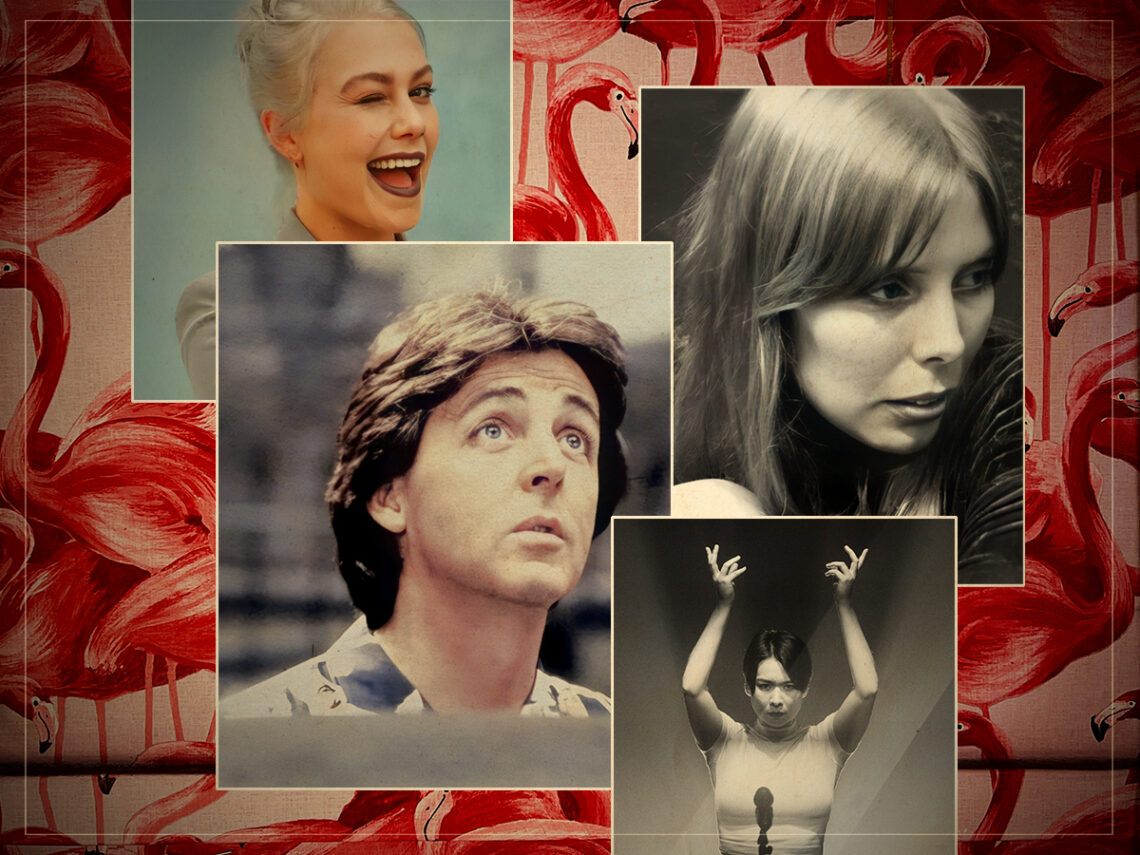
Discussing whether we’ve surpassed the need for the basic love song feels like a can of worms, mainly because it’s difficult to consider all the iterations of love songs through history and the revolutionaries who made them. For instance, every era has its share of love song pioneers, and even today, many contemporary artists, from Phoebe Bridgers to Mitski, are achieving the same level of impact.
However, deciphering whether the love song has a place in today’s landscape also comes down to what that means, exactly. For instance, some might argue that the love song that talks candidly about the romance between two parties isn’t interesting enough to warrant deep engagement, unless the artist is lyrically adept enough to make it seem more interesting than it actually is.
Any perusal of the current Official Charts will reveal that, in mainstream pop, the basic love song still thrives. However, while some of these may incorporate subtle layers that make them appear more interesting, some more than others, there seems to be a glaring discrepancy between the formulaic chart-toppers and what others may consider to be the more boundary-pushing innovators.
It’s easy to understand why such mainstream versions of love songs might easily warrant a charting position against less visible genre-blending artists who would rather channel their political rage into their music. However, it’s interesting to look at whether songs with deeper reflections on today’s society actually hold more longevity than the ones longing for a distant fixation whose body shape plays on their mind.
At the same time, however, the suggestion that love has no place in today’s musical landscape feels severely off the mark. When done right, the love song still has the power to inspire and move—that’s undeniable. However, it seems as though we’ve reached a point where it isn’t enough to execute such notions shallowly or in a way that isn’t aware of its own contexts.
Today, more than ever, artists are feeling the pressure to remove themselves from their own texts, though in a way that feels more naturally resigned than unimpactfully vague. Most are now approaching the love song with more creativity, with some even factoring sociopolitical contexts as a means of applying more depth, knowing that audiences are no longer here to be passive but to be as engaged as the artist.
Therefore, the love song still charges forth with as much fervour as its culturally-embedded counterparts, though with more of a heady exchange with the listener than mere deliberations about a singer’s other half. And while some of the more “basic” compositions still do well, their timelessness remains debatable, as the concept adapts to the growing need for greater complexity.

Never Miss A Tale
The Far Out Bob Dylan Newsletter
All the latest stories about Bob Dylan from the independent voice of culture.
Straight to your inbox.