


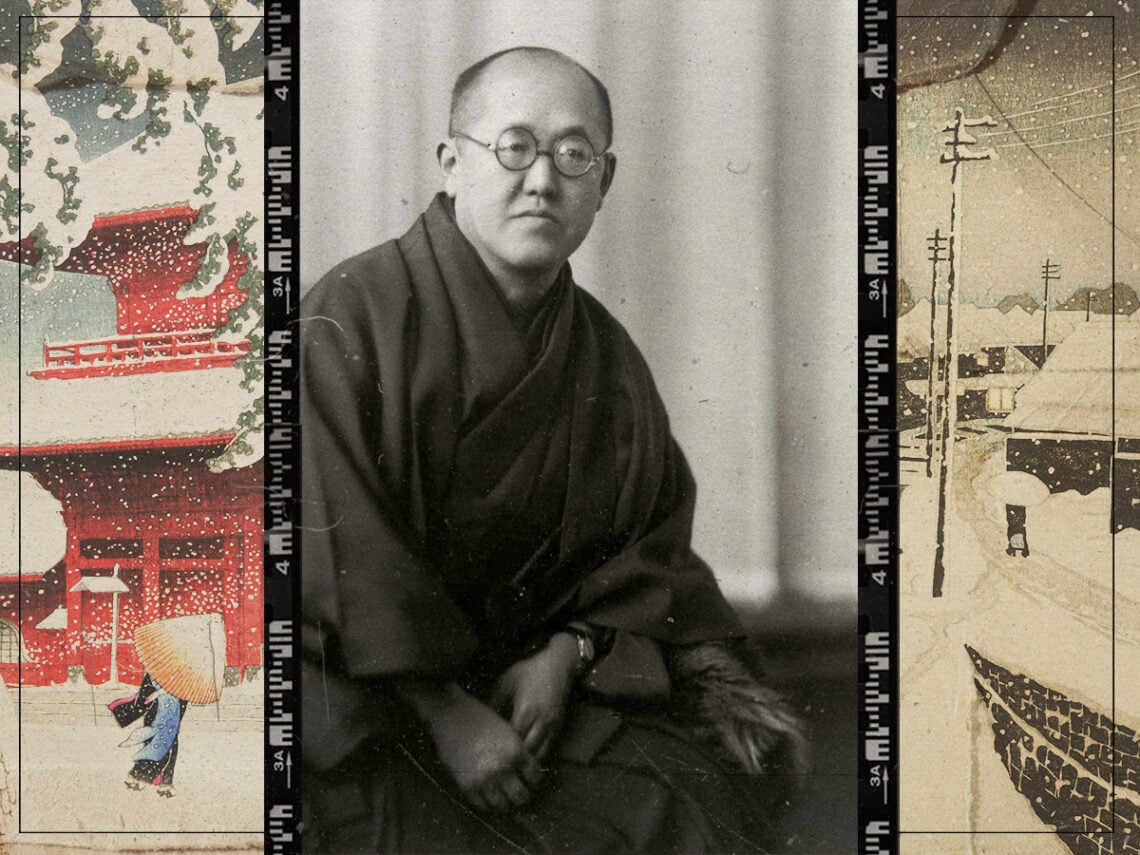
Hasui Kawase: The artist who inspired Studio Ghibli

It’s undoubted that in the world of animated cinema, Studio Ghibli has provided some of the most visually mesmerising and narratively moving films of all time. Co-founding in the mid-1980s by Hayao Miyazaki, Isao Takahata and Toshio Suzuki, Ghibli went on to release some of the most admired animated cinematic efforts, including Spirited Away and Howl’s Moving Castle.
There’s a tenderness to Ghibli films that touch the human heart and spirit, and visually, they are true masterpieces. One might think that such inspiration could only have come from deep within the creative minds of Miyazaki and his peers, but the truth of the matter is that the director has been deeply influenced by the artist Hasui Kawase.
Kawase was a renowned Japanese woodblock print artist of the early 20th century, a key figure of the shin-hanga movement, whose artists portrayed traditional subjects with styles influenced by the Western world. Kawase had mostly detailed landscapes in nearly one thousand woodblock prints over the course of 40 years, but his use of atmospheric effects and unique lighting separated him from his contemporaries.
The Tokyo-born artist demonstrated a talent for art from a young age and was eventually sent to learn under the tutelage of the woodblock print master Kiyokata Kaburagi. His early works depict beautiful and tranquil landscapes of Japanese natural settings, capturing the countryside with careful attention to detail.
Travelling through his native East Asian country also inspired Kawase, and he painted many iconic landmarks of Japan throughout his career, including Mount Fuji, the stunning temples of Kyoto and the busy streets of Tokyo, with each print infused with his unique character and mood.
Delicate lines and brilliant colour choices helped Kawase to create atmospheric images that evoke a sense of longing and nostalgia, through which viewers are practically transported away to scenes that lie somewhere between reality and fantasy, much in the way that the films of Studio Ghibli also do.
After all, the influence of Kawase on Ghibli, Miyazaki and his team of genius illustrators and animators is plain to see, and Miyazaki himself has previously stated his deep admiration for the legendary painter. The ability of Kawase to capture natural beauty alongside the human experience plays a significant part in Miyazaki’s love for Kawase, and it finds its way into several of the best Studio Ghibli films.
The likes of My Neighbour Totoro, Spirited Away and Princess Mononoke all feature landscapes that are highly reminiscent of Kawase’s woodblock print style. Whether in the lush forests or beautiful countryside settings, it’s clear that Miyazaki was always keen on paying his respects to one of his favourite artists.
More importantly, perhaps, there’s also been an emphasis in Ghibli films on the importance of respecting the natural world, and Kawase’s works also depict nature as special and sacred. The natural world ought not to be impacted by human activity, and Miyazaki seeks to stress the imperative of preserving such parts of our beautiful yet delicate world.
Just as so many Studio Ghibli films possess the quality to reach out and touch our hearts, minds and souls, so too did Hasui Kawase transcend the limits of his artistic medium to cement the cultural history of Japan and leave a legacy that will undoubtedly continue to inspire artists all across the world, just as he once did to Hayao Miyazaki.
