


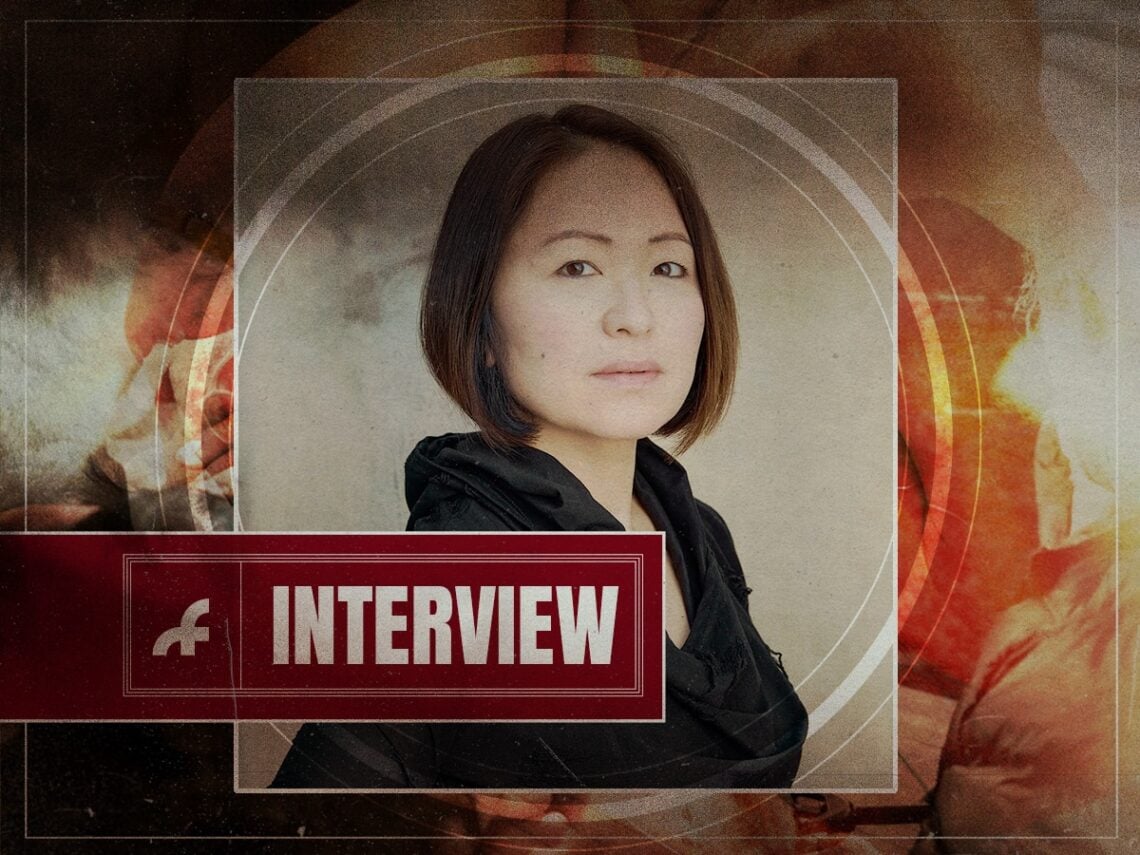
“Everybody deserves to be safe in their workplace”: Haruka Kuroda on the importance of intimacy coordinators within the film industry

Acting comes with its fair share of challenges. While most stars are expected to bare all emotionally, delving into the deepest depths of their minds to conjure up realistic feelings of everything from fear to devastation, it is sometimes the case that actors must reveal all physically. Getting naked, or simply acting out some of life’s most intimate activities for all to see, is no easy feat.
Nude and sex scenes are common in today’s entertainment landscape. Even shows aimed at younger teenage audiences often feature scenes that would be considered risque to adults many moons ago. Things have changed, and the easing of censorial rules in Hollywood, for example, has allowed filmmakers to increasingly show more explicit scenes within their work.
The past few years have seen an increase in awareness surrounding sexual assault and misconduct in the industry, with the #MeToo movement helping to highlight the need for safeguarding on film sets. It is here that many actors, especially young newcomers – and particularly women – find themselves in vulnerable positions. Some budding actors might take on films that require them to get naked or simulate intercourse, accepting these roles in the hopes of getting more acting jobs. They might, however, be too scared or uninformed to assess the situation and make the right decision appropriately.
The film industry is a high-pressure and cutthroat environment, and it is not hard to see how easy it is for many actors to find themselves in positions where they are pressured into doing scenes they later regret. That’s why it is so vitally important that intimacy coordinators have more prominent roles in the industry, creating safe spaces for actors to discuss explicit scenes and, if they choose to do them, execute them in a calm and unthreatening environment.
Japanese actor and voiceover artist Haruka Kuroda recently spoke to Far Out about the importance of intimacy coordinators, a role she has been performing for several years across stage and screen productions (where it’s known as an intimacy director in theatre). With a career spanning multiple decades as an actor and fight coordinator, Kuroda discovered the role of intimacy coordination later in her journey. She was inspired to pursue it after a negative experience on the set of a short film that required her to perform fully naked—a situation she was initially comfortable with. However, when she realised there were no women present on set and her request for the director’s wife to be present during the intimate scenes was denied, Kuroda was left feeling deeply “uncomfortable”. This experience underscored for her the critical need for dedicated professionals to ensure the safety and comfort of actors during such vulnerable moments.

In this instance, Kuroda walked out, but she was racked with guilt, wondering if she was being unreasonable. “Then finally, I thought to myself, I did the right thing. What I asked wasn’t wrong.” With this experience in mind and a desire to help other actors who might find themselves in similar positions, Kuroda began her journey into the world of intimacy coordination. “There are no other professions where one doesn’t feel the fear of being hired or fired because they refuse to be naked. No other profession in the world. Yet, as an actor, that could be a possibility,” she explains.
“Everybody deserves to be safe in their workplace – or in life – and if this role helps to create that safety for actors, for the crew, for the creative team, then that’s a positive change that we’ve made for the industry,” Kuroda says of her job. You might think it is now a legal requirement for film sets to have intimacy coordinators present, but it is not. Kuroda states that many companies include the use of an intimacy coordinator “in their guidance”, but whether one is needed is more of a case-by-case basis.
“I hate to be that person who says, ‘I’m the only one who can do this job’. When I’m in the room, I respect what the actors and director – with their knowledge, experience and expertise – bring on set or in rehearsal space.” Evidently, suppose a filmmaker has experience in successfully directing intimate scenes, or measures are put in place by the crew to create a safe environment independent of an intimacy coordinator. In that case, the role might not strictly be necessary, says Kuroda. “For us to say this has to be a legal requirement, I think it sort of dismisses and disrespects people’s expertise and skill.”
Still, Kuroda argues that employing an intimacy coordinator relieves a director of extra “pressure”, allowing them to juggle the many other roles involved in making a film. The reception from actors and directors she has worked with as an intimacy coordinator has almost always been positive. She argues that “negative comments tend to come from older male, white actors”.
This highlights the need for the presence of intimacy coordinators where necessary; it’s a job that is helping the industry to progress forward so that instances of sexual misconduct and inappropriate behaviour are much less widespread than they have historically been.
Kuroda then explained how intimacy coordinators prepare their actors for intimate scenes, starting by having “a pre-shoot conversation to go through scene by scene, all the intimate moments, because it’s got to be very specific”. She will ask if an actor is happy with every sequence that requires something explicit, and if not, she will communicate these worries with the director. However, she will have “already spoken to the director, possibly writer, producer, just to check what they want to see, what they want to do, how they see that scene,” before passing “that information to actors”.
By aiding the communication between those making the film and the actors, Kuroda ensures that there are no misunderstandings and that consent is in place while also assisting when actors change their minds, and production can go ahead safely. Naturally, this is a very “fulfilling” role, Kuroda states. “When an actor feels safe, they can fully commit to what they’re required to do,” she adds, calling the job “creatively, very enriching.”
We are now living through a climate where the exploitation and abuse that has tainted the film industry for decades is being taken more seriously. By utilising the help of intimacy coordinators, crews can foster considerably more welcoming spaces for actors to simply do their jobs.
