


‘Hard Truths’ movie review: Mike Leigh’s painful portrait of depression

Mike Leigh has been working since the 1960s, creating powerful social realist dramas and period films that crack open the skulls of their characters and force us to take a great big dig around their brains to figure out their likes and dislikes, their neuroses and their senses of humour. From Naked and Secrets and Lies to Vera Drake, Leigh’s career has typically seen him explore working-class characters, often families, dissecting the way that gender, race, and class intersect.
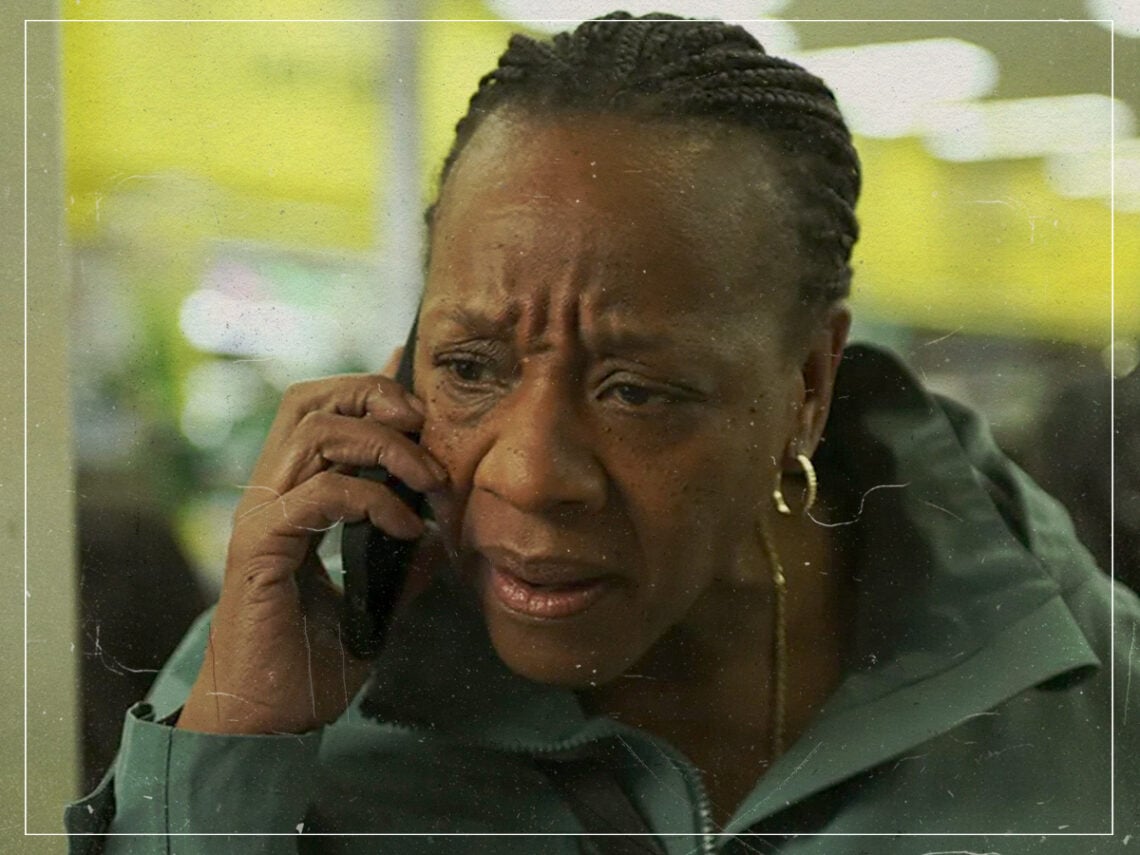
With Hard Truths, Leigh puts the spotlight on Marianne Jean-Baptiste’s Pansy, a middle-aged British-Jamaican woman suffering from severe depression whose family can’t seem to get through to her. Her home is spotless, and if her husband, Curtly, or her son, Moses, leave a single thing out of place, there’s hell to pay. Pansy is one of the most angry and depressed characters you’re likely to see on screen, with Jean-Baptiste giving an incredible performance, ranting about everything from ugly babies, chickens, and loitering, to foxes, display sofas, and charity workers.
Every interaction she has, whether it be with a family member or a stranger, causes her to flare up into a rage, which is sometimes comical, and other times hard to watch. All attempts to be polite when interacting with the general public are seemingly long-gone; instead, Pansy launches pointless tirades on those trying to help her (the dentist, the doctor, a sale’s assistant), before coming home and sleeping for the rest of the day.
Leigh’s direction crafts an atmosphere of innate sadness, which certainly takes its toll on the viewer. You can’t help but feel incredibly miserable as you witness Pansy constantly moaning and isolating herself from her family, and the clinical nature of her home, reflective of her personality, is mirrored in the cinematography, which feels rather cold at times. While it’s an accurate depiction of depression, hypochondria, and anxiety, sometimes it feels like there are simply too many scenes that depict Pansy doing nothing but arguing with strangers; after a while, the point becomes glaringly obvious, and you start longing for something more.
The film is at its strongest when Michele Austin’s Chantelle, Pansy’s warm and loving hairdresser sister, attempts to get through to her. While both are incredible in their solo scenes, when they’re together, something extraordinary happens, and just from their faces alone, they are able to communicate intense emotion. These scenes, such as when they’re in the graveyard or back at the flat, are absolutely heartbreaking, with the interactions between the two painting a complicated picture of wanting to be understood but not knowing how to let someone in.
Leigh isn’t a director who favours neatly wrapped-up endings with resolution and answers because life just isn’t like that. Thus, Hard Truths leaves us uncertain of where Pansy will go from here, which, while a little frustrating, helps to convey the utter sense of despair and fear that Pansy lives with. The film is an emotional battering, and with Gary Yershon’s moving score tuning in and out of lengthy silent scenes, you’re likely to emerge from the cinema with the need to let out a deep breath, have a drink, or cry.
Fear is the main theme here, with Pansy hiding behind anger as a defence mechanism. She isn’t a good mother or a good wife, at least during this moment in time, and Leigh’s film doesn’t shy away from being honest. Yet, Leigh lets us into the world of someone who is otherwise closed-off, crafting a layered character study ripe with empathy and understanding. While it’s not Leigh’s most accomplished film – he offers us something much more low-key than usual – it certainly contains some of the strongest acting in his whole filmography, which is no small feat.
