


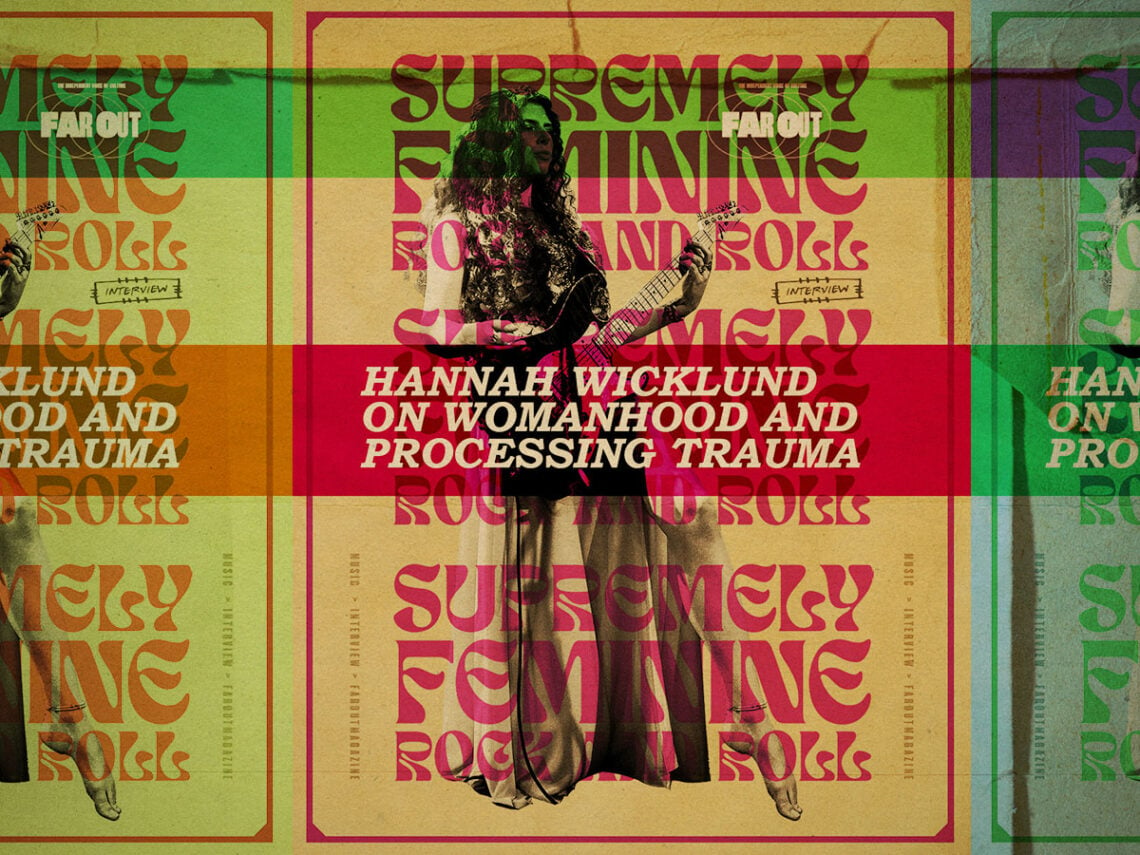
Supremely Feminine Rock and Roll: Hannah Wicklund on womanhood and processing trauma

Given that it took almost six years to come to fruition, it seems appropriate that Hannah Wicklund is still celebrating the release of her second studio album, The Prize, a year on from its release. The blues rock guitarist’s journey from envisioning the album to having a finished product was more than just a labour of love; it was a testing trial of her ability to persevere in the face of adversity, and when you approach the record with the knowledge of how arduous its creative process was, the result becomes even more arresting.
“This record is so much more than just a collection of songs,” Wicklund says of The Prize, a defiant statement of female empowerment and overcoming frustration. “I think that as far as my life goes, this record certainly carved my path in a lot of ways. A year after its release, the drama of the record behind the scenes, the music business woes and unfortunately, the destruction of toxic masculine energy in the industry has still been like the dark cloud over this album.”
The Nashville-based artist is a fiercely virtuosic musician and a lyricist who expresses herself in a way that isn’t afraid of painting the picture exactly how it ought to be seen, but for a woman in her mid-20s to be able to assert her capability in such an unflinching manner is something that many in the machismo-fuelled realm she operates within can be intimidated by. Given this, the fact that she’s been able to get such a rapturous response from the women and girls in her audience is something that has felt cathartic to her, to say the least.
“The impact that this record had for so many women is the heartbeat of this album,” she asserts, dedicating its importance to both her and her audience. “I think that, in a lot of ways, this supremely feminine rock and roll record has lived the life of a woman. It’s almost as if this record became a sister or a mother or a daughter of mine.” Much like having a relative by your side, there will always be times when you have to let go and say goodbye when it feels so painful to do so, but it will always remain an extension of you and a key part of your identity, which is evidently how Wicklund perceives her relationship with The Prize.
Wicklund wasn’t long out of her teenage years when she initially penned the ten songs that make up the album, and as a consequence, she’s changed significantly as a person at the same time as the songs have been allowed to grow and develop lives of their own. The stories that inspired them are largely lived experiences, and being allowed to sit with the tracks as she navigated her way through the grief and pain that they were derived from has allowed her the opportunity to see them in a new light.

Delving into the dark period that these songs emerged from and the traumatic experience she was healing from, Wicklund is now able to reflect on her past and says that the songs and their lyrics almost came to her as stream-of-consciousness reminders to continue believing in herself. “I was just writing messages I needed to hear for myself to get me through the next five years. It was then, about two or three years after I had written the songs, that I finally recorded them, and I started looking under the hood, that some of the lyrics made more sense to me and had a bit of a prophetic tone to them. I feel like I almost manifested what I needed from them.”
This language of spirituality is something that frequently crops up in both conversation and the themes of her songwriting, almost as though her music is a guiding light that has given her the power and scope to deliver it to a wider audience. Now, her motive is to spread these adages of hope and stir the same flurry of emotions from her listeners. “It wasn’t until I went out and toured the record, and when the record was in the hands of others, that I started experiencing it all over again through other people’s lenses,” she recalls. “There was a really beautiful moment when the record dropped for about a week where I had so many women sharing visceral stories of what this album was helping them with.”
In terms of beautiful yet visceral stories that were shared with her in the aftermath of releasing the album, Wicklund brings up a particularly inspiring interaction she had with a mother and daughter who came to a show of hers in Texas. “The daughter had a very emotional moment with me and shared what the record meant,” she passionately recounts, “and then her mum kind of pulled me to the side and shared with me that she was a therapist and that she has been using my music, specifically some of my lyrics, in therapy sessions.”
While touring might still bring her the same difficulties that many artists complain about, such as the lack of financial security and no subsidised provisions for artists, it’s moments like this that bring her joy and remind her of why she enjoys life on the road so much. A captivating performer, she is now choosing to mark the end of this chapter in her career with the release of Live at the Troubadour, a performance that was captured at the iconic West Hollywood venue and is indicative of the raw power and hold she has over her audience.
It felt like something of a no-brainer that she would choose the Troubadour as the venue where she recorded her first live album, and the excitement of everyone in the 500-capacity room, band included, is palpable throughout. Wicklund has her fans in the palm of her hand at all times, and through every jam and audience interaction, you can sense a certain swagger and confidence flowing between her and her ensemble. “That is one of the coolest and most iconic places that I have ever headlined,” she attests. “There are some artists who sell out the Troubadour on their first tour – I haven’t had that career, and so for me celebrating finally headlining the Troubadour after what has been a harrowing career, there was no other choice.”

The electric dynamism is down to the one element that Wicklund says is crucial to all of her live performances – authenticity. Whether playing to a much smaller audience or on tour with a much more established act and playing arenas, being true to herself is the only way she feels comfortable expressing her inner feelings. “With any good live record,” she says, “it’s about how it hits you. There’s something different about a live record versus a normal record, obviously, but I think it’s just about the expression at that point.”
However, being her authentic self on the live album was always going to be a given thing, considering how she conducts herself on record and in the studio. Choosing to record The Prize with just herself and a small team of collaborators, there wasn’t much room for her to cower away behind a facade, and the listener is confronted with the most soul-baring snapshot of a woman shifting between two significant parts of her life.
Working alongside Greta Van Fleet bassist Sam Kiszka as her producer, the duo recorded the majority of the album alone together, but their romantic relationship would later provide a stumbling block for Wicklund to have to overcome. “We met through mutual management,” she explains, “who unfortunately then sabotaged the record because of our relationship, so that uniquely feminine issue of falling in love and then having your entire career sidelined because of it was very disappointing.” On the other hand, working with someone she refers to as her “life partner” came with an added sense of connection she had never felt working with other producers and was an eye-opening experience compared to some of her more harrowing early experiences.
“There was something about getting into the studio with Sam and him just wanting to jam was unlike any recording experience I had had up to that point,” Wicklund says of the process. Having had other older and more experienced producers take interest in her made her contemplate the idea that in some parallel universe, there would be a more polished and colder version of The Prize that she would have resented making, but ultimately, the playfulness and freedom to explore the “explosion of ideas” that the two of them were able to generate made for a better and more satisfying creative process.
Diving deeper into her earlier experiences, she recounts how meeting some of the biggest impresarios of the industry made her wary of picking the right person to work alongside. “Scooter Braun being the first music business meeting I ever had when I was 18 really messed with my perception of who I should work with,” Wicklund remembers. “They really roll the red carpet out for you and make you believe that you need the top tier.” Working alongside Kiszka, in her eyes, was a dramatically different affair: “Sam does a really great job honouring the artist.”

Wicklund’s reflection on The Prize is not yet over, and it may never be over for her due to the toil that went into it and the transformative healing process she will forever associate it with. However, the release of Live at the Troubadour can be seen as a marker for the end of this chapter of her career and the triumph that came through after several years of persisting at getting it over the line.
Does playing at the Troubadour make her a star? No, it doesn’t. But if you’re to ask if it makes her feel a sense of fulfilment knowing that things are heading in the right direction for the first time, then the answer is a resounding yes. “Ultimately, this record showed me that my honesty and my pursuit of things greater than myself are possible without being super successful,” she says in her final testimony of where the entire process has taken her.
The spiritual lingo returns as she reflects one last time on the growth and healing that has occurred around her and the release of both the studio and live album. “I think that my higher purpose is to speak to people about more than just me, my music and art,” she declares. “I’ve gone through a lot of really hard things in my life which I’m now ready to speak about with my talking voice, that I’ve always just portrayed through my art and through my music. I feel like a whole human now after that record.”
