


‘Halo on Fire’: the most complex guitar solo of the 2010s

Hard rock and metal have arguably never been bigger than in the mid-1980s. Ozzy Osbourne became a whole new level of superstar in the wake of his Black Sabbath duties, MTV was playing the likes of Mötley Crüe and WASP every five minutes, and Van Halen broke records with their $1.5m headliner fee for 1983’s US Festival in San Bernardino—the open-air series of concerts’ ‘metal day’ selling over half of the full festival programme’s 670,000 tickets.
Metal had never been more popular. Yet, stewing in the Californian and New York underground, the thrash vanguard was ready to take a wrecking ball to the genre’s commercial excess.
Led by the ‘big four’, Anthrax, Megadeth, Slayer, and Metallica combined hardcore punk, the speedier end of the new wave of British heavy metal and a twist of prog’s penchant for complex solos to conjure a new blast of metal. It was fast, mean, and revelled in the dirt, far removed from metal’s camp self-parody that clogged the charts. Metallica’s debut album said it all. Dropped in 1983, Kill ‘Em All arrived like a declaration of war, a title that matched the thrash ferocity within, taking square aim at metal’s trending status.
The ‘big four’ eventually became the ‘big one’, with Metallica continuing to rise and rise across the 1980s, up until their critical and commercial peak with 1991’s eponymous album, which rankled long-time fans by swapping conventional thrash with a slower and more taut metal focus. Alienating their base further, Metallica cut their hair, swapped spotty denimed Kerrang fold-outs for stylised Anton Corbijn shoots and dropped the Load and Reload companion albums, embracing everything from country and blues to their alternative rock immersive.
The band and their fans have shared a prickly relationship ever since. As the 2000s rolled by following Napster controversies and the St Anger misfire, the band began to circle back to where it all began. They gravitated to their formative thrash beginnings, with lead guitarist Kirk Hammett wielding his former soloing intricacy unheard since 1988’s …And Justice for All.
Byouyed by 2008’s Death Magnetic return to form with studio guru Rick Rubin, the metal world waited eight long years for 2016’s Hardwired… to Self-Destruct double album. While a smattering of grumbles could be heard about its length, Metallica enjoyed some of the warmest critical reception in years. Special praise was heaped on the sound of a band having successfully reignited a flame long threatened by fame and a resulting lack of hunger that pushes any youthful outfit.
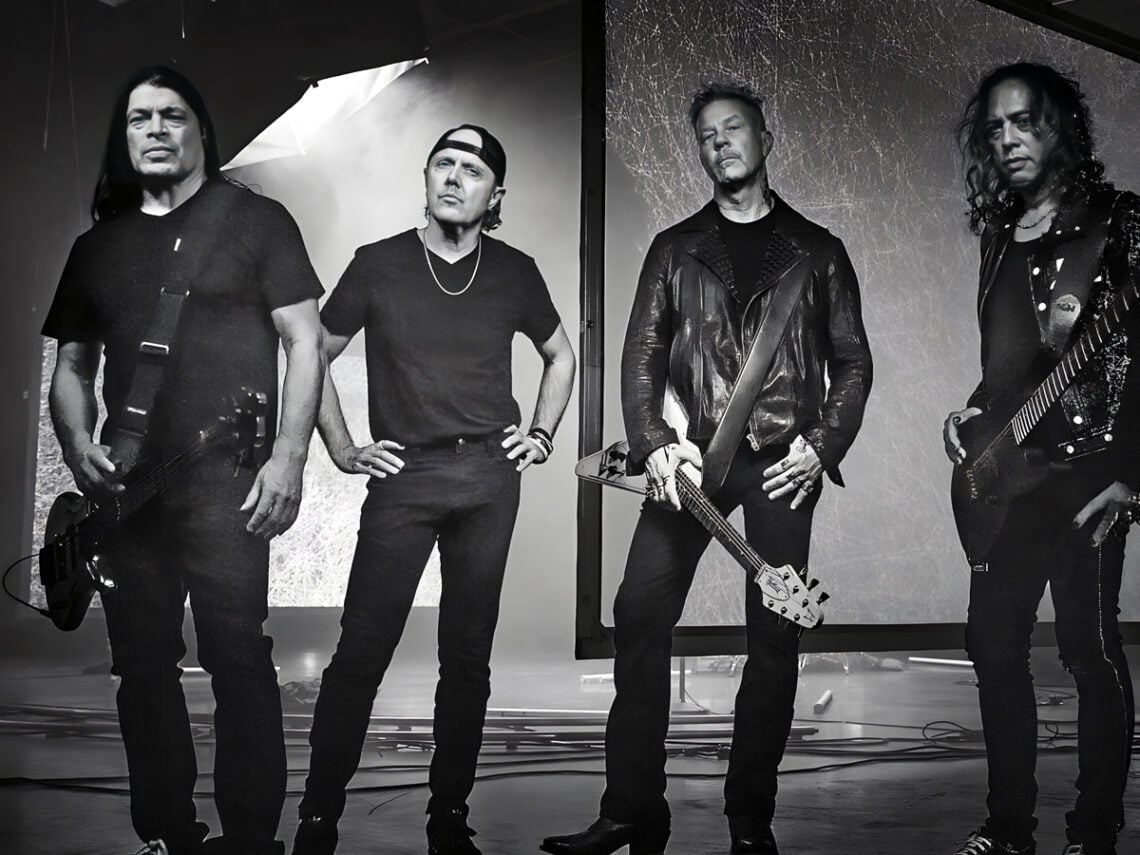
While never released as a single, ‘Halo on Fire’ reminded the world why Hammett was one of metal’s towering guitar greats, giving anyone in broader rock a run for their money, too. At over eight minutes long, Hammett’s dextrously melodic fretwork rounds off the song’s nihilistic wanderings of moral duality with an electric coup de grâce that shreds while still imbued with feeling for the track’s dark subject matter. As the piece speeds up, Hammett raises the stakes with a soaring passage that echoes the guitar blasts heard on Ride the Lightning.
The closing magic of ‘Halo on Fire’s’ demonstrates Hammett’s natural knack for charging a Metallica number with extra drama without lapsing into showmanship, a gift he could still expertly wield in the 2010s. “I loved ‘Halo on Fire’ because to me it’s along the lines of hard rock in the 1970s,” he told Uncut. “A lot of the best music for me came out of that period, so if we create something like that, then I’m going to really appreciate it.”
