


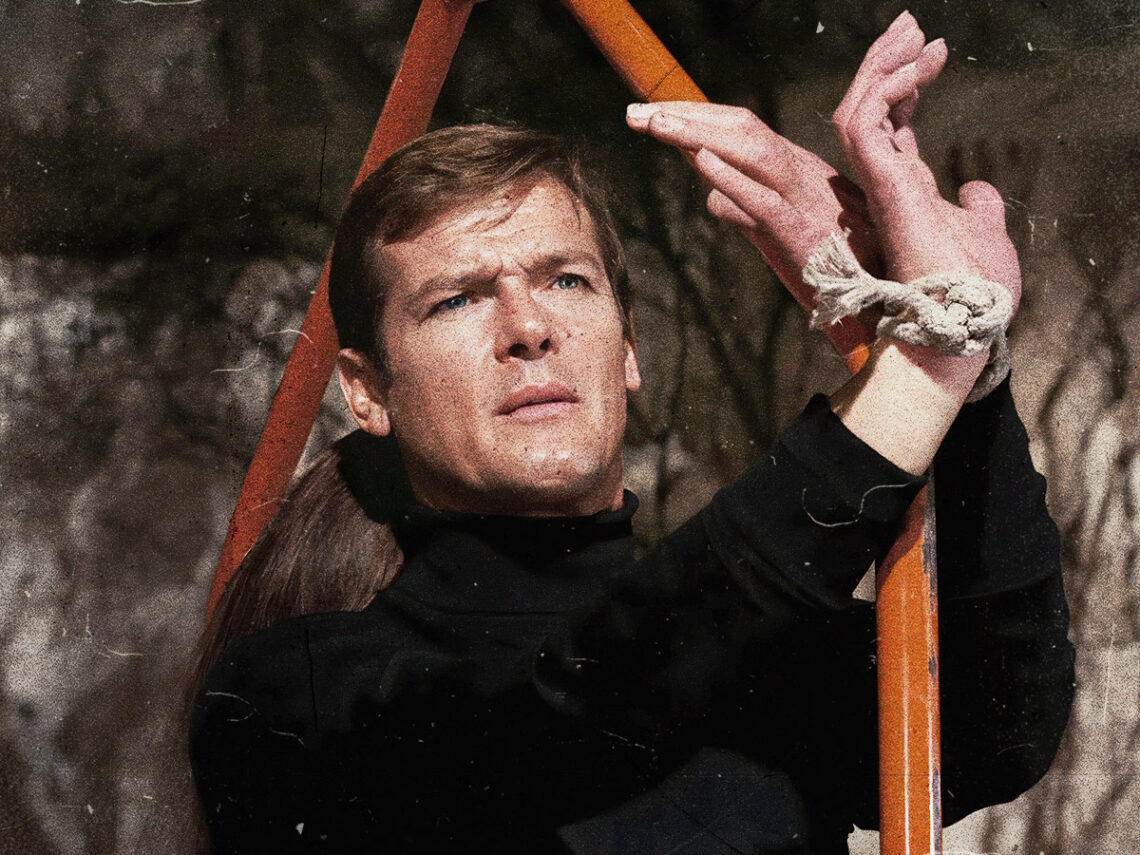
Guy Hamilton – ‘Live and Let Die’

Through the 1960s, the world of cinema was introduced and later enchanted by the adventures of James Bond, the suave British spy who punched, kissed and shot his way out of almost every sticky predicament. The Scottish actor Sean Connery was the man chosen to take on the part, becoming a figurehead of questionable contemporary masculinity as a result, despite his bold charisma and dedicated physical performances as the tux-wearing hero.
Films like 1964’s Goldfinger and 1967’s You Only Live Twice presented an untouchable hero, seemingly unharmed by bullet wounds and emotional manipulation, yet by the end of the decade and the release of On Her Majesty’s Secret Service with George Lazenby, the character had become exceedingly more fragile. So, when Roger Moore was picked to take up the mantle for Live and Let Die, director Guy Hamilton wasn’t quite sure how to frame the character, deciding to do away with realism and embrace camp levity.
As a result, there is no doubt that Moore’s Bond is one of the most peculiar of actors to take on the role, failing to fill the fairly large boots of Connery or Lazenby. A dapper British debonair, Moore presents an individual better suited to a lunchtime soap opera than an action-packed thriller, yet thankfully, Hamilton and screenwriter Tom Mankiewicz bloat Live and Let Die with a story so preposterous that it matches the star’s curious energy.
Though Bond is something of a cartoon character in and of himself, his films have usually been set in a grounded reality, yet Live and Let Die took 007 to America and the Caribbean to take down a heroin magnate and their strangely accurate tarot card reader. Such takes the character on a peculiar journey of spiritual mysticism where the lines between fact and fakery, absurdity and tragedy are blurred.
As a tight circus act of bells, whistles and bombastic drama, it all works surprisingly well, even if it does take you at least a good few minutes to shake off your prior knowledge of Bond as almost an entirely different character. It would indeed be difficult to see Connery’s 007 taking all this nonsense seriously. Yet, by providing a totally new approach to the character, Moore and Hamilton create a film that swells with sheer frenetic novelty, promising dynamism for the franchise’s future.
Still, it has to be said that, whilst Moore and Hamilton both establish something solid, it is in the work of the supporting cast that the film stands on its own two feet, with Yaphet Kotto’s Dr. Kananga and Geoffrey Holder’s Baron Samedi fuelling much of the film’s electric soul. Such depictions, written by Mankiewicz, certainly continue in Bond’s notorious problematic approach to foreign cultures, yet, there’s no doubt that the aforementioned performances should be praised, with Kotto making Kananga one of the most fascinating and daunting villains in the series to date.
When paired with the wild soundtrack penned by Paul McCartney, Live and Let Die comes alive in a symphony of bonkers filmmaking, taking Bond to strange new heights whether he wants to go there or not. Yet, it is this unhinged vibe that is the only thing going for the film, unable to excel without the influence of Kotto and Holder as the villainous duo and McCartney and Beatle producer George Martin as the manic musical maestros.
Truthfully, even Madeline Smith, as the underwritten yet energetic Bond girl Miss Caruso, gives more oomph to her role than Moore’s title character, who shuffles through the movie like he’s wandering through the wrong film set. Carrying a peculiar awkwardness, as if he knows he doesn’t have the bravado to fill the boots of the role, Moore rides the wave of the film, allowing everything around him to do the heavy lifting.
