


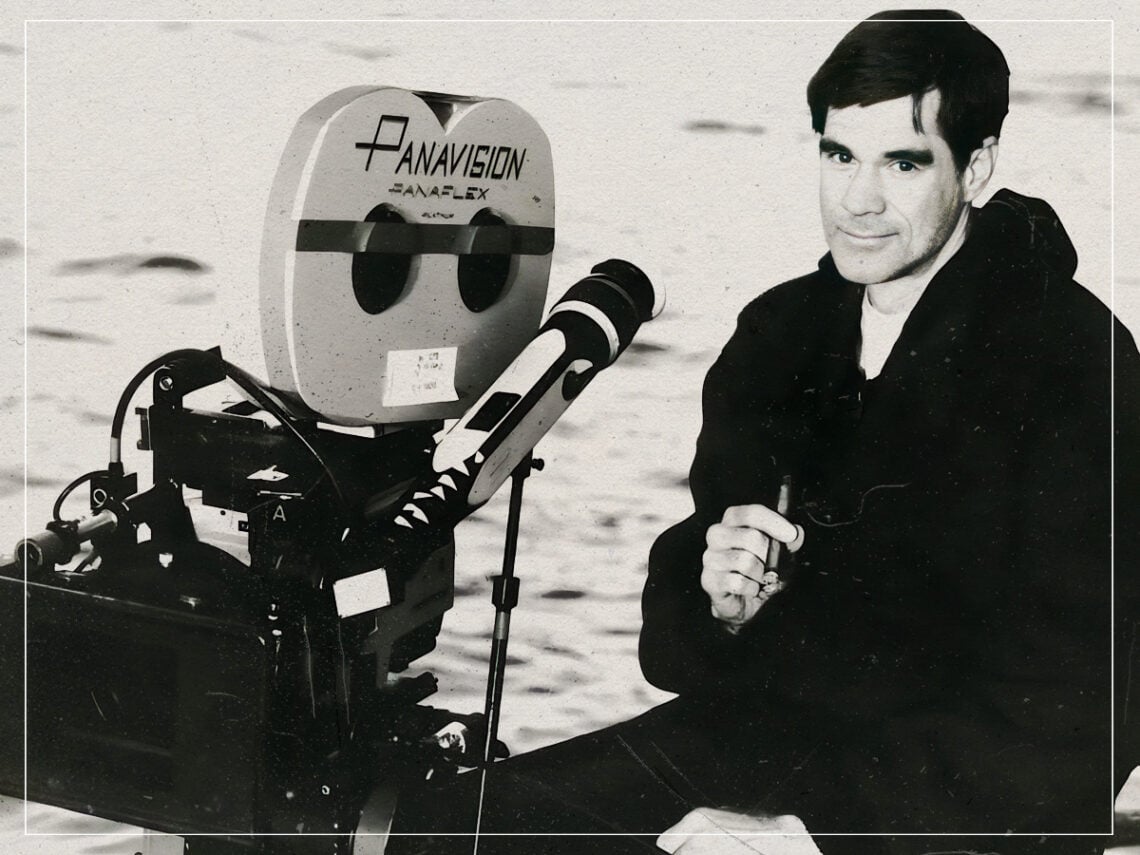
Gus Van Sant explains why he remade ‘Psycho’ shot-for-shot

There are few films in the history of cinema that have quite the iconic status and cultural relevance as Alfred Hitchcock‘s 1960 horror film Psycho. Based on Robert Bloch’s novel, which is the same name and stars Anthony Perkins and Janet Leigh, Hitchcock’s classic is widely considered one of the greatest works of the English directing icon.
With a tense narrative surrounding a shy motel owner, Norman Bates, and an on-the-run embezzler, Marion Crane, plus some of the most memorable cinematography and score moments in 20th-century cinema, Psycho delivered on all fronts and paved the way for new modes of violence and sexuality in the medium of film in the proceeding years.
38 years after the film was released, Gus Van Sant, the director behind My Own Private Idaho and Good Will Hunting, handled a remake of Psycho starring Julianne Moore, Viggo Mortensen and William H. Macy. Where Hitchcock’s film was black-and-white, Van Sant’s was in colour, but the director made the rare decision of providing an actual shot-for-shot remake of the original, providing as accurate a retelling as possible.
Van Sant had once spoken of his decision to remake Hitchcock’s classic shot-for-shot when he appeared on the WTF podcast with Marc Maron. In one way, Van Sant had been seeking out a way to push back against the Hollywood studio obsession with IP and the executives who had been more keen to make a sequel rather than a remake.
According to the director, there had been a joke in the film industry in the 1990s that studio executives thought that sequels were less risky than original stories, something which became more and more true as cinema progressed into the 21st century. “They would rather continue a story that’s already known in the public, and they were really searching for some way to do that,” he said. “Now they’ve found out that comics is the way to do it. But back in the 1990s, they hadn’t found that yet.”
After Van Sant made Drugstore Cowboy, he was invited to Universal to see the kind of films that he would be able to remake, and he posed the question of an exact shot-for-shot remake. However, the Universal executives, according to Van Sant, “thought it was silly, ridiculous, absurd, and they left. They said, ‘We won’t be doing that.'”
Years later, Van Sant had earned yet more acclaim with Good Will Hunting, and his ‘Best Director’ Academy Award nomination had suddenly changed Universal’s tune, mostly because the execs wanted to brag about doing Van Sant’s next film. The director noted, “Universal, oh yeah, tell them Pyscho, frame-by-frame, new cast, in colour, and that’s the idea,’ and then my agent calls back and says, ‘They think that’s fantastic.’ So all of a sudden, they were in.”
Van Sant had still been warned by composer Danny Elfman, who offered his services in composing the score for the Psycho remake, who pointed out the fact that Van Sant would likely be slaughtered by Hitchcock fans and movie critics alike. Still, Van Sant had been adamant about viewing his remake as an “experiment” rather than a film with critical hopes.
The idea was that he wanted to see whether an old hit movie could be exactly remade and released to a similar reception. However, by Van Sant’s own admission, “it didn’t work”, but he signed off on the matter, “That was the sort of weird science experiment… It’s more important now, I think because people will ask questions about it. It’s more alive now than it was back when it failed, just with the art world or the modern world.”
Check out the trailer for Gus Van Sant’s remake of Psycho below.
