


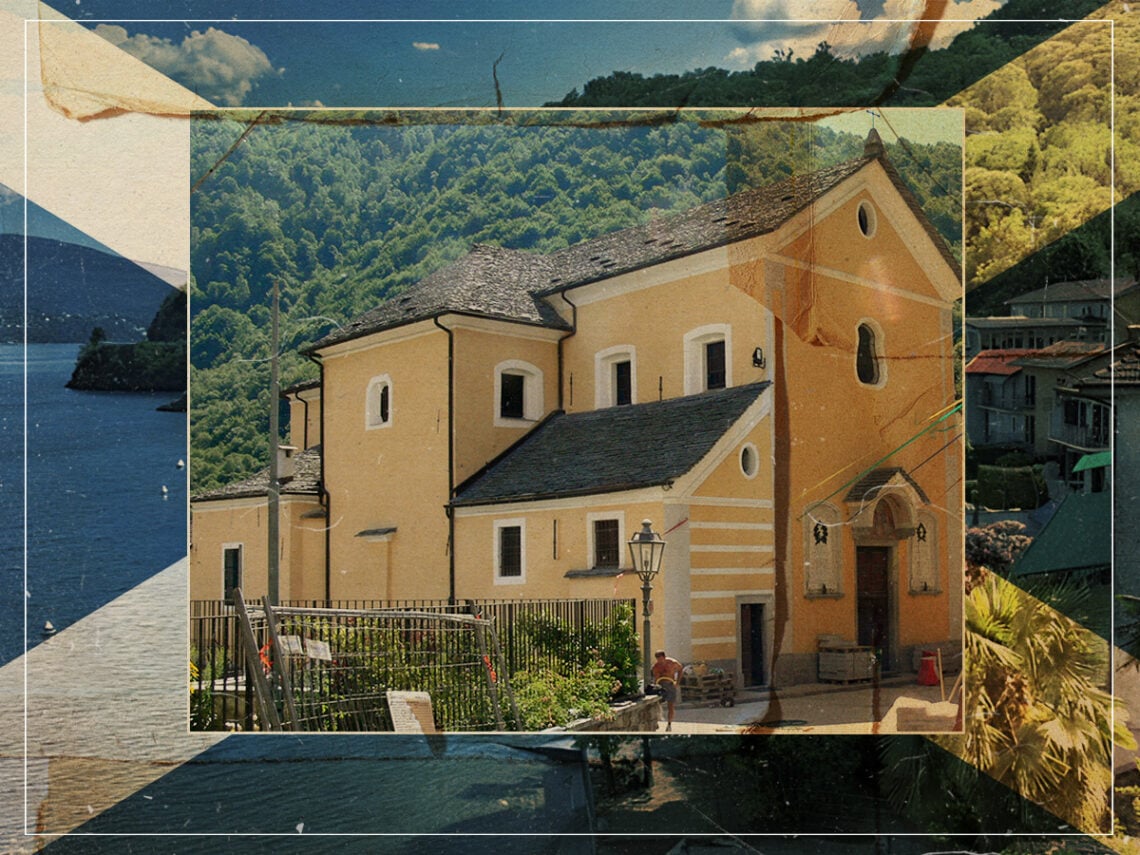
Gurro: the bizarre Scottish town in the heart of the Italian Alps

The proud nation of Italy has given a lot to the world, from the roads and viaducts of the Roman Empire to the two-stroke scooters of the mod subculture. When you think of Italy, you might think of the delicious food, the sleek fashion, or the stunning architecture – characteristics that you would not award to the rain-soaked lands of Scotland. Don’t get me wrong, Scotland is a wonderful country, but it is hard to see any parallels between haggis and pasta. Nevertheless, for the inhabitants of a small village in the Alps, the two nations are forever intertwined.
Nestled within the picturesque mountain landscape of Verbano-Cusio-Ossola, in the northwest of the country, sits Gurro. With a population of only a few hundred and a long 90-mile drive from the metropolitan hubs of Turin or Madrid, it is difficult to imagine the remote village, hidden away in the bosom of the Alps, receiving many tourists. However, during the 16th century, while fleeing the aftermath of the Battle of Pavia, blizzards meant that many Scottish troops returning home had to bed in at Gurro for the winter.
As anybody who has ever had the pleasure of experiencing a night out in Glasgow will know, the Scots certainly bring the party, and perhaps that is why these fleeing forces had a lasting impact on the history of Gurro. So much so that when the bitter chill of winter turned to idyllic Italian springtime, the Scottish troops decided to stay in the hills of Verbano-Cusio-Ossola. Romances blossomed between the hard-faced soldiers of Scotland and the rural beauties of Gurro, and thus began centuries of Italo-Scozzesi cross-pollination.
Even today, 500 years after the first Scottish troops settled in Gurro, their lineage is still unavoidably present within the village. You can hardly move for St Andrew’s Crosses or tartan. It’s as though somebody transported the tourist gift shops of the Royal Mile across Europe. However, the Scottish lineage of Gurro is not limited to an appreciation for tartan and Tunnock’s, as the small population of the village speaks in a dialect virtually unheard of within the surrounding towns and villages.
Scottishness is so firmly rooted in the language of Gurro that its inhabitants have forgone the distinctly Italian ‘sì’ for the firmly Scottish ‘aye’ as an affirmative. The accent of Gurro, though Italian-sounding to the untrained ear, is very different from the nearby settlements, said to be influenced by the Celtic language of Gaelic, spoken by those Scottish troops all those years ago. The people of the village have also adopted the traditional fashion of Scotland, with tartan petticoats worn by most women within the village.
Although the people of Gurro are unlikely to burst into a rendition of ‘I’m Gonna Be (500 Miles)’, or even the most mainstream tracks by the Jesus and Mary Chain, they also celebrate their Scottish heritage through music. The distinctive tones of Gurro’s traditional folk song, which tells the story of the original Scottish settlers, can be heard throughout the cobbled streets on a near-nightly basis, usually over a glass or two of red wine.
So, although Gurro offers a taste of Scotland within the beautiful surroundings of the Italian Alps, any homesick Scottish tourists looking to tuck into a deep-fried Mars bar or some Lorne sausage should look elsewhere – the culinary world is where the two nations depart. When it comes to food, Gurro is distinctly Italian, and perhaps that is for the best. Whether or not the original tale of Scottish troops settling in the village for winter is actually true remains a hotly contested debate. Yet, it remains an important part of the inhabitants’ identities and everyday lives – lang may their lum reek.
