


The grotesque sci-fi character based on Marlon Brando: “He couldn’t look silly”

When Denis Villeneuve was an impressionable 13-year-old growing up in rural Quebec, he read a piece of science fiction which blew his young mind. It was a work of such startling complexity that it felt like it spoke directly to Villeneuve, an admittedly thoughtful and anxious boy. He knew he wanted to be a filmmaker but had no access to a camera, so he and a friend began drawing storyboards for a theoretical adaptation. Amazingly, Villeneuve would fulfil his childhood dream by making a real adaptation of the book in 2021, and he based the look of one of its most visually unusual characters on an actor from one of his favourite films: Marlon Brando.
After directing four films in his native Canada, Villeneuve burst onto the Hollywood scene with the thriller Prisoners in 2013. Over the next few years, his career went from strength to strength, with the likes of Sicario, Arrival, and Blade Runner 2049 winning plaudits from critics and amassing impressive box-office figures.
By the time he inked a deal to turn Frank Herbert’s Dune into an epic cinematic event, though, the seminal sci-fi novel had long been considered unadaptable. Though David Lynch had made its first big screen incarnation in 1984, it was never believed that his film captured the true grandeur of Herbert’s vision. The story was seen by many fans as too enormous, yet also too esoteric, to ever be successfully shaped into a commercially viable narrative.
Villeneuve’s solution was to focus on how the emotions he felt reading the book would inform all the otherworldly designs of the planet of Arrakis and its people. The cerebral director told The Hollywood Reporter, “There was so much rigour in how Frank Herbert approached his description of cultural history and the planetary ecosystems. I wanted to approach the design and the whole world of the movie in the same way. The book has fantasy elements, but I knew it would be helpful for the creatures, vehicles and technology to feel as real and grounded as possible.”
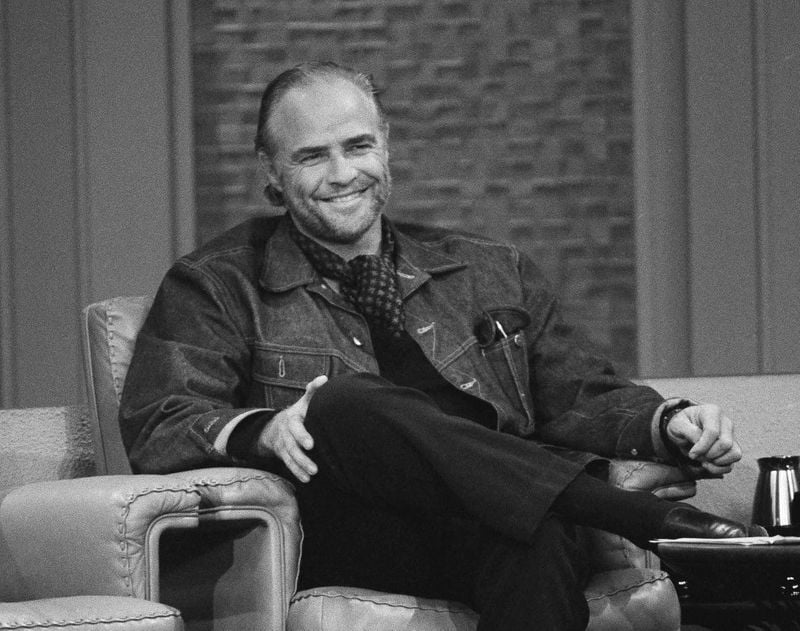
Trying to stay real and grounded proved exceedingly difficult when designing the movie’s villain, Baron Harkonnen, though. He is described in the book as a 400-pound man who is so enormous that he can’t support his own weight when walking, which leads to him hovering around with the aid of anti-gravity devices known as “suspensors.” Villeneuve knew the character had the potential to look silly if the team didn’t execute his design correctly, but everything clicked into place when costume director Jacqueline West proposed taking cues from a certain Hollywood icon.
“Denis was concerned that he needed to look strong and menacing,” revealed West. “I suggested that maybe Marlon Brando in Apocalypse Now would be a good place to start and that he could wear some kind of long black silk, almost diaphanous, muumuu. Denis really flipped out over that idea.”
West believed Villeneuve had already been pondering a Brando-influenced design because he immediately knew exactly what she was getting at. However, he didn’t just want to take inspiration from Brando’s bald-headed look in that Vietnam classic, which the legendary star shot at a point when he’d put on weight. Villeneuve also wanted Harkonnen to display the same taciturn, broodingly threatening aura Brando exuded as Colonel Kurtz, despite spending most of the film seated.
Stellan Skarsgard, who played Harkonnen in Villeneuve’s vision, understood his task completely and was able to project low-key menace at all times, even while wearing extensive prosthetics. Villeneuve was so happy with how things turned out, in fact, that he wasn’t put off by the fact that he had modelled one of his characters so obviously on someone from Hollywood history.
He marvelled, “There was something about Kurtz that was a nice inspiration, and Stellan handled it masterfully. It’s one of the first times that I’ve allowed myself to have the pleasure to make a little homage like this.”
