


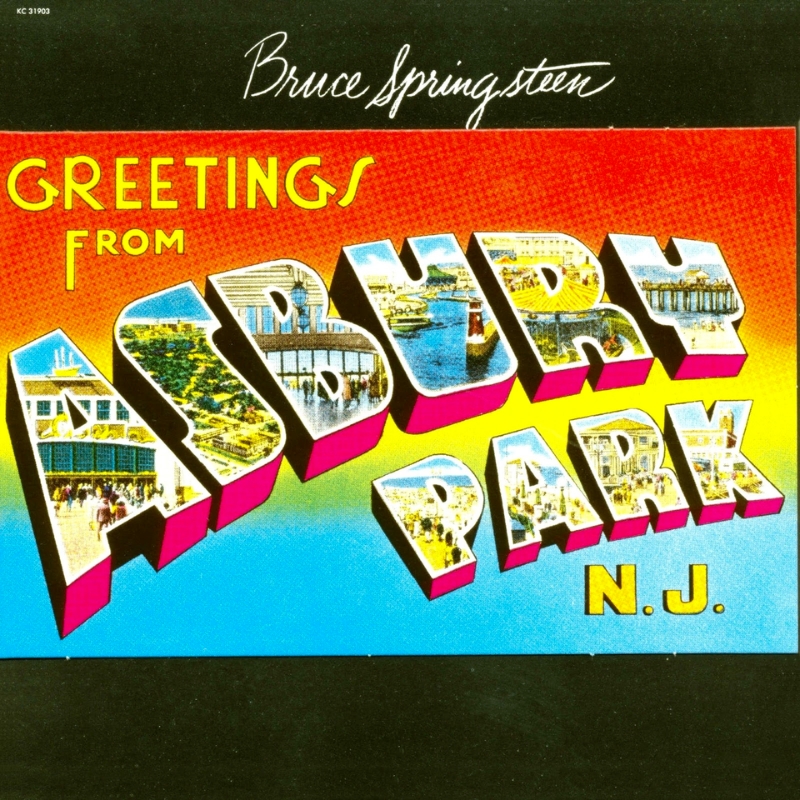
Greetings from Asbury Park, N.J.: 50 years on from Bruce Springsteen’s brilliant, flopping debut

Every self-made ‘Boss’ was once a lowly employee. It’s ironic that during this green period, a lot of your best work is produced. That is the case with Bruce Springsteen’s epic that flopped: Greetings from Asbury Park, N.J.. 50 years on, his debut album stands as perhaps the most explicit depiction of his true artistry—he’s penned bigger hits, and pushed towards higher octane exultancy, but this humble debut sees sincerity unmatched.
Over the course of his career, he has lived by his mantra that “great talent morphs in strange and often enlightening ways.” Never one to stick in the mud, he has followed the same evolving path as his hero Bob Dylan and every other artist who refuses to play to the gallery. As David Bowie once said: “Always remember that the reason you initially started working was that there was something inside yourself that you felt that if you could manifest it in some way, you would understand more about yourself and how you coexist with the rest of society.”
That manifestation comes to the fore from the get-go in Springsteen’s fierce cannon. His debut is a documentation of life in New Jersey. As he once said of Dylan’s work: “Highway 61 Revisited and Bringing It All Back Home were not only great records, but they were the first time I can remember being exposed to a truthful vision of the place I lived. The darkness and light were all there, the veil of illusion and deception ripped aside. He put his boot on the stultifying politeness and daily routine that covered corruption and decay.”
He continues to eulogise Dylan’s exacting encapsulation of society, adding: “The world he described was all on view, in my little town, and spread out over the television that beamed into our isolated homes, but it went uncommented on and silently tolerated. He inspired me and gave me hope.” It would seem that Springsteen wanted to do just that with his record too.
And his hero-worshipping of Dylan was all part of it. He placed his songs in the folk traditions of America and sharpened them with the visceral edge of rock ‘n’ roll in his own guttural way. That is what earns the album its sense of truth. It has a place of poignancy. And it also achieves originality not only by shifting what came before it, but through the simple talent behind it—the gruff tones, inherent sense of nostalgia in Springsteen’s stylings, and his bold strumming.
However, the issue was that Springsteen’s promotion pushed ‘the next Dylan’ angle. The issue was neither fresh nor had he gone away. It was like saying, ‘the next main course’, ten minutes after finishing a roast. This failed attempt to sell the record’s all-American heart through comparison to others rather than championing the LP’s originality led to a poor chart position. It peaked at a moderate 60 in the US and failed to travel well overseas, but the likes of David Bowie heard it, and thanks to that, ‘The Boss’ didn’t stay quiet for long. If anything, this middling effort became a defining moment in his career and offered up a lesson on commerciality.
He brushed up on the potential controversial elements of the album and added in the sound of rolled up sleeves of future records. But it is this debut record that seems him untouched by that. It is a dive bar classic that respectively poses the question, what would it be like if Elvis Presley was a beat and Townes Van Zandt was ghost-writing for him? With it sounds like the soaring salt of the earth and effortlessly original to boot.
