


The five best albums from the counterculture movement, according to Graham Nash

When reflecting on the West Coast counterculture scene of the 1960s, Hunter S Thompson famously wrote, “Maybe it meant something. Maybe not, in the long run, but no explanation, no mix of words or music or memories can touch that sense of knowing that you were there and alive in that corner of time and the world. Whatever it meant.”
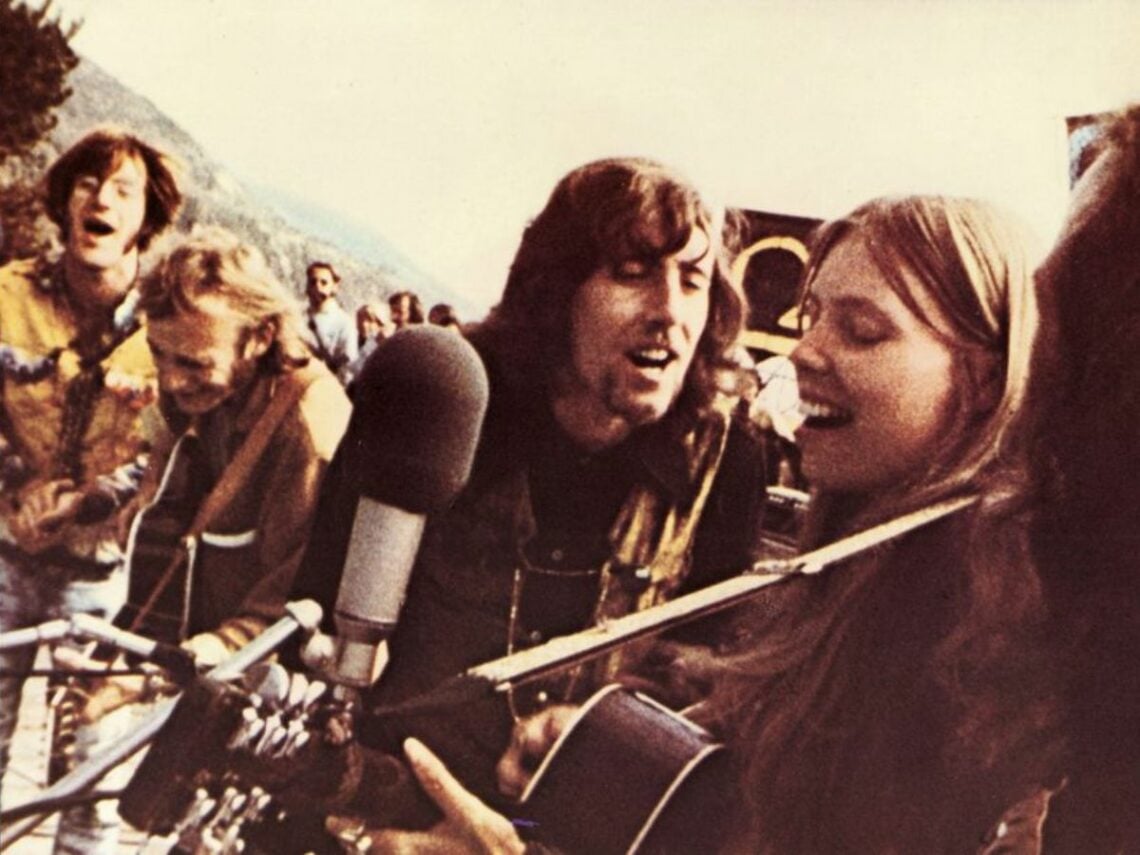
In the heart of the hippest fragment of that scene, in the wild west of Laurel Canyon, was a young lad from Blackpool. The fate of Graham Nash seemed uncertain as he grew up in Lancashire with a father in prison for buying the future folk star a stolen camera and refusing to rat on the thief. But nobody could’ve predicted that he would be in the eye of the storm of a revolution from which the world is still reeling.
As Nash said himself when he eventually uprooted from the Hollies and found himself basking in counterculture’s Canyon epicentre, “This was an incredible environment for a musician to be in,” and as Tom Petty adds, “It was a nice circle of really good artists thinking alike – ‘How can I make a record as that one?’”
Those records included If You Can Believe Your Eyes and Ears, Buffalo Springfield Again, Pet Sounds and about a hundred other classics. This music represented the core of a truly ground-breaking cultural moment. And it seemingly happened so seamlessly, as Nash recalls: “People would just knock on your door and go, ‘Hey listen to this!’”.
The scene may well have fizzled out, though plenty of artists still live in Laurel Canyon, but with the right car and radio station, the magic of that indelible era still cackles. As Regina Spektor said, “This music shaped the second half of the 20th Century.” But what shaped the music of that particular scene?
Well, according to Nash and millions of others, it all started with one single record: The Freewheelin’ Bob Dylan. Speaking about this masterpiece, Nash told Louder, “How fortunate I feel being alive at the same time as The Beatles, Bob Dylan, Jimi Hendrix, Joni, James Taylor, Paul Simon… so many wonderful writers. But no one comes close to Dylan in my humble opinion.”

The startling thing is that sentiment would likely have remained true if Dylan had only submitted that solitary sophomore effort. On the shimmer record, written when he was barely old enough to drink, is the movement’s mission statement.
He grabbed society by the lapels and ordered it to look at things differently, as Springsteen would later put it, “The world he described was all on view, in my little town, and spread out over the television that beamed into our isolated homes, but it went uncommented on and silently tolerated. He inspired me and gave me hope. He asked the questions everyone else was too frightened to ask.”
Imagine being born into unprecedented times and not feeling inspired by that? But Dylan wasn’t alone. There were plenty of other strands of songwriting to be developed for the modern age beyond lyricism. That certainly came to the fore with two classics that arrived less than three months apart: Pet Sounds and Revolver.
These two masterpieces, by The Beach Boys and The Beatles respectively, took the sonics of music to new stereo heights, utilising, for the very first time, the studio as an instrument. However, this was no mere savvy experiment, it was done with beautifying music in mind. The songs stood up alongside the illuminating leap forward, creating perfect postmodernist works.
With that in mind, Nash reflected, “I don’t believe that there will ever be a group as talented as The Beatles.” And yet, without the Beach Boys, they may well have been a very different band themselves, as Paul McCartney made clear when he proclaimed, “I figure no one is educated musically ’til they’ve heard Pet Sounds. I love the orchestra, the arrangements – it may be going overboard to say it’s the classic of the century – but to me, it certainly is a total, classic record that is unbeatable in many ways.”
The zenith of the defining album is not just the innovation, but the songwriting, with ‘God Only Knows’ standing out as a paragon of the craft. Great songwriting, in Nash’s view, is what crystallised the era above anything else. So, it comes as little surprise that the two other records he champions come from Simon and Garfunkel and Joni Mitchell.
Speaking about his former partner’s finest effort, Blue, he commented, “My relationship with Joni was unbelievable to me. I knew that I was in the presence of ‘genius’ when I first met Joni in Toronto, Canada. She sang me about 15 of the loveliest, passionate songs…. I was in love from that moment. Sometimes it’s hard for me to listen to. It was an incredible growth spurt for me. ‘River’… so great!” While it might pain him to listen, he also reflected that it was an honour to be part of soaring art.
Reflections on companionship are also firmly part of the final classic he champions among counterculture’s best: Bookends. The album is a woven tapestry of relationships of all kinds, coaxed into a touching concept of the most considered variety. “The song ‘Old Friends’ is an absolute fave of mine. The lyrics, the melody, the emotion… stunning! ‘America’… give me a break,” Nash concluded.
Graham Nash’s five favourite counterculture albums:
- Revolver by The Beatles
- Pet Sounds by The Beach Boys
- Bookends by Simon & Garfunkel
- Blue by Joni Mitchell
- The Freewheelin’ Bob Dylan by Bob Dylan

Never Miss A Tale
The Far Out Bob Dylan Newsletter
All the latest stories about Bob Dylan from the independent voice of culture.
Straight to your inbox.